



A new study by Hub Entertainment Research has found that personal recommendations remain the leading way audiences discover new television shows, while YouTube continues to gain ground as an alternative to traditional TV and streaming platforms. The findings also point to declining interest in subscribing to streaming services for a single exclusive series.
- Personal Recommendations Remain the Leading Way to Discover TV Shows
- Shorter Series Have a Better Chance of Attracting New Viewers
- YouTube Becomes a Go-To Alternative When Viewers Cannot Find Something to Watch
- Fewer Viewers Subscribe to Streaming Services for a Single Exclusive Show
- Google Remains a Leading Tool for Finding Where to Stream TV Shows
- What the Findings Mean for the Streaming Industry
As competition for viewers’ attention intensifies, streaming platforms face an increasingly important challenge: helping audiences discover content they actually want to watch.
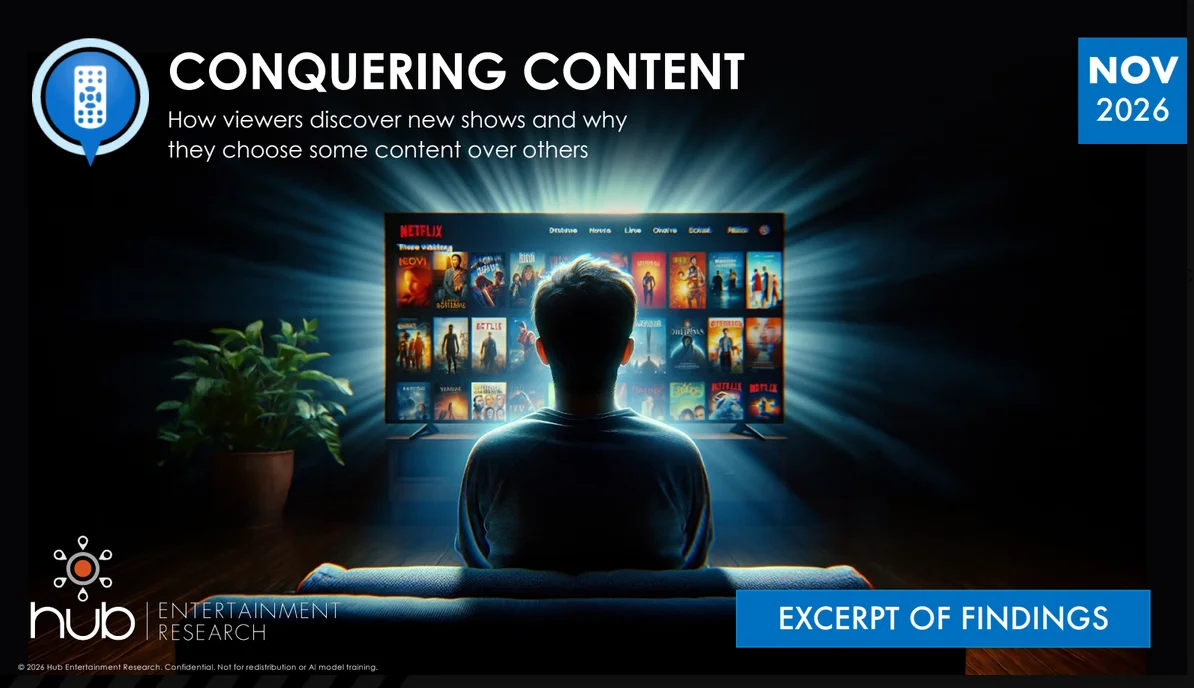
Hub Entertainment Research’s November 2026 Conquering Content study examines how consumers discover television shows, make viewing decisions, and choose streaming subscriptions across paid and free services.
Based on a survey of 1,601 US television consumers aged 16 to 74, conducted in October 2026, the research highlights changing viewing habits and the factors shaping content discovery.
Personal Recommendations Remain the Leading Way to Discover TV Shows
Despite the growing use of sophisticated streaming recommendation algorithms, word of mouth remains the most influential source of television discovery.
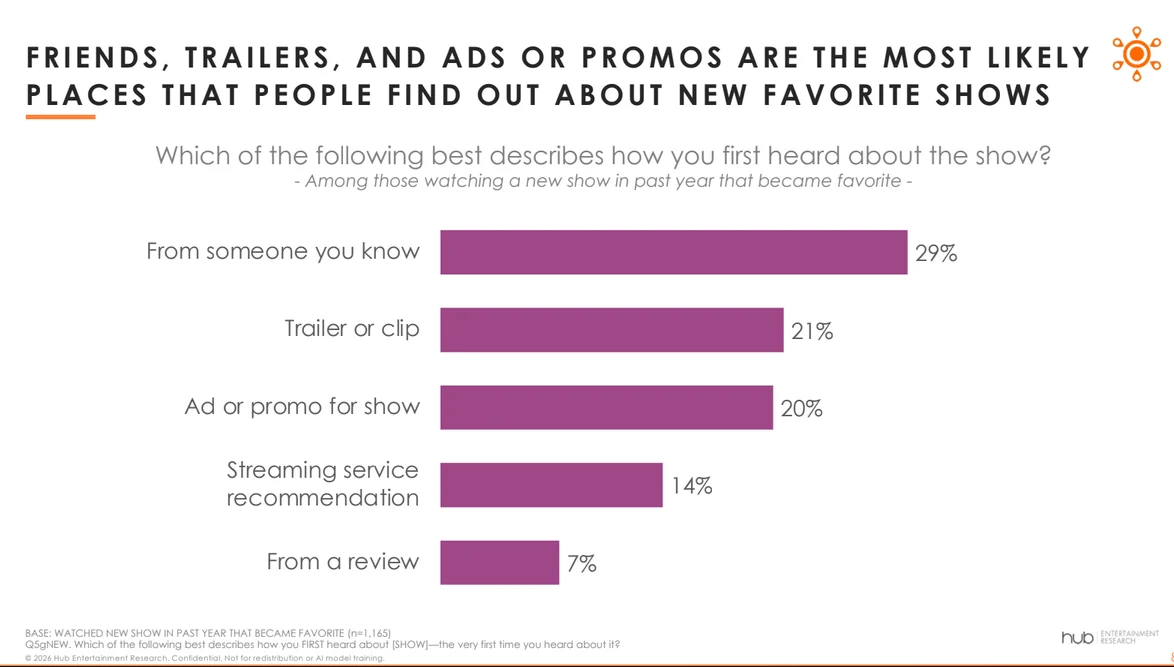
Among respondents who discovered a new favorite show in the previous year, 29% said they first heard about it from someone they knew.
Trailers and video clips ranked second at 21%, followed by advertisements and promotional materials at 20%. Streaming platform recommendations accounted for 14% of initial discoveries, while reviews represented just 7%.
The findings highlight the continued importance of personal recommendations in generating interest in television content, suggesting that algorithm-driven discovery has yet to replace the influence of friends, family, and other personal connections.
Shorter Series Have a Better Chance of Attracting New Viewers
The number of seasons and episodes available can also influence whether audiences are willing to start watching a television series.
According to the study, 38% of respondents said they would definitely start watching a scripted series consisting of one season with 16 episodes.
However, that figure fell to 27% when respondents were presented with a series featuring five or more seasons, each containing 16 episodes.
The results suggest that large episode libraries and long-running series may discourage potential new viewers who are reluctant to commit to an extensive viewing schedule.
For streaming platforms, making established titles more accessible and reducing the perceived commitment required to start a series could help attract new audiences to their existing content libraries.
YouTube Becomes a Go-To Alternative When Viewers Cannot Find Something to Watch
YouTube is increasingly competing with television networks and streaming services for viewers’ attention, particularly when audiences struggle to find appealing content elsewhere.
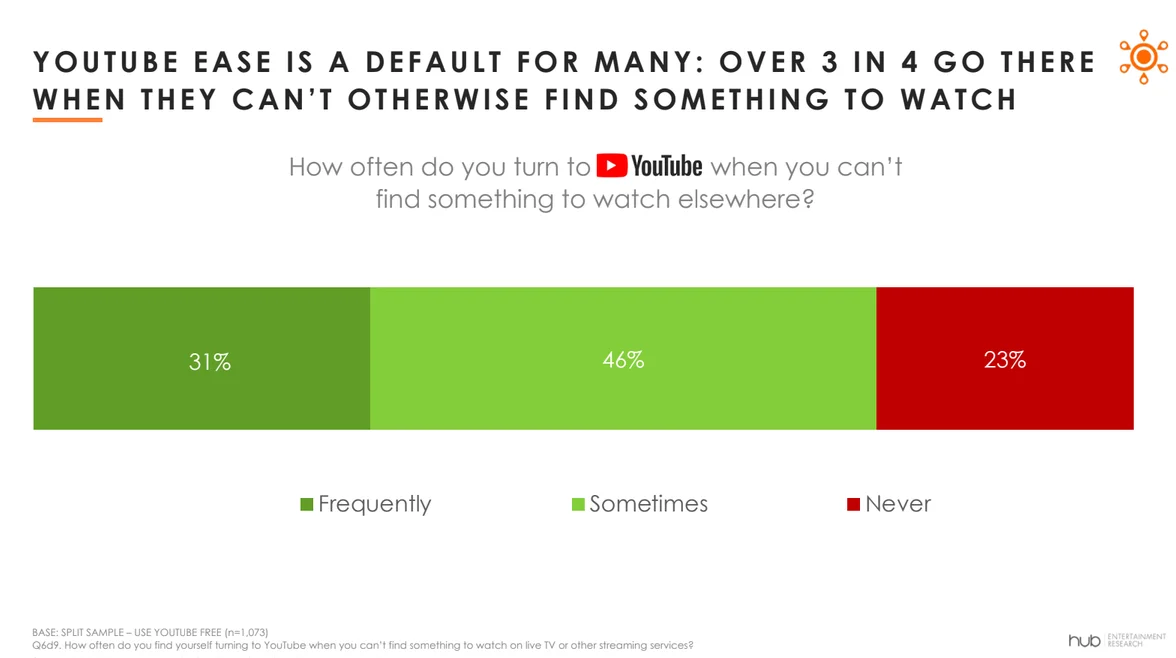
The Hub Entertainment Research study found that 31% of respondents who use YouTube for free frequently turn to the platform when they cannot find something to watch on other services.
Another 46% said they do so occasionally, bringing the combined figure to 77%. Only 23% said they never use YouTube in this situation.
These findings reinforce YouTube’s position as a significant competitor in the broader video entertainment market, extending beyond its traditional role as a destination for short-form and user-generated content.
Fewer Viewers Subscribe to Streaming Services for a Single Exclusive Show
Exclusive programming remains a key component of streaming platforms’ strategies, but its ability to attract new subscribers appears to be weakening.
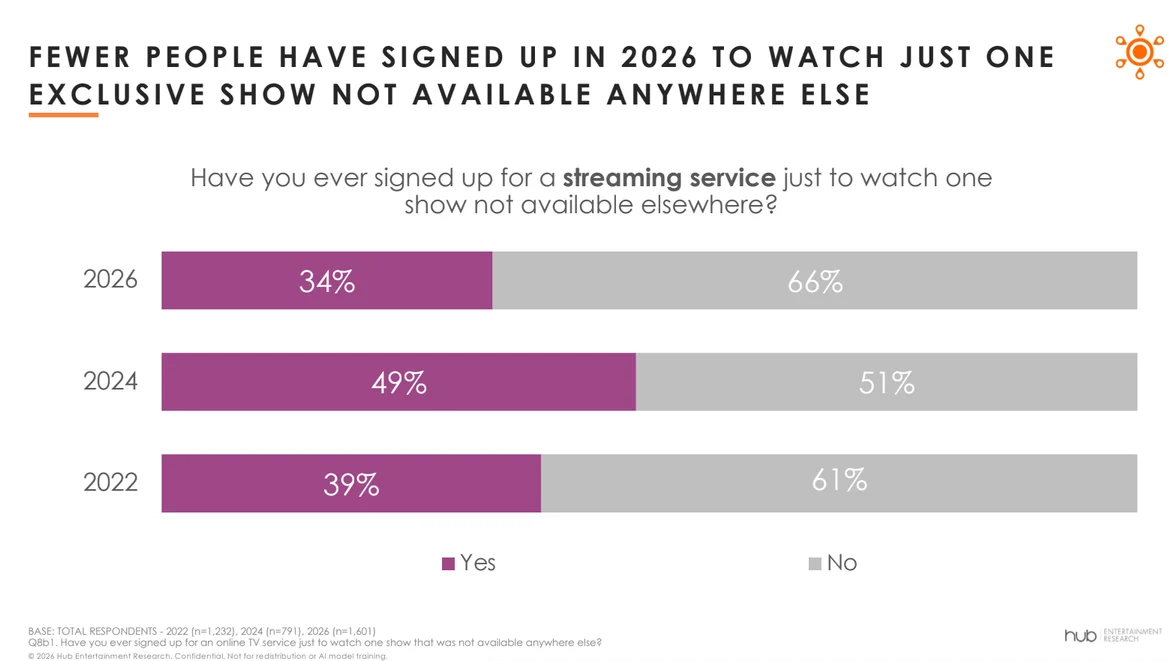
In 2026, 34% of respondents said they had subscribed to a streaming service specifically to watch a single show unavailable elsewhere. This represents a notable decline from 49% in 2024 and 39% in 2022.
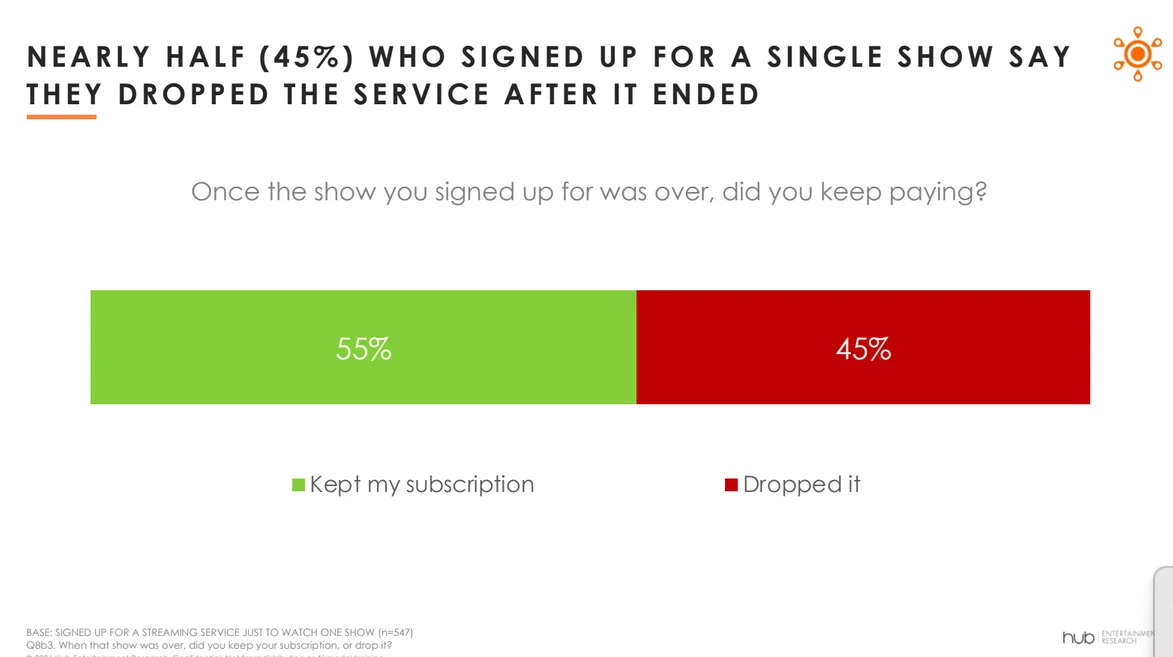
The study also found that 45% of consumers who subscribed to a streaming platform to watch a particular series canceled their subscriptions after the show ended.
While exclusive TV shows can still drive new subscriptions, the findings suggest that streaming platforms face growing difficulties in retaining viewers once the content that initially attracted them is no longer available to watch.
Google Remains a Leading Tool for Finding Where to Stream TV Shows
Search engines continue to play an important role in helping audiences find movies and television shows across an increasingly fragmented streaming landscape.
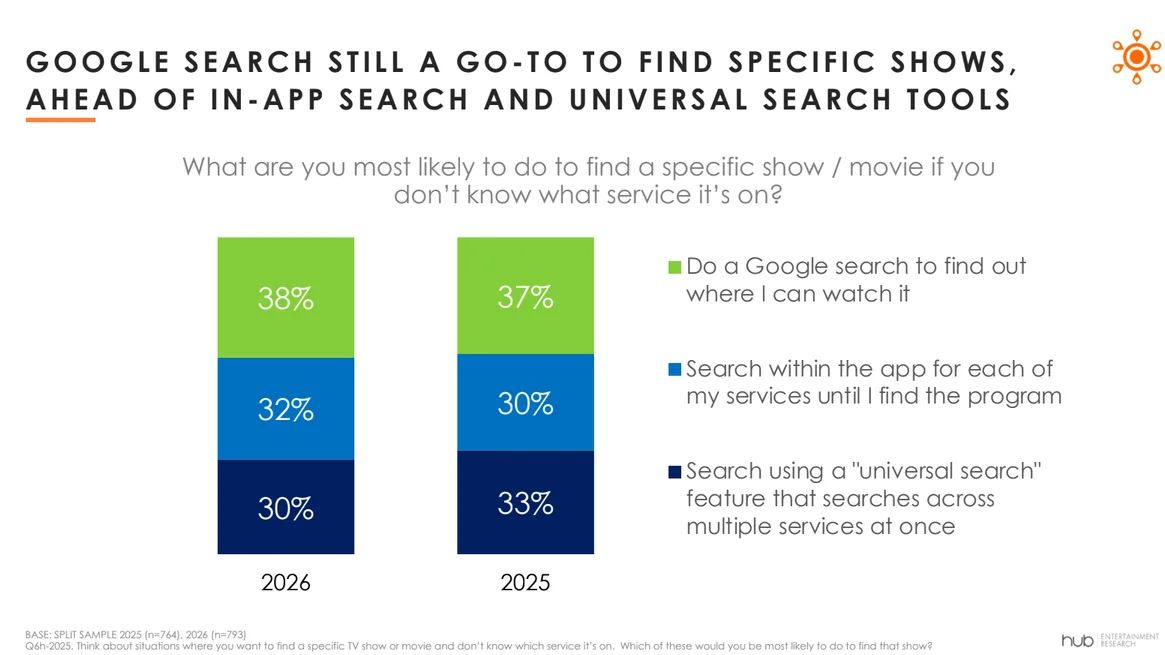
According to the study, 38% of respondents said they would most likely use Google to find out which platform offers a particular title.
Meanwhile, 32% preferred searching directly within individual streaming applications, while 30% favored universal search features that allow them to look across multiple services simultaneously.
The results highlight how content discovery increasingly takes place outside streaming platforms themselves, with Google remaining a major resource for viewers trying to locate specific titles.
What the Findings Mean for the Streaming Industry
Hub Entertainment Research’s Conquering Content study points to a changing streaming landscape in which exclusive programming alone may no longer be enough to attract and retain subscribers.
Personal recommendations continue to influence viewing decisions, shorter series appear more accessible to new audiences, and YouTube is becoming an increasingly popular alternative when traditional TV and streaming services fail to meet viewers’ expectations.
At the same time, declining subscriptions driven by individual exclusive shows highlight the challenge of turning short-term interest into long-term customer loyalty.
For streaming platforms, the findings suggest that future growth will depend not only on investing in original programming but also on improving content discovery, making existing libraries more accessible, and giving audiences compelling reasons to maintain their subscriptions.