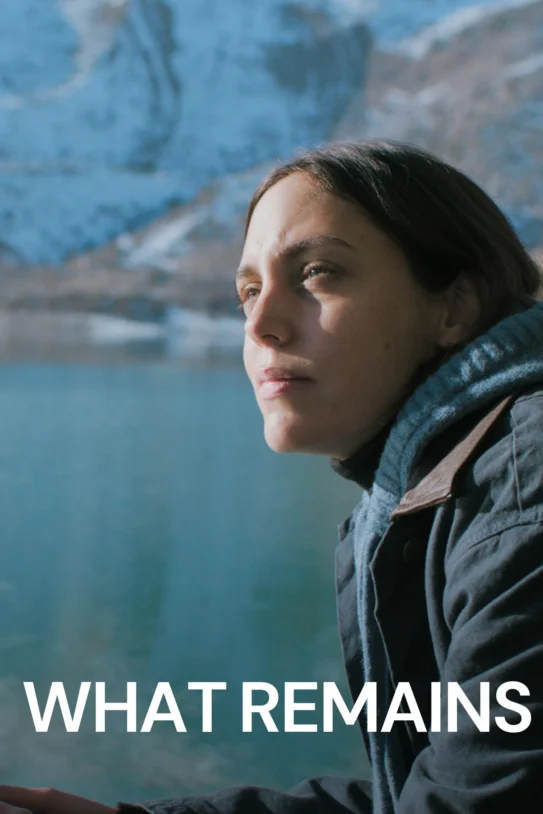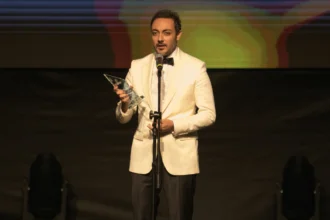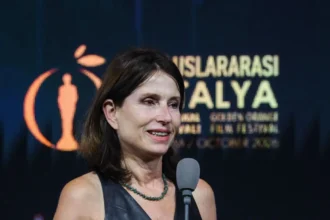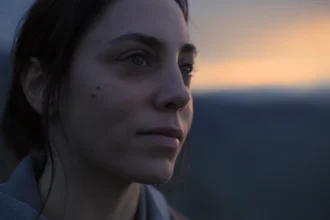





In our November issue, Yasemin Şefik spoke with Öykü Karayel, who won the Golden Orange Award for Best Actress for her performance in What Remains.
No one can remain the same person after a journey.
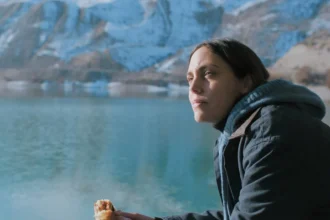
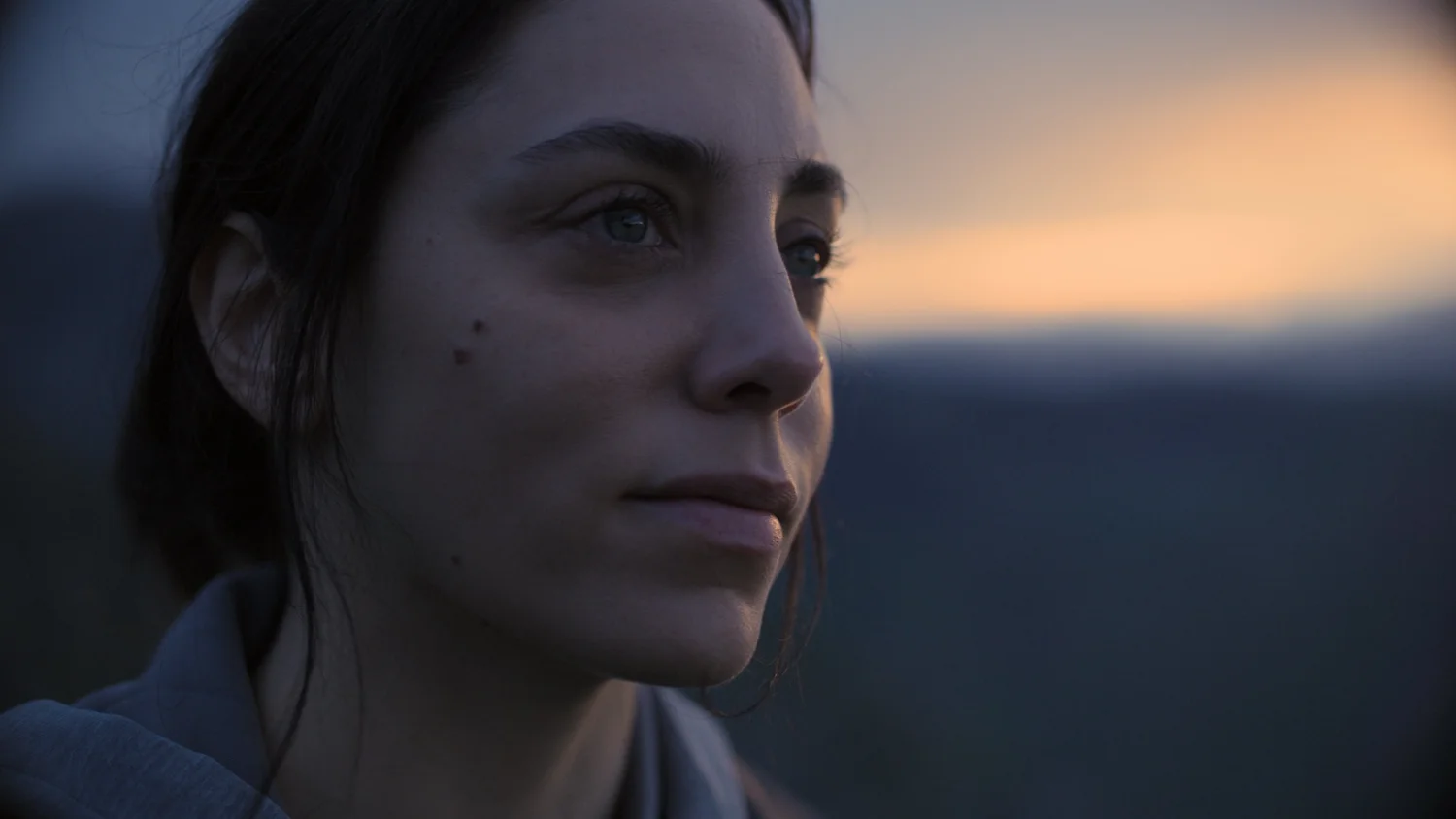
In Yeşim Ustaoğlu’s What Remains, sometimes a silence, sometimes a poem, and sometimes a journey towards oneself tells the whole story. Elif, brought to life by Öykü Karayel, is a woman who confronts not what she has lost over the years, but what remains within her after all those losses. Birhan Keskin’s verses are also among the unseen voices of this story. We spoke with Öykü Karayel, who won the Best Actress award at the Antalya Golden Orange Film Festival, about being a woman, change, the silences within relationships, and the courage to look at one’s own life anew. Because sometimes, one needs to go a little further away to find one’s way back to oneself.
Even the title What Remains makes you think. As things disappear from our lives, we begin to wonder what is left behind. When you first read the script, what did you think Elif had lost the most? Her joy in living, her desire to create, or her relationship with herself?
All of them, actually. When a person loses their connection with life and with themselves, neither joy nor any kind of desire can find a place to exist anymore.
But the title What Remains, specifically in the context of this film, has always evoked something different for me than the things left behind. It brings to mind the state a person reaches over the years as they transform, rid themselves of excess, perhaps become simpler, more purified, perhaps acquire new layers and become equipped with new knowledge… What Remains is actually a film about the need to turn around and take a closer look at this state of being.
Elif is a poet. It is striking that someone who lives through words eventually finds herself unable to find the words to describe her own life. What was Elif’s greatest silence for you?
She and Mehmet had actually been sharing a silence for a long time. Sometimes relationships reach a point, through no fault of either person, where that silence becomes their only common ground. At the beginning of the film, we witness precisely such a moment in their relationship. Then Elif’s long-silenced self begins to crack. Just like the butterfly in the film struggling to break free from its cocoon, that journey becomes inevitable for Elif, as if dictated by the laws of nature.
During the conversation in Antalya, you mentioned finding many common points with Elif and how her journey had also turned into a personal journey for you. Getting so close to a character can sometimes be dangerous for an actor. Was there a feeling you carried from Elif into your own life that stayed with you even after filming wrapped?
Even though I am not a poet, like many of us, I am someone who ponders the question of meaning, questions where she stands in life and the person she has become, tries to look at her surroundings and the world she lives in with a certain awareness, and finds such a way of living meaningful. That was actually the point from which I established my connection with Elif. And since the film is a journey film, you really do embark on a journey yourself while making it. Along with that process, I also witnessed what the character went through, this time as Öykü. No one can remain the same person after a journey; something, whether small or significant, changes within them.
The title What Remains, specifically in the context of this film, has always evoked something different for me than the things left behind. It brings to mind the state a person reaches over the years as they transform, rid themselves of excess, perhaps become simpler, more purified, perhaps acquire new layers and become equipped with new knowledge… What Remains is actually a film about the need to turn around and take a closer look at this state of being.”
Yeşim Ustaoğlu’s female characters rarely offer easy answers. We see them just before or just after making a decision. Elif is also such a woman. How did working with Yeşim Ustaoğlu change the way you approached the character? Was there a moment when she, as a director, pushed you beyond the acting territory you were accustomed to?
Many actors tend to retreat into their comfort zones. But we actually carry many illusions about ourselves into those spaces as well. A good director is someone who prevents you from escaping into that territory, who sees what you cannot see in yourself and considers bringing that side of you to the surface more valuable. Yeşim is also someone who, existentially speaking, is like a reservoir of emotions. You understand this even better when you get to know her closely. I think her own depth naturally rubs off on her actors, too. This was a great gift for me, as it made concentrating on set much easier.
You mentioned that Birhan Keskin’s poem “Taş” (“Stone”) was very important in helping you understand Elif. Sometimes a poem can express what pages of a screenplay cannot. What did that poem tell you about Elif?
That Elif is like an open wound. That she carries an ancient sorrow on her shoulders and, despite everything, has made peace with it.
You can read our interview with Metin Akdülger, one of the lead actors of What Remains, here.
You can read our interview with What Remains director Yeşim Ustaoğlu here.