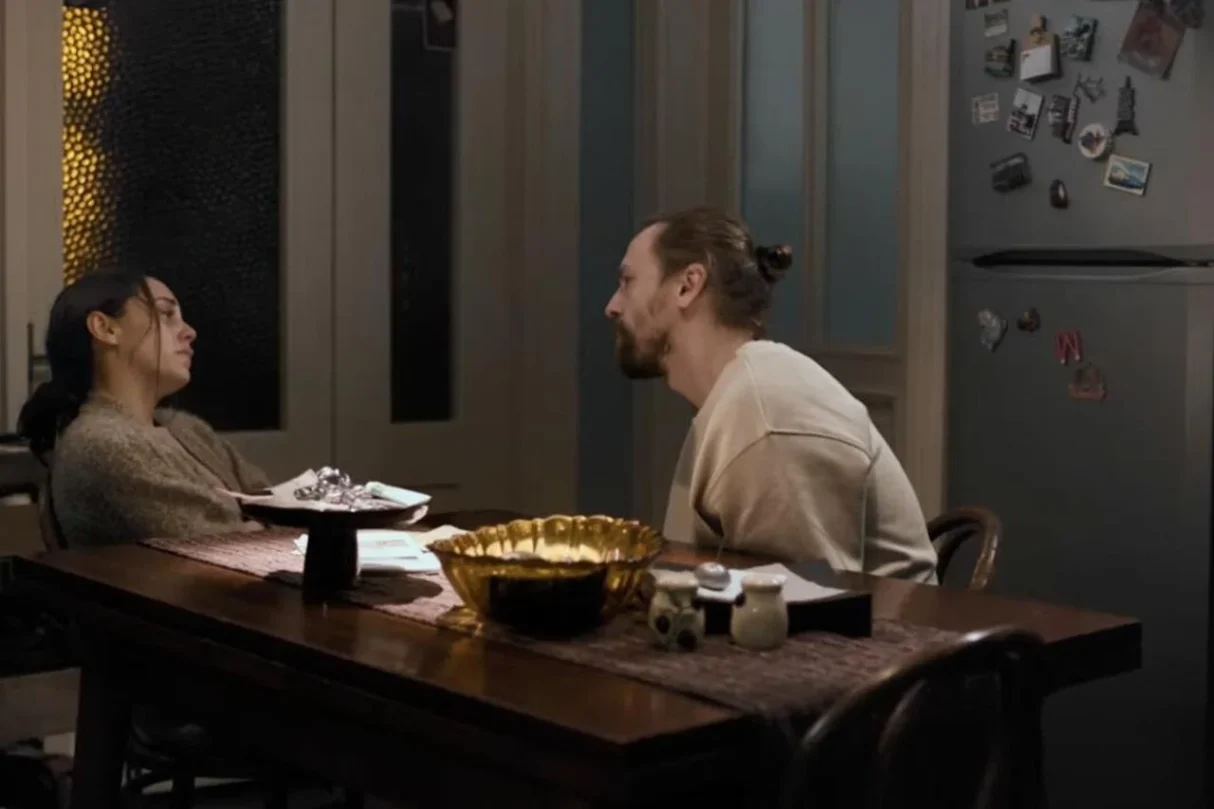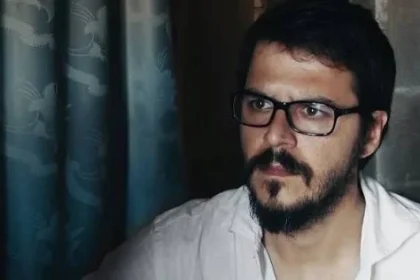





Yasemin Şefik spoke with Metin Akdülger, one of the lead actors of What Remains, about Mehmet’s story and the film’s creative process in our November issue.
As everyone builds their lives, sometimes they get lost, sometimes they grow tired, and sometimes they think they have found their way…
In What Remains, we meet Mehmet, a man who lives through music, sounds, and creation. Yet there are certain things in his own life that he struggles to hear. When you first met Mehmet, what kind of person did you see him as? A man trying to build his own life, or someone who has become lost within the life he has built?
Life and the stories told, and what remains of them afterwards. For me, “meeting Mehmet” – I call him Memo – began with a spirit that invites you to tell your own story. When you ask someone what kind of person they are, what do they say? I don’t think either Memo or I would choose to answer that question. As everyone builds their lives, sometimes they get lost, sometimes they grow tired, and sometimes they think they have found their way… I think love, more than anything, makes people believe they have found their lives.
During the conversation in Antalya, you mentioned that Mehmet is someone who knows how to listen but doesn’t actually listen. I think this is one of the character’s most interesting contradictions. Does Mehmet really not hear Elif, or does he know that if he does, he will have to change certain things in his life?
Listening to someone is one of the most fundamental steps in our profession, and it is the same for you, too. While Memo prioritises listening in his artistic performance on stage, in his own reality, it is as if he has been taken off that stage. Hearing the voice of his love could bring about a change in him and help him understand this situation; Elif, Selim, his father, his guitar, his melodica, his brother and his mother… Does he hear them? I would suggest watching the film and deciding for yourself.
Mehmet’s relationship with music intersects with the world you have also built around music. Did this familiarity make your job easier when portraying a musician? Or did knowing the inner world of someone involved in music make you focus even more on certain aspects of the character?
I am not a musician; I am an actor who sometimes plays and sings. For this reason, I can say that, in line with the film’s needs, I adopted a completely different musical approach and behaviour through Şevket Akıncı. Music enthusiasts such as Volkan Ergen and Özün Usta, who inspire great admiration, also supported me throughout the process. Creating a flow by finding a collective perspective is something that always excites me more.
In the film, we see two creative people living in the same house. One writes poetry, the other creates music. But their creativity is not enough to bring them closer together. Why do you think speaking the same language and understanding each other are not always the same thing?
A home, a life built by two people can change over time. I think Elif and Mehmet once had a beautiful dance together and a wonderful child, but their lives and rhythms have now drifted apart. I believe they are confident enough not to use their love to suppress each other, but rather to separate their incompatible rhythms. Of course, this is not easy, and their struggle with these difficulties leads them to embark on separate yet parallel journeys in order to reconnect with their roots and their own rhythms.
In Yeşim Ustaoğlu’s films, characters are not easily divided into good or bad. Mehmet, too, is someone who may be criticised at first glance but has sides that deserve to be understood. What did you and Yeşim Ustaoğlu talk about most when discussing Mehmet? Were there moments when you felt you had to defend the character?
Beyond being a filmmaker, Yeşim Ustaoğlu is someone who has managed to bring her artistic practice together with her approach to life and her own distinctive, inclusive perspective. Experiencing her and witnessing her approach to life, above all her artistic endeavours, gave me hope.
Since she is a director who is clear and reassuring in her own storytelling, I tried to listen to her, understand her, and enjoy the experience of creating together. I can say that whenever I occasionally lost the rhythm, I stopped and tried to find it again. Sometimes we played solos; when either of us wasn’t satisfied, we played them again.
Mehmet has plans to start a new life in Berlin. Elif, meanwhile, is searching for the possibility of a different life somewhere entirely different. One seems to be planning to leave, while the other seems to have already begun drifting away. At what point do you think Mehmet realises just how far Elif has moved away from him?
Memo is highly self-aware, but he is not someone who can manage to confront his own reality. I think this defines one of the tones of his journey at the beginning of the film. His greatest companion is Selim, who may also have become his metronome on this journey. As he begins to hear him, he can establish a connection with his life and heart and embark on a harmonious journey of confrontation. In short, he has been aware of their distance from the very beginning.
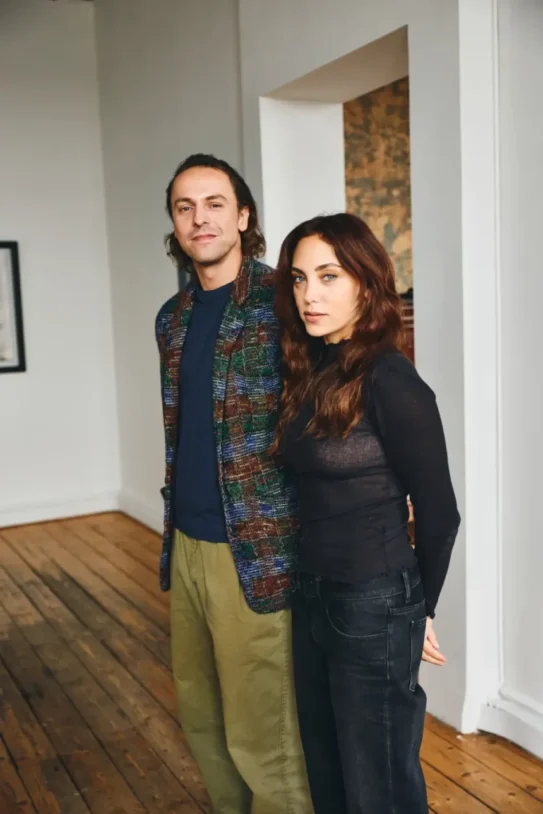
You and Öykü Karayel portray two people who gradually lose each other while living under the same roof. How did the acting chemistry between you work in creating this quiet tension? What was the thing that impressed or surprised you most about Öykü’s performance?
I don’t think Öykü needs any explanation. She is someone I take great pleasure and fulfilment in working with, a very creative and profound person. I remember feeling very sad when the scenes we shared in the film came to an end. I hope I get to share the screen with her again one day.
I am also curious about Mehmet from Öykü’s perspective. Did you ever disagree with each other about your characters on set? For example, was there an issue that Öykü considered justified on Elif’s behalf but that you saw differently from Mehmet’s perspective?
I honestly don’t remember us disagreeing with each other. Yeşim gave us a very clear and detailed world, and we tried to add colour to it. Of course, there must have been things we thought differently about, and I believe these differences also contributed to the vitality of the scenes, but I can’t recall a specific example.
Mehmet also has a side that confronts his past, his family, and the losses he experienced during his childhood. Sometimes people find the reasons behind their present-day behaviour in something they experienced years ago. Did learning about Mehmet’s past change the way you viewed his behaviour towards Elif?
I don’t like seeking a sense of fairness in a person’s existence through their past or, to use the fashionable term, their “traumas.” I see the modern person’s illusion that they can understand the complex nature of humanity by reducing one another to categories and definitions as a major obstacle to genuine confrontation. In this respect, I find Memo’s process of hearing the voices and truths he has not heard about his own past both different and unique. I believe one of the distinctive aspects of this original narrative is that we witness him experiencing a liberation first in relation to himself and his roots, rather than towards Elif, Selim, or his father.
I don’t like seeking a sense of fairness in a person’s existence through their past or, to use the fashionable term, their ‘traumas.’ I see the modern person’s illusion that they can understand the complex nature of humanity by reducing one another to categories and definitions as a major obstacle to genuine confrontation. In this respect, I find Memo’s process of hearing the voices and truths he has not heard about his own past both different and unique.”
In Yeşim Ustaoğlu’s films, locations are not merely backdrops but part of the story. What Remains also features a journey that extends from the city to other geographies. How did the filming locations, particularly Trabzon and the atmosphere of the Black Sea region, influence the way you portrayed Mehmet?
I would like to take this opportunity to draw attention to Kuru Taşın Başı, the documentary Yeşim made together with Selen. When the experience of being human is approached holistically, it allows a person’s own narrative to be authentic and genuine, in my opinion. What happened in Yusufeli, and witnessing what has been done to people and nature, places a responsibility on us. Responsibility can only be something as influential as we are, and the more we grow, the greater our responsibility becomes.
Seeing Yeşim’s way of building narratives through locations and the way people take shape within those spaces allows us to look at our world differently. I think Memo’s roots and the locations are intertwined, creating a mutual transformation. As an actor, experiencing those places helped me tune my own instrument, so to speak.
The director has a very distinctive cinematic language. I also think there is an intuitive and experimental side to your acting approach. How did these two worlds come together on set with Yeşim Ustaoğlu? Was there a directorial choice that surprised you or a small piece of guidance that completely changed a scene?
I am 38 years old and have been on a journey as an actor for approximately 14 years. I enjoy experiencing different approaches, methods, styles, or whatever one might call them. At the end of the day, I believe I am there to listen to the storyteller and bring the experience they have created to life. For this reason, the storyteller, the director, is a very important person to me. Their command of their craft sets me free. In this respect, the experience I had with Yeşim opened the door to one of the most distinctive experiences of inner freedom I have had so far. Of course, she gave me plenty of direction, and I will miss the way she did it.
Let’s get a little behind-the-scenes gossip, too. The film carries quite an emotional weight, but there must have been very different moments behind the camera. Is there an incident involving Öykü or Yeşim Ustaoğlu that you remember from filming and that still makes you smile when you talk about it?
I don’t like gossip. Sometimes, when I consider it necessary, I share my professional experiences. While building a world that comes alive behind the camera, people can go through all sorts of transformations and sometimes move through intense emotions. I try to explain to my friends on the crew that the playing field is not a personal space but a collective one; I try to create an atmosphere of mutual understanding.
In independent cinema, everyone respects the dedication and sacrifices shown by one another. This makes us equal parts of a whole. When I manage to establish this, emotions begin to flow. Sometimes we cry together, sometimes we laugh uncontrollably. I remember having many fits of laughter while cleaning the house in Trabzon, but I also know that the following day, everyone grew quiet, with sadness in their eyes.
What Remains is a film co-produced by MUBI and brought to the big screen in collaboration with Başka Sinema. What do you think about MUBI being a platform that not only brings films to audiences but also gets involved in producing original stories of this kind? What does being part of such a production mean to you as an actor?
MUBI is a platform that gives hope to me and thousands of other film lovers. I was happy that they supported us together with Başka Sinema, and for that, I am especially grateful. I hope that, in the first steps towards opening up a promising path for independent cinema and film professionals who increasingly feel lonely and helpless, I can bring them good luck as well.
Let’s move away from Mehmet for a moment and talk about Metin. When do you think a person is truly alone in a relationship? When there is no one by their side, or when they can no longer find anything to say to each other even though someone is there? Has this film changed anything about the way you look at this question?
I don’t think loneliness is a feeling experienced entirely on one’s own. This may sound like an objection to the very structure of the word, but I believe people experience this feeling through their own other. Let’s call this other the soul, and the self the heart, for example. If the heart and soul lose their harmony, a person may experience the melody emerging from their loneliness as noise. I think they begin to make peace with their loneliness when they become aware of this and start perceiving the noise as a soundscape.
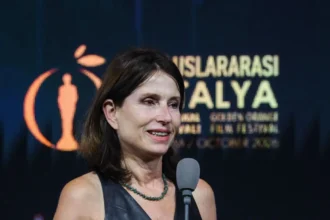
What Remains received four awards at the Golden Orange Film Festival and is now preparing to meet a wider audience. What kind of magic does this film hold for someone who will be discovering Yeşim Ustaoğlu’s world for the first time? And finally, do you think audiences will remember more of what was said or what was left unsaid after the film ends?
The fact that our film was recognised by the Antalya Film Festival jury, deemed worthy of praise, and awarded in four different categories gives us reason to believe that it will attract the audience’s interest. I can say that seeing the film team happy and feeling valued as a result has also made me proud. I have radical views on art and awards; that is a separate and lengthy subject. Regardless of awards and approval mechanisms, I can say this: I really want the film lovers around me to watch this film. I can’t wait to talk with them about the emotions it evokes.
I am curious about the impact this film will have on someone discovering Yeşim’s cinema, but from Memo’s perspective, an artistic act is created by the audience just as much as it is by the performer. Everyone has an authentic experience at their own rhythm. When approached with this principle in mind, I believe the film offers a unique narrative that leaves an open space for the audience. Expecting the rhythm of a standard film experience may limit you. To the extent that you can flow into the film’s own world, it may leave a trace of what remains in your own life experience, too.
You can read our interview with Öykü Karayel, one of the lead actors of What Remains, here.
You can read our interview with What Remains director Yeşim Ustaoğlu here.