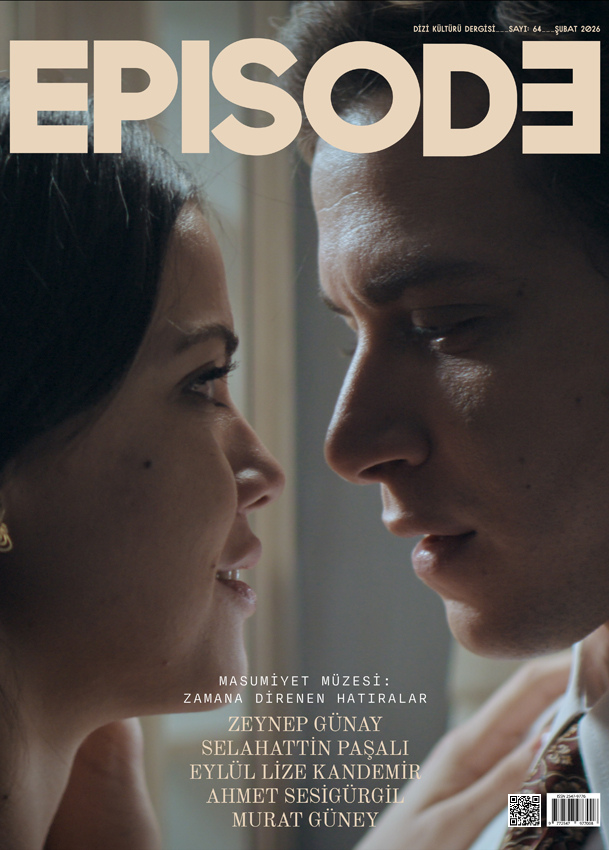





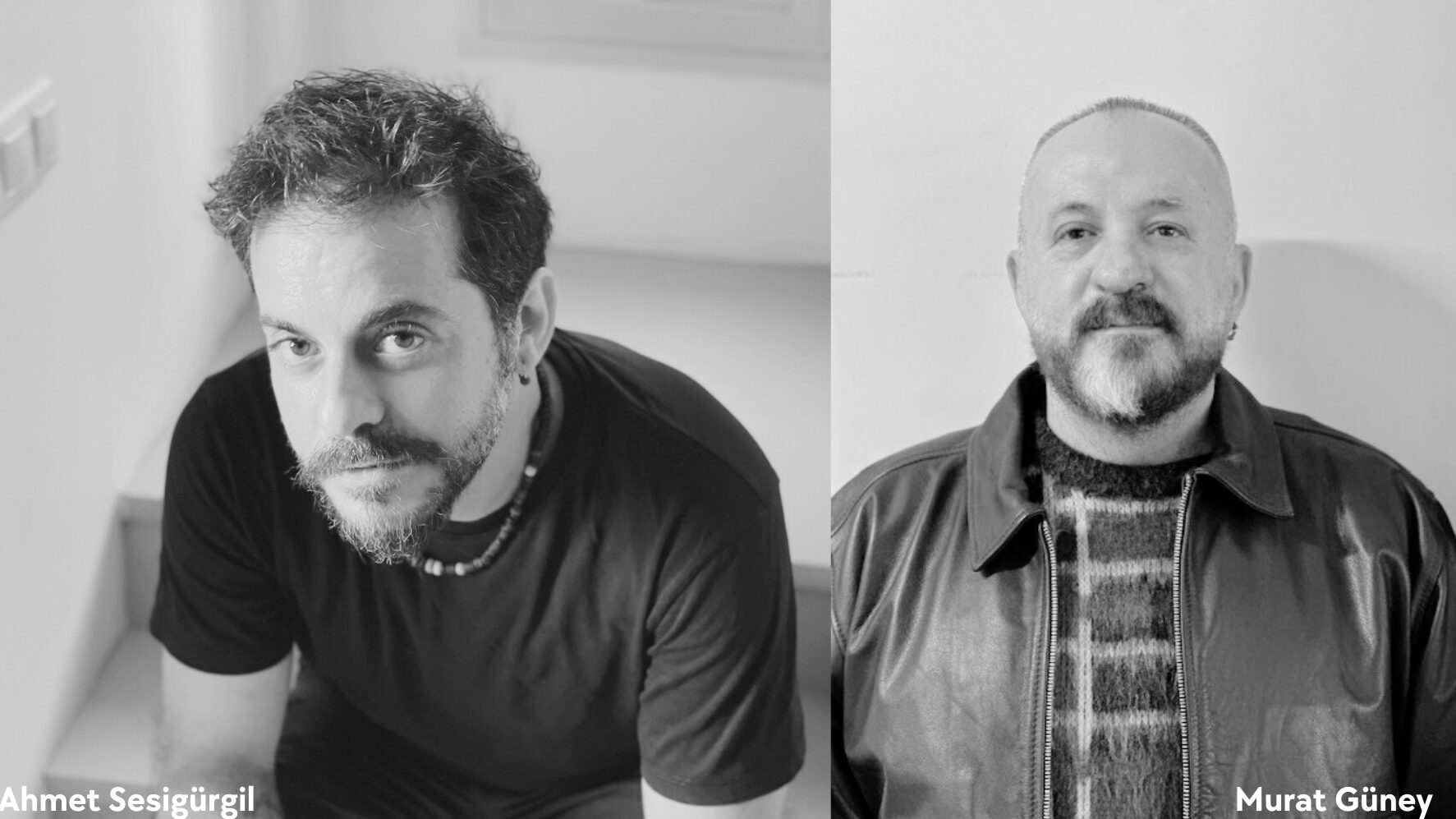
As Episode Magazine we spoke with cinematographer Ahmet Sesigürgil and art director Murat Güney about Orhan Pamuk’s The Museum of Innocence for our February 2026 issue.
Of course, we prepared a concrete atmosphere related to the period in which the story takes place, we reconstructed Nişantaşı of that time, and we had locations that were handled in great detail, but we tried to look beyond that. From the opening to the end of the novel, we aimed to establish a balance with all the objects, colors, and emotions, and to truly convey that world to the audience. While doing so, we focused on keeping the story at the forefront.”
When approaching Orhan Pamuk’s The Museum of Innocence as an adaptation, it is necessary to talk not only about the script but also about the visual language and atmosphere that are established. The objects around which the novel is built, the items collected by the character Kemal, the locations, the museum, and Istanbul itself are all presented in an impressive way in the series as well.
On the one hand, this design texture reveals the old Türkiye, while on the other, it conveys Istanbul’s timelessness, completing The Museum of Innocence. We spoke with the series’ cinematographer Ahmet Sesigürgil and art director Murat Güney and about the visual language created for The Museum of Innocence, the design process, and the path they followed. Enjoy the read!
I truly enjoyed watching The Museum of Innocence, and while watching it, I placed it in a different category among local productions. As an adaptation, it is very faithful to the novel, but at the same time, the series has a deeply layered visual language and art direction. How did the preparation process for the set go?
Ahmet Sesigürgil: While making the series The Club, we became a real team, and we’ve continued in that way ever since. During that process, we thoroughly explored what production design actually is. Of course, we don’t claim that we brought production design to Türkiye, but thanks to Zeynep Günay and Murat Güney, we developed a working method in which we operate with a production designer.
We have a design language of our own. From costumes to wall colors, from the color of the scene and the episode to contrast, we design everything. Our opinions and ideas can change along the way. However, we do not chase references. We don’t say “let it be like this” or “let it resemble that.” We apply our own design based on the text. Then we establish a relationship with the locations. As long as the budget allows and we can build sets, we move in the direction we want. Everything is determined by the communication among us.
Murat Güney: Yes, as Ahmet mentioned, a language has formed among us. We have done other projects for Netflix with Zeynep and Ahmet and spent a lot of time together. That’s why we have an established communication. First and foremost, we focus on what we can do in connection with the script. Our design progresses in line with what the script makes us feel, guided by our own perspectives and thoughts.
Since we function as a team during the preparation period, we can move very practically and quickly. However, as an art director, I still think that preparation periods are not sufficient under Turkish conditions. We try to organize very quickly, but the timeframes are not enough. Under these conditions, in order to deliver the best possible result, it’s essential to be a team that understands one another.
We also entered the set of The Museum of Innocence very quickly. At the same time, it was of course very exciting. How often do you get the chance to work with Orhan Pamuk, one of the most internationally renowned authors of Türkiye? That brought with it a very different feeling.
Had you read The Museum of Innocence before going on set, or earlier? In the novel, there is a world built around objects and the museum. How much of what you imagined were you able to create in the series?
Ahmet Sesigürgil: I had read the novel a long time ago, but when I learned that we would be shooting it, I read it again. Then I focused on the script. I can say that my final reading went parallel to the script. As much as the characters surprised me while reading the novel, I can say that as a filmmaker I was challenged just as much. In fact, while shooting this project, I once again realized how great a novelist Orhan Pamuk truly is. Throughout the shoot, the characters’ motivations, their ups and downs, Kemal and Füsun’s plans, and the objects never stopped surprising us, constantly reminding us that there was always more than what appeared on the surface.
There are many codes related to the novel, including the sociopolitical codes brought by the period. As an advanced example of literature, due to Orhan Pamuk’s interest in painting, there are even color palettes dedicated to chapters. We incorporated all of these into the design and tried to uncover their meanings.
Murat Güney: I had read the novel years ago. Honestly, after reading the script, I didn’t want to return to the novel. I wanted to move forward with what remained in my mind. Of course, we visited the museum many times, but throughout this process, I maintained a respectful distance from the novel. I worked more by taking the museum as a reference and tried to design a more timeless world. Another key point was that our starting point was Kemal. We wanted to look at the world through his eyes. We tried to figure out how to build a world based on his perspective.
You were part of the first adaptation approved by Orhan Pamuk. How did you feel the responsibility of this, and what were the biggest challenges you experienced?
Ahmet Sesigürgil: As a cinematographer, I would answer it this way: every era has certain images that have settled in our minds. For example, when shooting a film set in the 60s or 70s, it is possible to capture something close to the spirit of that period by using the equipment of that time. Of course, there are also things coded into us by American cinema and modern cinema. For instance, the 70s are associated with orange, brown, and yellow tones. The angles, costume references, and colors of the 80s are defined in a certain way. The 90s move toward blue and millennium tones.
However, we decided not to do these things and not to follow such a path. Together with Zeynep and Murat, we focused on more modern “looks.” We tried not to view the story through a periodic timeline. Of course, there are certain meanings brought by the era within the story, but we tried to approach the story itself in a holistic way.
The scenes involving the characters Füsun and Kemal were particularly challenging. Since the characters continued to surprise us, we made changes during the shoot. We normally do not like last-minute changes on set because everything needs to be rebuilt. But both this project and the characters convinced us otherwise. That is why I am eagerly waiting for the reactions of those who have read the novel, like you. This has been the project whose interaction with the audience I am most curious about.
Murat Güney: Personally, while constructing the entire atmosphere of the novel and creating that design, I was somewhat concerned about how much of it we would be able to reflect. I wondered whether we could truly convey the feeling of that world to the audience. For that reason, I did not approach this project as a period piece. I tried not to look at anything from a historical or chronological perspective.
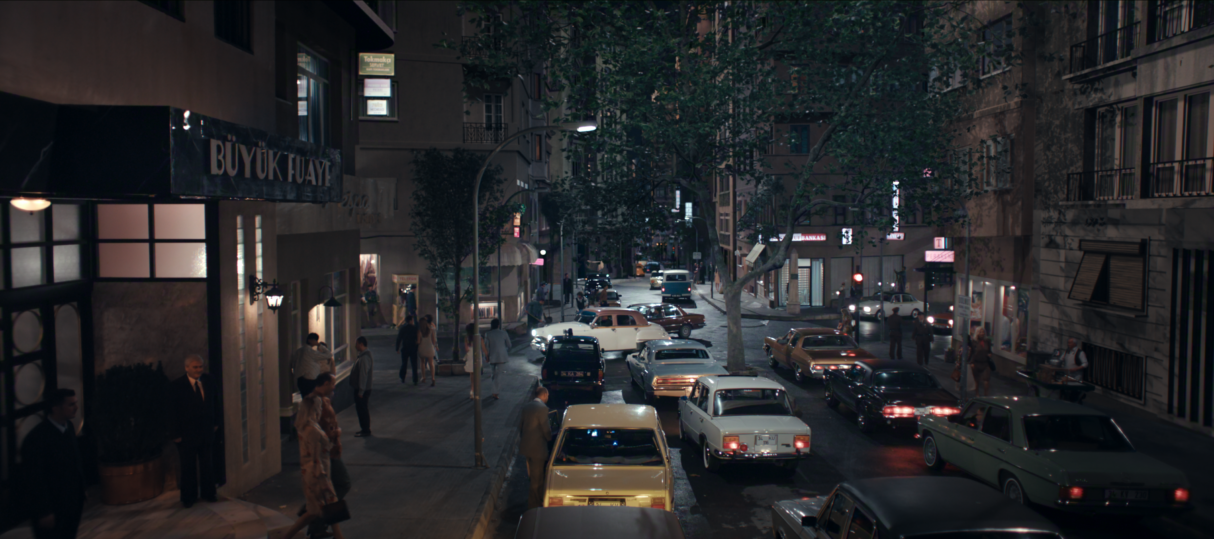
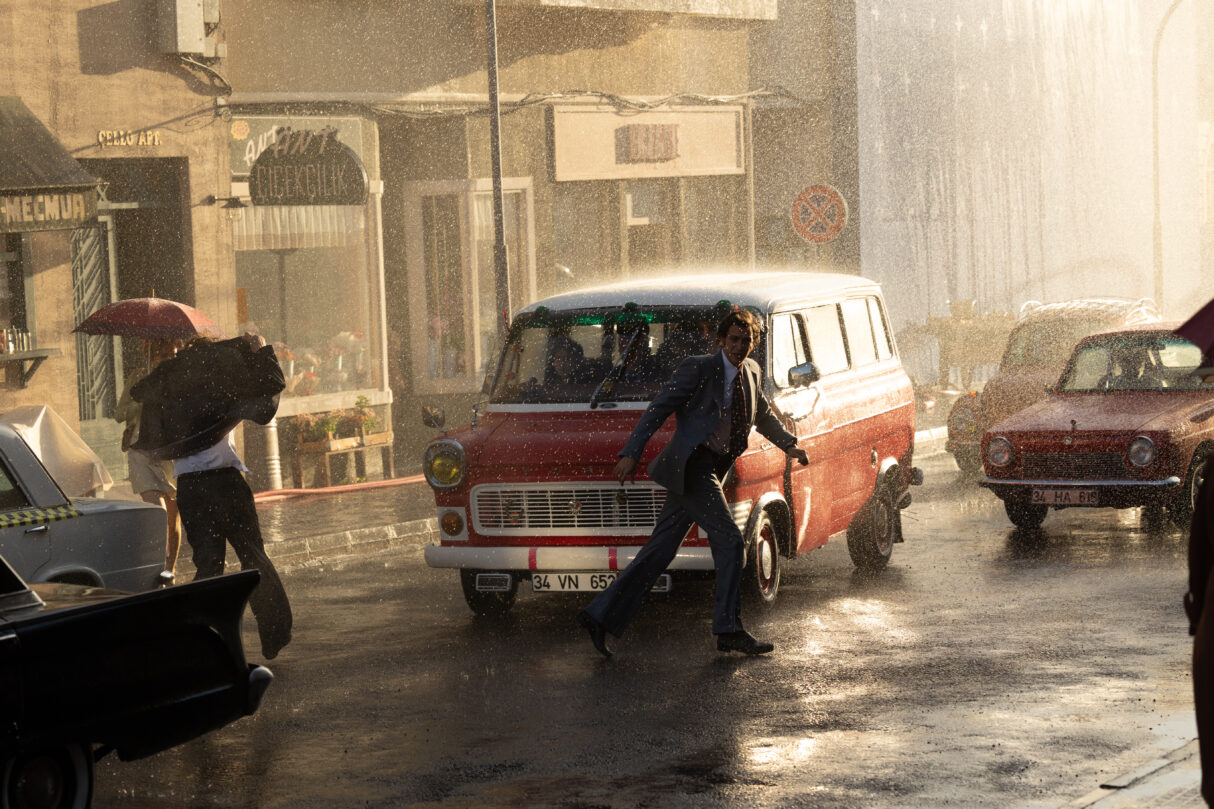
Of course, we prepared a concrete atmosphere related to the period in which the story takes place, we reconstructed Nişantaşı of that time, and we had locations that were handled in great detail, but we tried to look beyond that. From the opening to the end of the novel, we aimed to establish a balance with all the objects, colors, and emotions, and to truly convey that world to the audience.
While doing so, we focused on keeping the story at the forefront. Frankly, trying to do such a detailed work while racing against time was very challenging. I can say that I personally went through many sleepless nights. As I’m talking now, I’ve gone back to those days and remembered them. But in the end, a work emerged that made all of us very happy.
There are episodes in which Kemal leaves his own neighborhood, Nişantaşı, and begins searching and exploring socioeconomically different parts of Istanbul… In those moments, the images I formed in my mind were more orientalist, for example, but that is not how it turned out. The character of Kemal pulled me toward a different place than what I had imagined and changed the framing.”
Then let me ask about Kemal, a character who divides readers of the novel into two camps. What do you think about Kemal?
Ahmet Sesigürgil: From where I stand, choosing Zeynep Günay as the director of this adaptation was a very correct decision. Zeynep is a director who strongly takes ownership of her characters. This was also the first time she told a story from a male perspective, but she established a very good balance.
Kemal is truly a confusing man. No one can convince me that they know what Kemal wants. From this perspective, we tried to portray Kemal and to address human nature. Of course, there were moments when we struggled and questioned him. (Laughs) Still, when approaching Kemal, we should focus on human nature and approach him from there. For that reason, perhaps instead of judging him, we should try to understand him.
Murat Güney: I agree with Ahmet. When I look at Kemal and Füsun’s relationship, having Zeynep on this project was important. Kemal is a character who needs to be understood with his weaknesses, obsessions, and love for Füsun. When we look at Kemal’s approach, we cannot say that he acts with the intention of hurting someone. He does not live his life from that place. He does not act to hurt or harm women; he has an obsessive love.
Since the story progresses from Kemal’s point of view, we actually see him in all his variations, from good intentions to obsessions. I am among those who think that Kemal is stuck and unable to move in another direction. I do not see him as a consciously evil character.
Ahmet Sesigürgil: There is also a film that I love very much, Cast Away, starring Tom Hanks. For example, that film is also a narrative about experiencing something. One of the recent notable works, the series Pluribus, is similar in that sense. We need to approach Kemal a bit from this perspective as well. We do not necessarily need to identify with Kemal. It is more about being able to understand the situation he is in and approaching it through questions like “What would I do if I were in his place?” Look, we’ve gotten stuck on Kemal’s problem again, we can’t get away from it. (Laughs)
The novel has very important symbols and motifs that give it its layered structure, but at the same time, “Istanbul” is also a character. In the series, we see Istanbul change along with Kemal’s state of mind. What would you like to say about that?
Ahmet Sesigürgil: I can give very concrete examples regarding this. Let me try to explain without giving spoilers. There are episodes in which Kemal leaves his own neighborhood, Nişantaşı, and begins searching and exploring socioeconomically different parts of Istanbul… In those moments, the images I formed in my mind were more orientalist, for example, but that is not how it turned out.
The character of Kemal pulled me toward a different place than what I had imagined and changed the framing. Of course, Zeynep and Murat also had a major influence here. We are a team that likes control; we pay great attention to aspects such as location, color, light, and contrast. It makes us very happy that this came across to you in the same way.
Murat Güney: I’m very happy and glad that you noticed this. We did not see Istanbul merely as a decorative element. In fact, every element we used reflects the concretization of obsession. Every object and every mentioned element has its own meaning and memory. But we tried not to make these too obvious. We took care to use Istanbul in this way as well.
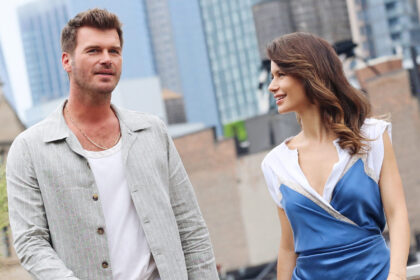
The Museum of Innocence will premiere on Netflix on Feb. 13.