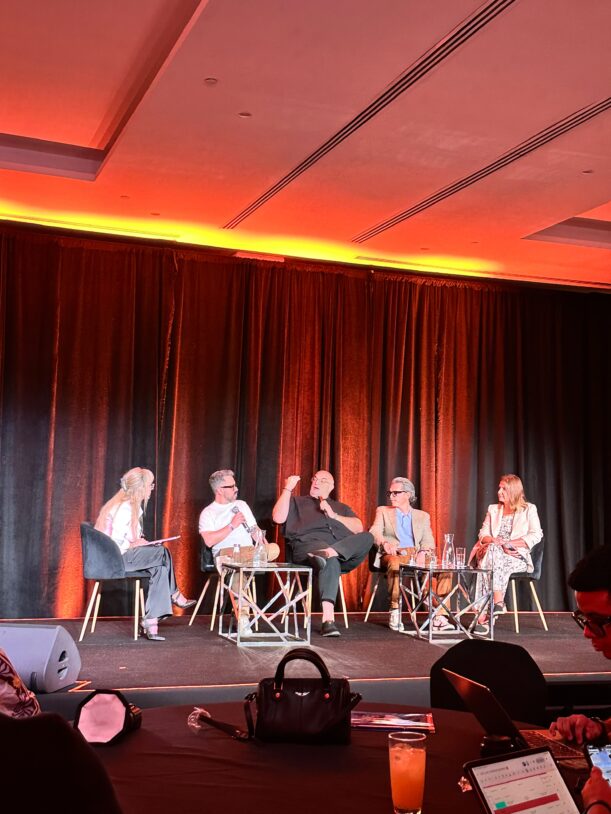




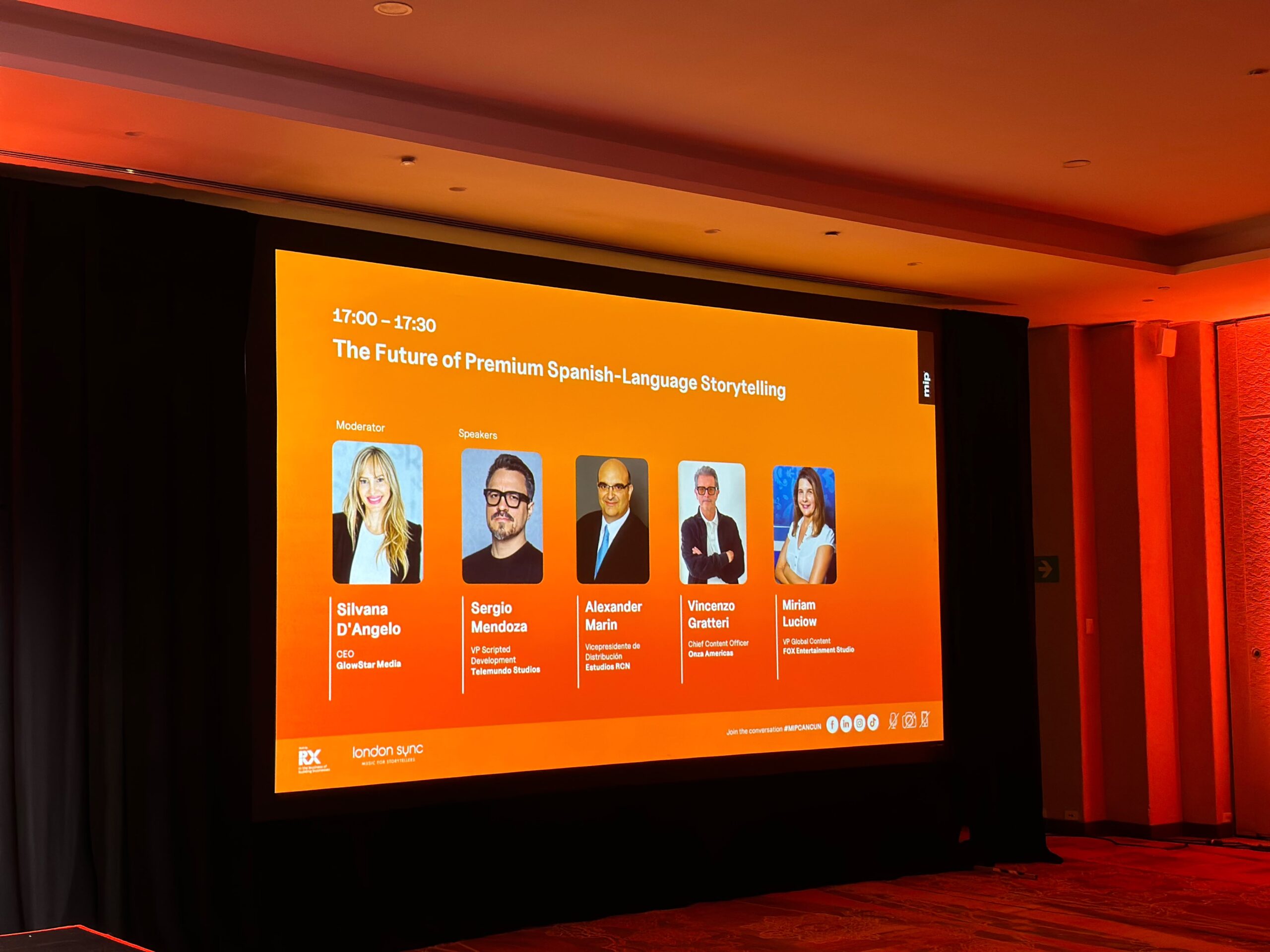
The evolving definition of premium content, the adaptation of successful long-running formats for streaming platforms, and the growing influence of microdramas were among the key topics discussed during the The Future of Premium Spanish-Language Storytelling panel at MIP Cancun.
Moderated by Silvana D’Angelo, CEO of Glowstar Media, the panel brought together Sergio Mendoza, VP of Scripted Development at Telemundo Studios; Alexander Marín, VP of Distribution at Estudios RCN; Vincenzo Gratteri, Chief Content Officer at Onza Americas; and Miriam Lucio, VP of Global Content at Fox Entertainment Studios.
What Makes Content Premium in Today’s Market?
One of the central discussions focused on what makes a production premium in an increasingly diversified content landscape. Panelists questioned whether the distinction is determined by episode count, the platform on which a series is released, or the quality and originality of its storytelling. They also highlighted how the concept of premium content has evolved alongside changing audience habits and the expansion of streaming services.
The conversation also explored the challenge of adapting successful long-running productions into shorter streaming formats without losing the elements that made them resonate with audiences. Panelists emphasized that maintaining the essence of a story requires understanding the expectations of the new format rather than simply reducing the episode count.
Another key theme was the importance of creating stories with lasting appeal. Vincenzo Gratteri stressed that, amid an abundance of content and increasingly fast-paced consumption habits, producing series that remain in the audience’s memory is becoming more challenging. He highlighted the value of storytelling that enriches audiences, encourages reflection, and has the potential to become a contemporary classic rather than generating attention only during its premiere.
Microdramas, Creative Adaptation and the Global Appeal of Local Stories
Discussing the development of premium scripted content at Telemundo, Sergio Mendoza emphasized the importance of adaptation and collaboration with writers who understand the specific requirements of each format. Drawing on Telemundo’s experience with shorter telenovela formats, including La Reina del Sur, he noted that entering new content categories requires working with creative voices familiar with their storytelling conventions. He also pointed to the company’s exploration of microdramas, stressing that each format has its own rules and that producers must be willing to learn from those who specialize in it.
The panel also addressed the opportunities and limitations of microdramas. Gratteri expressed reservations about the format’s ability to deliver the same narrative complexity as longer productions, arguing that episodes lasting around 90 seconds leave limited room to explore the complexities of human nature. While acknowledging the growing market for microdramas, he suggested that audiences may eventually become more selective about how they spend their time, placing greater value on content that justifies their attention.
Looking at the international potential of Latin American productions, Miriam Lucio highlighted the power of locally rooted stories built around universal human experiences. Stories centered on family dynamics and relationships, she explained, can resonate with audiences across borders regardless of their geographical setting. She also pointed to science fiction as a genre with significant untapped potential in Latin American production, while noting the region’s established strengths in comedy, family drama, horror, thrillers, and true crime.
Lucio further highlighted the renewed interest in ambitious period and epic productions, citing adaptations such as The House of the Spirits and One Hundred Years of Solitude as examples of projects demonstrating the region’s ability to deliver large-scale storytelling.
The discussion ultimately underscored the importance of creative adaptability, distinctive storytelling, and a deep understanding of audience behavior as the Spanish-language content industry continues to explore new formats and distribution opportunities.