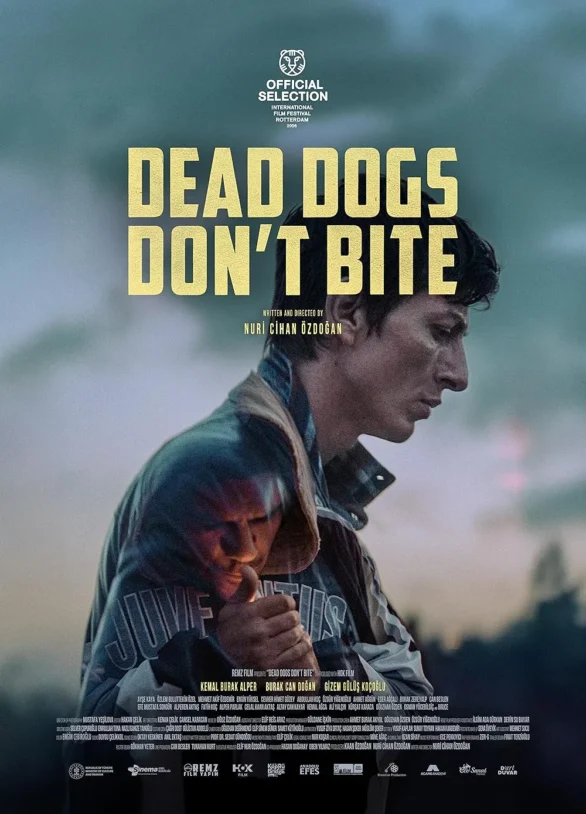





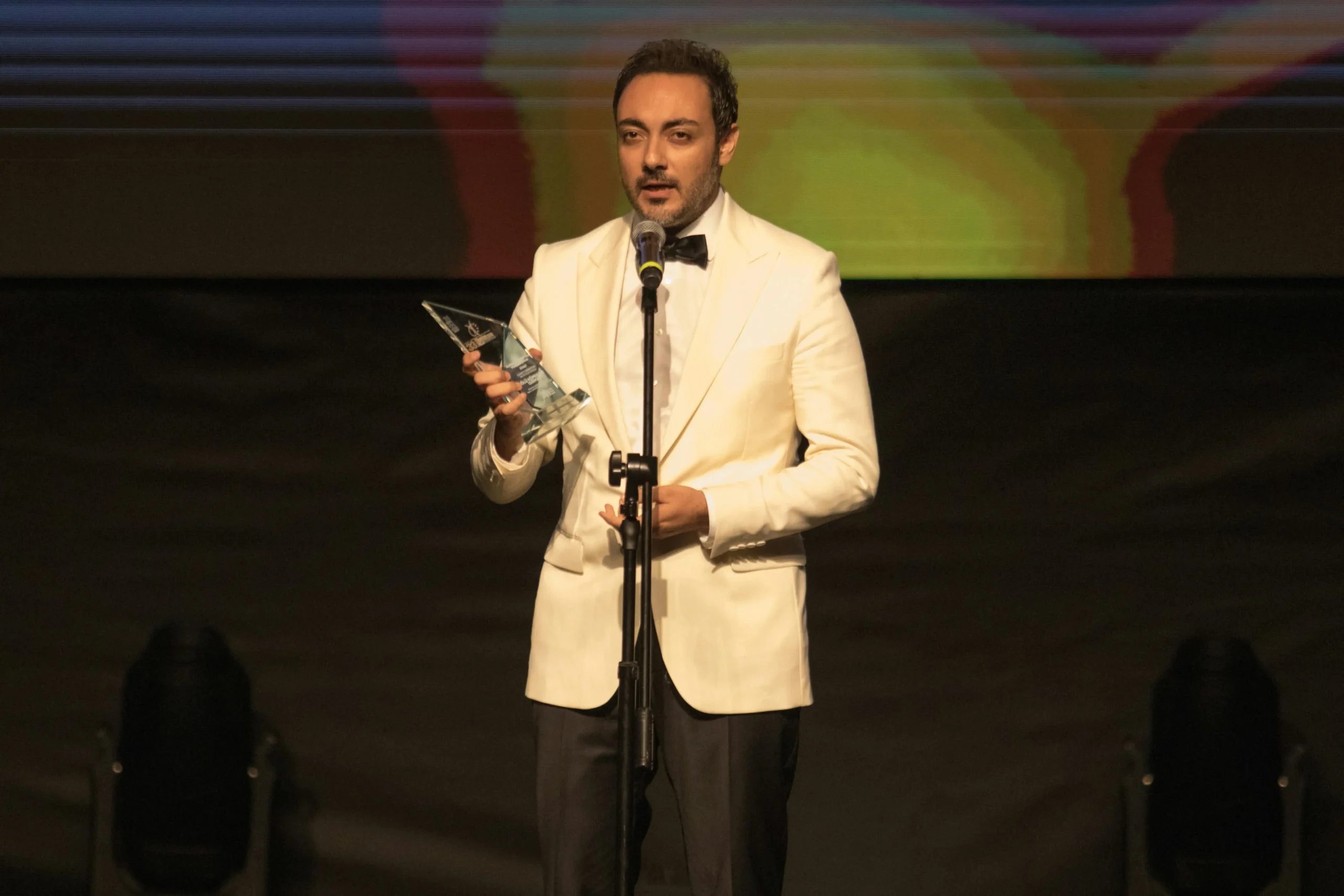
Nuri Cihan Özdoğan’s feature debut, Dead Dogs Don’t Bite, offers a timely critique of the system of exploitation targeting Türkiye, which Europe has turned into a dumping ground for plastic waste. At the same time, through the metaphors of dogs and waste, Özdoğan tells a class-based story unique to Adana. He turns his lens on lives that capitalism has rendered passive, struggling at the bottom in desperation and gravitating towards crime.
The film’s realism and visual language, which draw on Italy’s cult crime drama Gomorrah, are also highly striking. I interviewed Nuri Cihan Özdoğan about Dead Dogs Don’t Bite during the 33rd Adana Golden Boll Film Festival. Enjoy reading!
Dead Dogs Don’t Bite first screened at the Istanbul Film Festival. Now it is competing at the Adana Golden Boll Film Festival. How is the festival going?
We have had a special connection with the Istanbul Film Festival ever since “Meetings on the Bridge.” That is why it was such a pleasure and so special for us to begin the screenings in Istanbul. We were very curious to see how Dead Dogs Don’t Bite would be received there. We were also very happy that the film’s subject matter was understood, and, in a way, that put us at ease. Now we are in Adana, on the very land where the story was born and where we shot the film. We were also very curious to see how it would be received here, and we had a little knot in our stomachs.
There was a huge crowd at the screening; the hall was incredibly packed. There were also very positive reactions after the film. How did that make you feel?
Well, before the film even started, many people couldn’t get into the screening room and had to turn back. Some of our spouses, friends and colleagues were very happy to see that scene. I would like to thank them once again for their understanding. I find myself moving between happiness and embarrassment. Of course, there is also the happiness that comes with being the host.
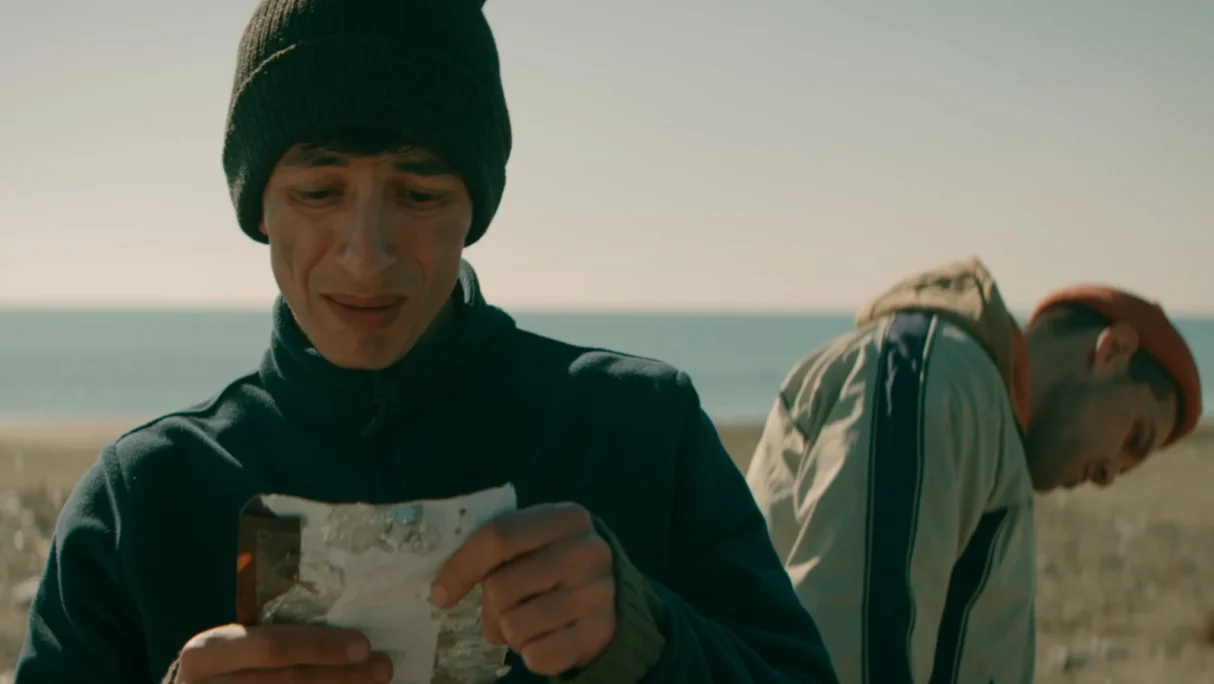
Dead Dogs Don’t Bite is your feature debut. It is genuinely a very well-written and well-executed film for a first feature, both in terms of its screenplay and its cinematic elements and visual language. Perhaps we could start by talking about the production process. How did Dead Dogs Don’t Bite come about?
Actually, I had been working on my first feature film since 2018. However, the funding process did not go as we had planned. Then the pandemic and the earthquake intervened. When we couldn’t secure the funding we wanted, we decided to take matters into our own hands.
I also had other screenplays, but we decided that Dead Dogs Don’t Bite would be easier to shoot. There were also people here who wanted us to make this film in Adana and were waiting for it. We came together here, and we received some very valuable support.
I have had a style I wanted to develop and a visual language I wanted to establish since my short films. In that respect, Dead Dogs Don’t Bite holds an important place.
I wanted to get to the cinematic language you mentioned because there are aspects that set this film apart. It has a spirit of its own, one that belongs to Adana and these lands. Dead Dogs Don’t Bite also has a political stance. In particular, through the metaphor of the dog, it offers a critique of the system, addressing international capitalism and Türkiye’s current political-economic landscape. What would you like to say about that?
Yes, I started taking notes and writing this screenplay four or five years ago. We shot the film two years ago, and at the time, the issue of waste imports addressed in the film was very much in the news. When we were preparing to present the film to audiences, we hoped the issue would have lost its relevance, but that did not happen. On the contrary, it peaked and began to be discussed even more.
Nature has now started spewing this filth back out, too. It has reached a point where it can no longer be denied or ignored. Of course, as someone who lives with loved ones in Adana, who was born and raised here and draws inspiration from the stories of this land, it is genuinely disturbing that Adana has to face such an issue.
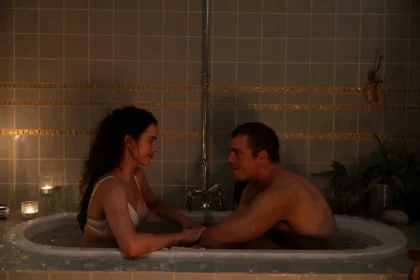
Actually, at the heart of the film was the story of İsmet and Dogo. The film began with their story, but I needed a layer that would give this story meaning. I brought the issue of waste together with the friendship between İsmet and Dogo, which is on the verge of decay. İsmet and Dogo are also boys who are drawn to crime. That is why the issue of waste fit so well into my film as an additional layer; it became the element that completed it.
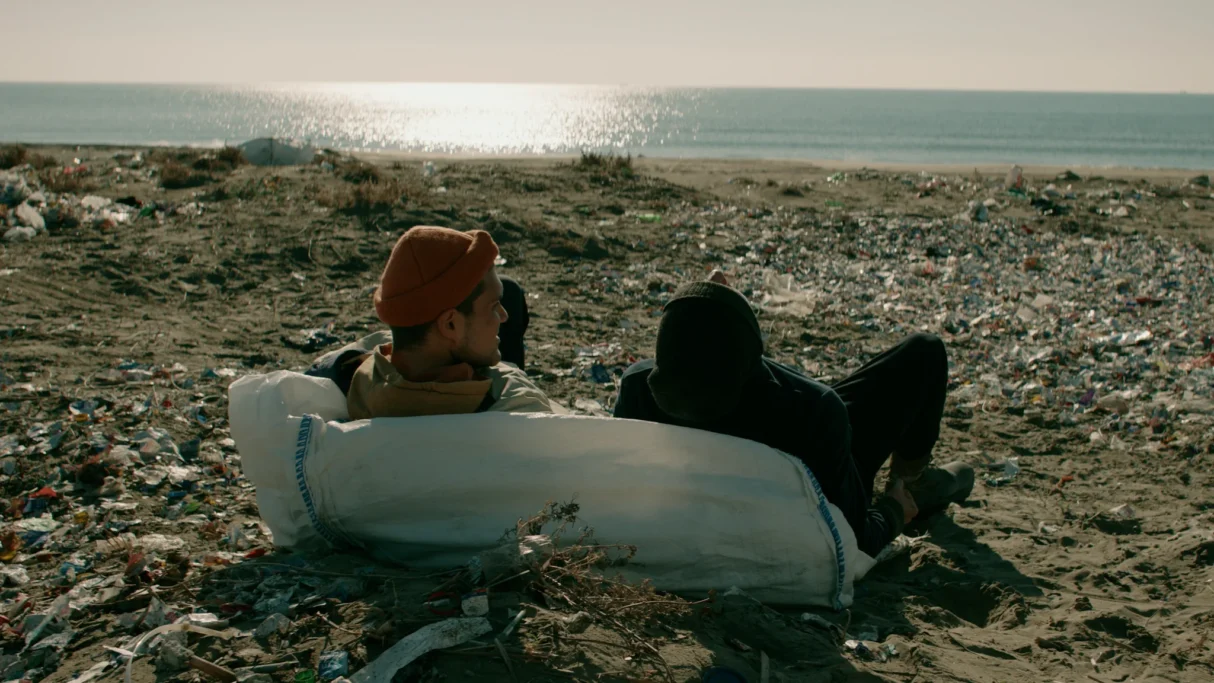
To be honest, Dead Dogs Don’t Bite approaches a social issue from a very class-conscious perspective. İsmet and Dogo are trapped in desperation, trying to climb the social ladder and finding a way out by gravitating towards crime. The line “Filth flows downwards, money flows upwards” sums up the film. Was this system critique something you specifically wanted to address?
Of course. In fact, the film and series Gomorrah, adapted from the book by Italian journalist Roberto Saviano, served as a reference for me. That film and series portray the workings of the system brilliantly. By the way, as someone who loves crime cinema, I didn’t like Gomorrah at all when I first watched the film. However, as I began to understand director Matteo Garrone’s perspective, it became one of the cornerstones of my approach to cinema.
By the way, you know that the mafia went after Roberto Saviano after his book was published. He has had a very extraordinary life, living under death threats and armed protection.
Yes, I know. It portrays the system in which filth flows downwards and money flows upwards from the inside, in the clearest possible way. At the same time, I wanted to tell a story through the people affected by this system. We observed the people exposed to harsh working conditions at the recycling facilities in the film, visited the locations and listened to the guidance of our concept consultants. That was how we came to understand the psychology and desires of İsmet and Dogo.
How did you develop the visual language? The use of locations in the film is also striking. It has a role in complementing the story being told.
I am very happy to receive such feedback about the use of locations and the film’s atmosphere. Thank you. The first spark of the story came when I saw the amusement park on the Karataş coast. The moment I saw that amusement park, I had neither the issue of waste nor the screenplay in mind. I simply saw İsmet and Dogo start walking before my eyes. At the amusement park, there was also a girl with an unusual appearance selling tickets. A whole world came to life in my mind.
That is why the use of locations became the triggering point of this film. I was also excited about bringing this to the screen. At the same time, we needed to design these landscapes as part of a dark world. Together with our cinematographer, Mustafa Yeşilova, we explored different locations, and I made use of the advantage of living here, particularly when it came to being in the right place at the right time and working with light.
Technically, Mustafa and I also prepared specifically with the films we had taken as references and the works of directors known for their use of locations. We worked very carefully on both camera movements and mise-en-scène. That is why such feedback makes me very happy.
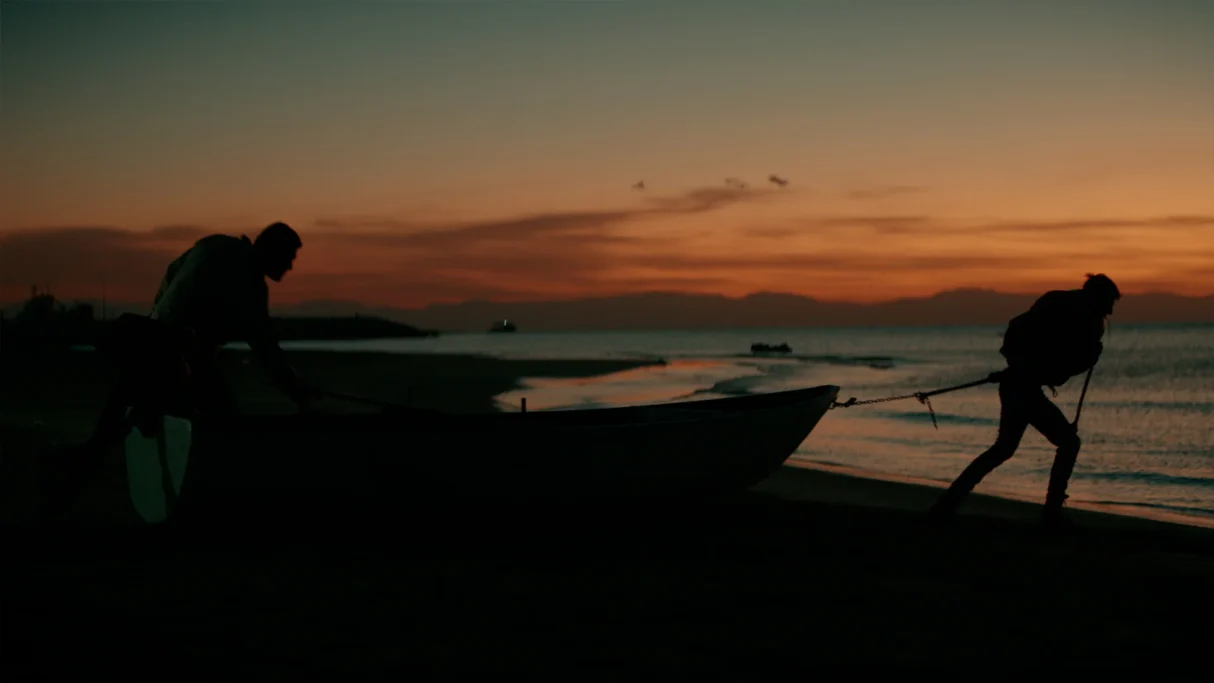
On the one hand, Dead Dogs Don’t Bite also tells a story that moves from the local to the universal. I think this is one of the film’s strengths. The film is rooted in these lands, but the direction its story takes is one that could attract international interest as well. Did you have such thoughts in mind while writing the screenplay?
Actually, you sense that. After all, the international waste system reaches all the way here, and this has a very real potential. However, I did not tell this story because I thought it might attract interest on an international scale. This is a serious issue concerning Adana, and there are many people suffering because of it. It was a story I needed to tell because I love Adana so much.
At the same time, I associate this issue with Yaşar Kemal’s approach to these lands. Yaşar Kemal wrote epics about these lands, these mountains and these people. I was born here and grew up here, too. I draw inspiration from the stories here. That is why this screenplay emerged from the love I carry within me; it was something I had to tell.
This waste issue continues to grow. We have become Europe’s plastic dumping ground. The people living in these areas are the ones who suffer the consequences the most. Unfortunately, the subject of the film seems likely to remain relevant. What would you like to say about this?
Unfortunately… I hope serious measures will be taken in the coming years and bans on plastic waste imports will be introduced. Unfortunately, we are the country that imports the largest amount of plastic waste from the United Kingdom and the European Union. For this reason, we must make our stance on this issue known in the strongest possible terms. This is a reality that is destroying our land, our nature and our people; we cannot escape it.