



Global gaming industry investment reached $18.5 billion in the third quarter of 2026, more than 3.6 times the previous quarter’s total, despite a sharp decline in deal activity. According to a new report from Ampere Analysis published on November 12, the increase was largely driven by Nvidia’s proposed acquisition of AI technology company Hugging Face.
Ampere recorded 96 investment deals during the quarter, a 45% decrease compared with Q2 2026. However, the combined value of transactions rose to $18.5 billion, with the Nvidia-Hugging Face agreement accounting for approximately 70% of the total.
Why Did Gaming Industry Investment Reach $18.5 Billion?
The significant increase in deal value was primarily driven by Nvidia’s agreement to acquire Hugging Face. Announced in September, the proposed transaction is valued at approximately $12.93 billion and represents a major investment in the artificial intelligence ecosystem.
The deal demonstrates how large-scale technology transactions can influence investment figures across the wider gaming industry. Although Hugging Face is an AI platform rather than a traditional gaming company, its inclusion in Ampere’s analysis reflects the growing overlap between gaming, artificial intelligence and advanced computing technologies.
What Do the Q3 2026 Gaming Investment Figures Reveal?
The contrast between the total value of deals and the number of transactions points to a market increasingly shaped by a small number of high-value agreements. While investment spending increased substantially, the 45% drop in deal volume suggests that the quarter did not experience a broad-based rise in investment activity.
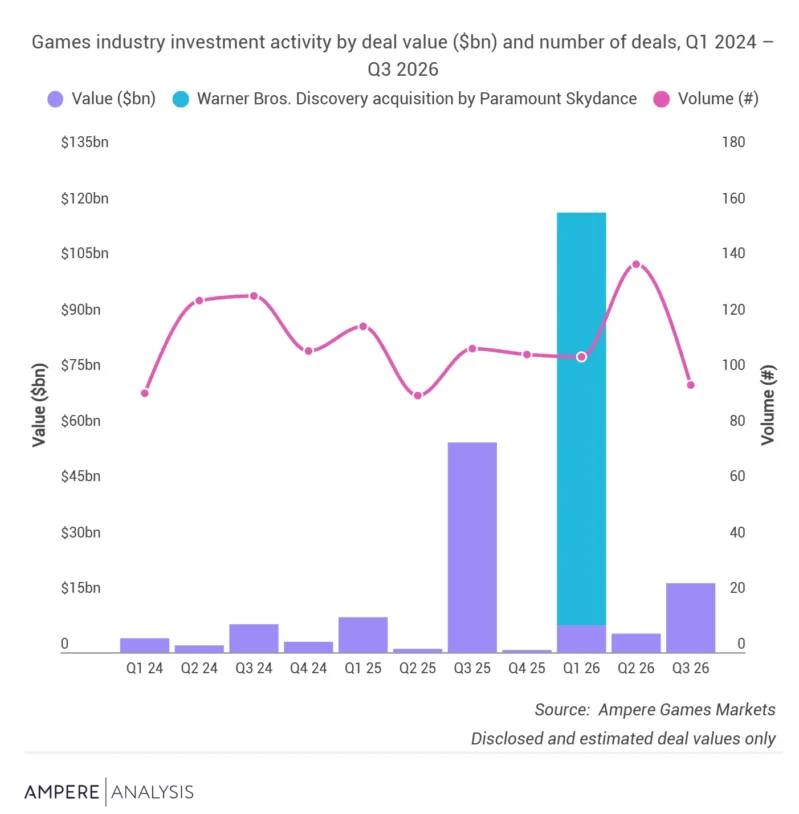
For gaming companies, developers and investors, the figures underline the importance of looking beyond headline investment totals. Major acquisitions can significantly alter quarterly results, while the number of deals offers a different perspective on the level of activity across the market.
Ampere Analysis’ findings highlight the growing influence of AI-related transactions on the wider gaming investment landscape, even as overall deal activity slows.