






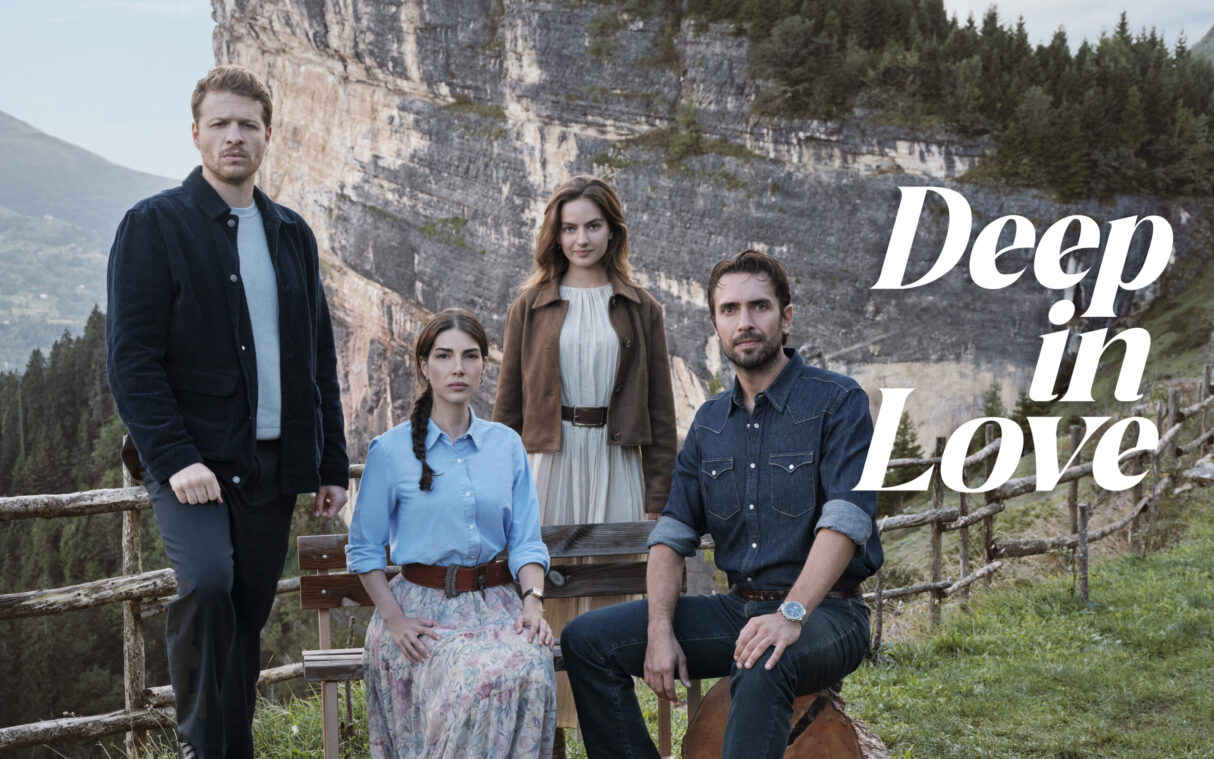
Deep in Love premiered in October in Türkiye and has been continuing its run with strong ratings. Starring Deniz Baysal and Ulaş Tuna Astepe, the series draws viewers in with its emotional depth and Black Sea atmosphere. We sat down with its director, Çağrı Bayrak, creators, Ayşe Ferda Eryılmaz and Nehir Erdem, and leading stars, Aytek Şayan, Erdem Şanlı, Zeynep Atılgan, and Onur Dilber to talk about the story’s emotional journey and what makes Deep in Love connect with audiences around the world.
“Everyone really embraced their character and the geography they live in. We became a team of people who follow Trabzon games, who recognize regional dishes, who try to internalize the culture. It’s like we’ve all left Trabzon at some point and came back years later. The places, the mansions are familiar to us, it’s like we are in that world. That is something that should happen and I think we really succeed in making it happen.”
You are playing Gezep in Deep in Love. Gezep is a bit of a wild character… There is nothing he wouldn’t risk for his family. We’d like to hear about Gezep from you.
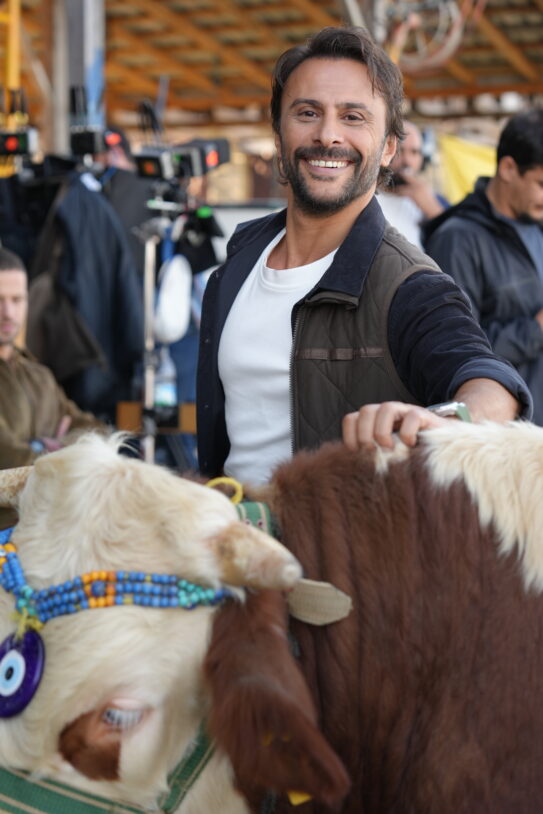
Onur Dilber: Yes, Gezep is wild. There is nothing he wouldn’t do for his family; he is reckless, he is a loose cannon. For me, the best part about playing Gezep is that he isn’t limited to these characteristics, he is written in a much more layered way. I’m really happy that our screenwriters developed this character so deeply.
Gezep’s recklessness, how he sometimes gets crazy or even descends into madness; it’s all related to the sense of unworthiness he carries from his past or some other events that could be traumatic. Every actor would love to play a character with such a background, a character that is so layered. The depth of Gezep as a character really makes me happy.
I can also say this: Gezep can really surprise the audience. Because you can’t predict what he is going to do. When we think, “Oh, he is definitely going to kill someone,” he acts in a way we don’t expect or when we believe, “He won’t react to this,” he can react pretty destructively. I think the unpredictable nature of the character makes him so watchable and such a joy to play.
The audience really liked Gezep even though he did very harsh and violent things. Why do you think this is?
Onur Dilber: Yes, Gezep is violent. I’m glad he is loved despite it. I think it’s because Gezep’s violent tendencies are not without reason or logic. His violent actions are driven by his sense of justice and loyalty to what he believes is right. He is also very emotional.
I think an emotional character with a strong heart doing harsh and violent things creates a sense of relief for the audience. Our writers have given the character room to breathe through their writing. And I am trying to bring a more epic quality to Gezep, which I believe contributes to the character being loved.
Especially in fight scenes, I try to make it more fun by using more epic elements. I want to make the audience feel this is a “game.” I am building a game inside a game. One of the reasons I do that is because of the children. I know they too watch the show and like the character. That’s why, for example in torture scenes I try to establish a more stylized and fun tone with phrases such as “dat dat wrong answer.” I want the audience to feel that we’re not actually removing someone’s nails, but they’re watching a performance.
The characters are well suited to this tone. That’s why I think Gezep is loved so much.

Gezep seems to have a broken love story he carries from the past, we understand that a bit more as episodes pass. Do you think Gezep’s trial will be with love in the upcoming episodes?
Onur Dilber: Gezep has a past love story and this really feeds into today. Eleni’s arrival after twenty years, takes the tension between Furtunas and Koçaris to a whole new level. This story forces Gezep to face his past lover.
But I don’t think his only trial will be with love. He has very sharp edges and people like him are generally tried with a lot of things in life. I think Gezep will struggle with love, friendship, familial relationships and even himself. Honestly, I am looking forward to the script myself.
What did you feel when you first read Deep in Love? What affected you the most when you read about Gezep, the general story and other characters? How did you prepare to play Gezep?
Onur Dilber: When I first read the script, actually even before then, I got very excited. Because I knew our writers and their style very well. Reading a script by them was by itself a reason to get excited.
After reading, I was most impressed with Gezep’s character analysis. I was really curious about what is going to happen to him, where will his story lead. This curiosity made me want to not just watch, but play the character. I wanted to be Gezep in a sense. That’s why it was a very exciting process for me.
Other characters were not copies of one another, they were very open to conflict. What will happen to Oruç, to Sevcan’s story, to Adil’s journey… I started wondering about it all. That shows how good the script is. Because there really is a big and well-established world there. Every character is carefully developed. The curiosity remains as the story progresses.
When you get ready for a role, you don’t actually start from zero. Your life, your experiences, they are preparations for the characters you’re going to play. My connection to Trabzon, the fact that I grew up there and met people like Gezep, was my biggest advantage when preparing for the role.
Apart from this, until we got on set I internalized and reflected deeply on Gezep. When I am getting ready for a character, I don’t do two-hour work on a table. After reading a character, I live and breathe them. That’s how I prepared for Gezep.
When we get on set, the character continues to develop. Relationships with other actors, on-set dynamics reshape the character. Gezep never gets to the point where I say, “Okay, this is it.” Because the character keeps developing and you keep living with them. That’s why I continuously recreate Gezep through the script and on-set relationships.
The series is filmed in Trabzon, which contributes a lot to the story visually. How did you find Trabzon? What do you think being in a different city together with the entire team adds to the story? What can you tell us about the set?
We were very lucky to shoot in Trabzon. It offers a visual world that is unlike most of Türkiye and the world to the audience. I sometimes watch series on mute, just looking at the screen. The scenes in ‘Deep in Love,’ are shot in a geography many people would like to see and have probably never visited. That really increases the viewing enjoyment.
Of course, it is difficult to work in a different city; we’re away from our social life, our friends. But it has its advantages as well. We have an environment where we need each other more. This leads to stronger bonds. It is almost like a conservatory experience; we learn together, we produce together.
This unity reflects on the work as well. We watch the series together, we talk about the characters together, we have fun and get emotional together. This produces a warmer, more intimate work. Being set in such a strong geography as Trabzon even more positively affects the job.
Everyone really embraced their character and the geography they live in. We became a team of people who follow Trabzon games, who recognize regional dishes, who try to internalize the culture. It’s like we’ve all left Trabzon at some point and came back years later. The places, the mansions are familiar to us, it’s like we are in that world. That is something that should happen and I think we really succeed in making it happen.
We’re interviewing you for our Content Americas issue, the series’ international journey began quickly. With which qualities do you think Deep in Love will affect viewers from different cultures the most?
International sales are happening and the fact that the series will be watched in different countries makes me so happy. This feels like we created a universal thing.
The viewers abroad are going to see somewhere very different from what they imagine when they think of Türkiye. Central Anatolia, Black Sea, East Anatolia, all so different from one another. They all have their own culture. Our series shows a side of that richness that wasn’t seen a lot before.
I think the viewers will say, “Oh, is there somewhere like this in Türkiye?” while the people who know here are going to think, “I’m glad this series exists and we can see this.” Geography is very impressive, but we are also going to see how strong the family bonds are in this series. Family is extremely important in the Black Sea region; conflicts in the series actually feed upon this protectiveness. Under all fights, there is a desire for peace.
That’s why I believe Deep in Love will resonate deeply with international audiences, particularly through its striking geography and strong sense of family.