




A new industry report suggests that vertical series have rapidly evolved from a niche content format into one of the fastest-growing segments of the global entertainment business.
Published by Holywater Tech and Owl & Co, The State of Microdrama 2026 attributes the format’s expansion to shifting audience demographics, broader storytelling across multiple genres, and the increasing use of AI-powered production.
According to the report, the global vertical video economy, excluding China, is expected to generate $150 billion in revenue in 2026, marking a 41% year-over-year increase. Dedicated vertical series platforms alone are projected to account for approximately $4 billion of that total, underscoring the growing commercial potential of the format.
The study also points to a major shift in audience composition. Once regarded primarily as content for female viewers, vertical series are now attracting a significantly broader demographic. Male viewership has surged over the past seven quarters, while audiences aged 22 to 27 have become one of the format’s fastest-growing groups. Researchers say the trend reflects the industry’s move beyond romance, with genres such as drama, comedy, science fiction and fantasy drawing increasing attention.
Viewer habits are evolving alongside the content. Most users now watch vertical series during the evening, with 70% saying they stream episodes in bed before sleeping and 59% watching from the couch. Heavy users spend an average of 13.1 hours per week on the format, a sharp increase from just five months earlier.
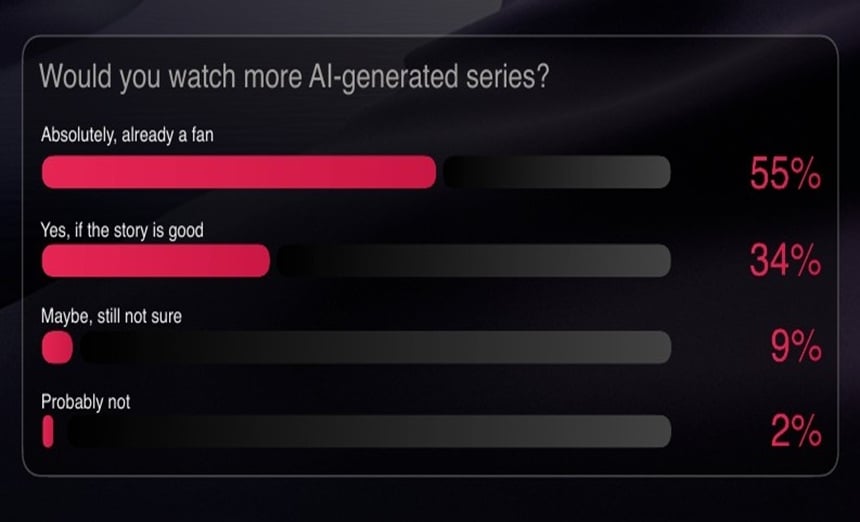
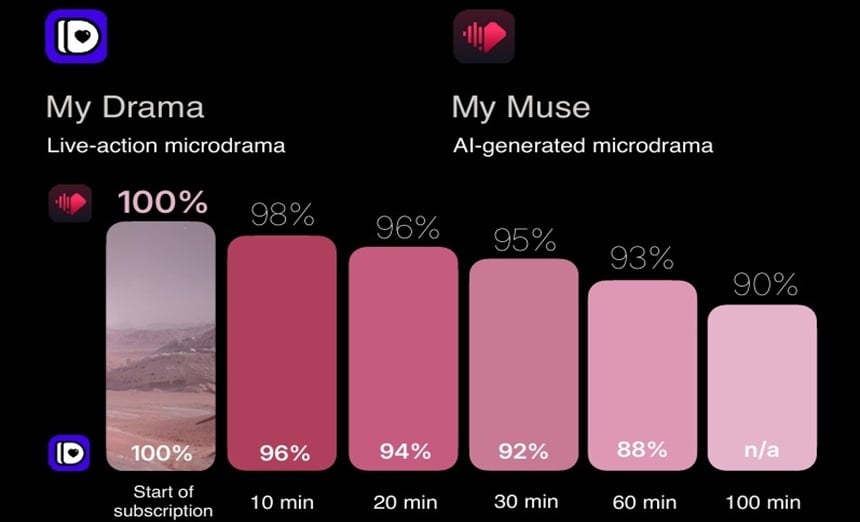
Artificial intelligence is also emerging as a key driver of the industry’s growth. On Holywater Tech’s AI-assisted platform My Muse, nearly nine in ten users said they would like to see more AI-generated stories. The report found that AI-produced series deliver subscriber conversion and audience retention rates comparable to traditionally produced content, suggesting that AI-supported storytelling is becoming commercially viable.
Based on the findings, Holywater Tech argues that the industry has outgrown the term “microdrama.” As content expands across a wider range of genres and production models, the company believes “vertical series” more accurately reflects the format’s future, with younger audiences, AI-enabled production and diversified programming expected to fuel its next stage of global growth.