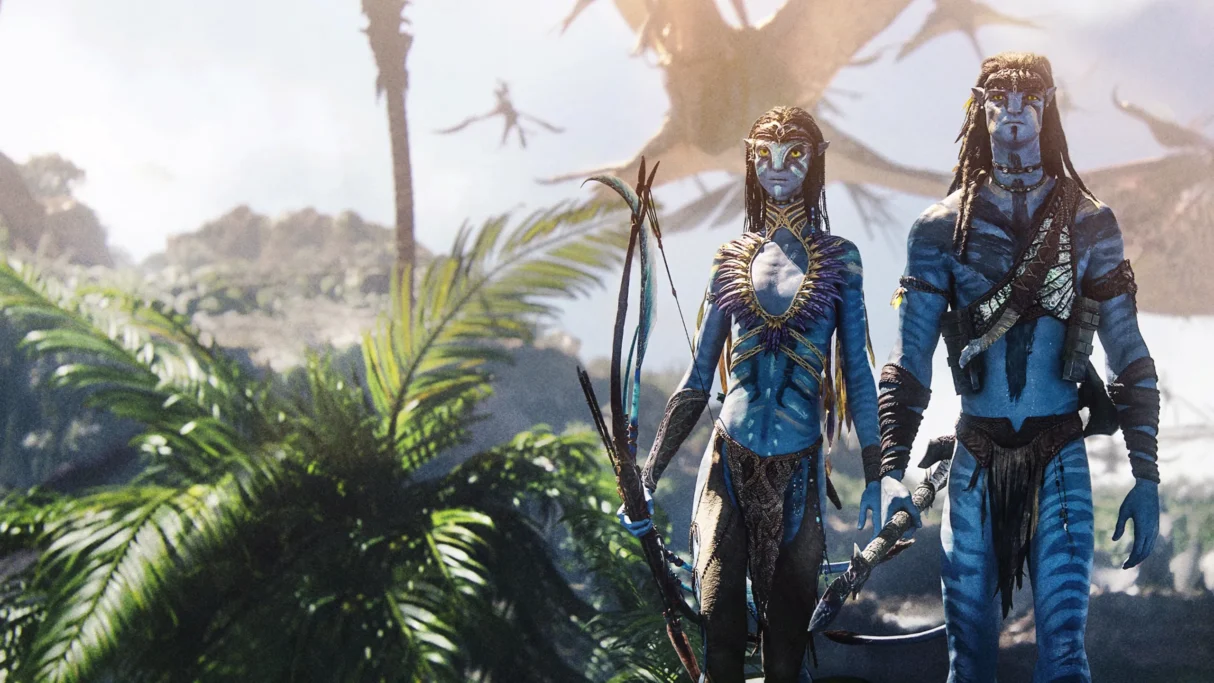





In the June issue of Episode Magazine, Juju reviews Avatar: Fire and Ash, which is now on Disney+.
Building one of the biggest universes in the cinema world step-by-step for over sixteen years, James Cameron introduces the audience to a side of Pandora we have never seen before with Fire and Ash, the third installment of the Avatar series. This time, at the center of the story, there is no exploration, fascination, or new worlds; instead, there is grief, anger, and transformation. As this colorful and fascinating universe created by Cameron confronts such harsh and fragile emotions for the first time, it brings Pandora to a grayer tone. Furthermore, while the Na’vi have been flawlessly glorified until now, they are now becoming “humanized” in the eyes of the audience.
The first film of the series carried the excitement of discovering the magic of Pandora. The conflict between humanity’s search for resources and the bond the Na’vi people established with nature was described with very clear lines, and the audience suddenly found themselves inside a visually unprecedented world. Avatar stood out not only as a science fiction film but also as a powerful allegory on the relationship between nature and humans.
The second film, Avatar: The Way of Water, turned its focus to the concept of family. The story, progressing through the Sully family’s struggle for survival, strengthened the emotional side of the series while introducing Pandora’s oceans and new Na’vi communities. Although visually mesmerizing, the second film largely followed the thematic line of the first film and moved through safe waters.
Right at this point, Fire and Ash stands out as the film that changes the direction of the series. Cameron does not present Pandora as a world where only beauty and harmony reign this time. With the inclusion of the Fire Clan, who live in volcanic regions, into the story, the differences, conflicts, and ideological separations within the Na’vi society become visible. Thus, the moral structure of the series is moved to a more complex ground compared to the previous films.
The strongest aspect of the film emerges here. Pandora is no longer just a fascinating background; it gives the feeling of a living world where different beliefs, resentments, and power struggles take place. Especially the ways the Sully family copes with grief after the losses they experienced give the story an emotional depth that we rarely encountered in previous films.
When we met the series, Pandora and the Na’vi people became a reflection of the ideal world Cameron dreamed of for humanity from day one. However, the idealized people of Pandora confront us with their human weaknesses this time.
From a visual standpoint, Cameron manages to push his own standards once again. The first film was etched into memories with its forests, and the second film with its oceans; the third film reveals a completely different face of Pandora with its volcanic landscapes, ash-covered geography, and an atmosphere shaped by fire. The greatest success of the series lies right here: even though we return to the same world in each film, we feel completely in a new place.
Nevertheless, the film is not perfect. Action sequences that drag out from time to time and some story branches that lay the groundwork for sequels lower the tempo of the narrative occasionally. In the end, it seems like Cameron continues to constantly apply a mathematics that works. However, these shortcomings are not enough to overshadow the emotional weight the film tries to create.
In conclusion, Avatar: Fire and Ash can be evaluated as the darkest, most mature, and even the boldest installment of the series so far. If the first film describes exploration and the second film describes belonging, the third film describes loss and a crisis of faith. Cameron transforms Pandora from being a fascinating planet into a living civilization that possesses its own internal conflicts. It might not be the most enchanting Avatar film, but it is definitely the most thought-provoking one. Avatar: Fire and Ash is now streaming on Disney+.