



In the June issue of Episode Magazine, Oben Budak shares what he saw on the set of House of the Dragon and presents his interviews.
An epic experience on a scale you won’t easily see anywhere else, or even in cinema most of the time: I had the opportunity to visit the set of HBO’s House of the Dragon and interview the actors and director. As the series brings one of the bloodiest naval battles in television history to the audience with its highly anticipated third season, pull up a comfortable chair to read this article, where you can get the latest information about the filming and the dragons.
After talking to dozens of people working for the production, I understood better that it wasn’t only the battle scenes that were impressive. The characters’ internal conflicts, the decisions they make, and the transformations they undergo are just as much a part of a massive story as the dragons.
I must confess; when I was invited to the set last July to watch the filming of this story, the biggest reason for my excitement was the dragons. They are my favorite characters in this universe. Of course, I knew they were created with computer effects, but still, seeing the areas where the filming took place was going to be an experience in itself. Frankly, since I thought most of the shots were filmed in front of a blue screen, I had kept my expectations somewhat in check.
In those first minutes when we entered Warner Bros. Studios located in Watford near London, I encountered a huge surprise. A significant part of the worlds I thought were completely digital had actually been built. We were walking inside what looked like a small English village, and Westeros was rising right in front of us. Right at the entrance of the studio, we were welcomed by the series’ award-winning production designer, Gavin Bocquet, who began to explain how this world was established.
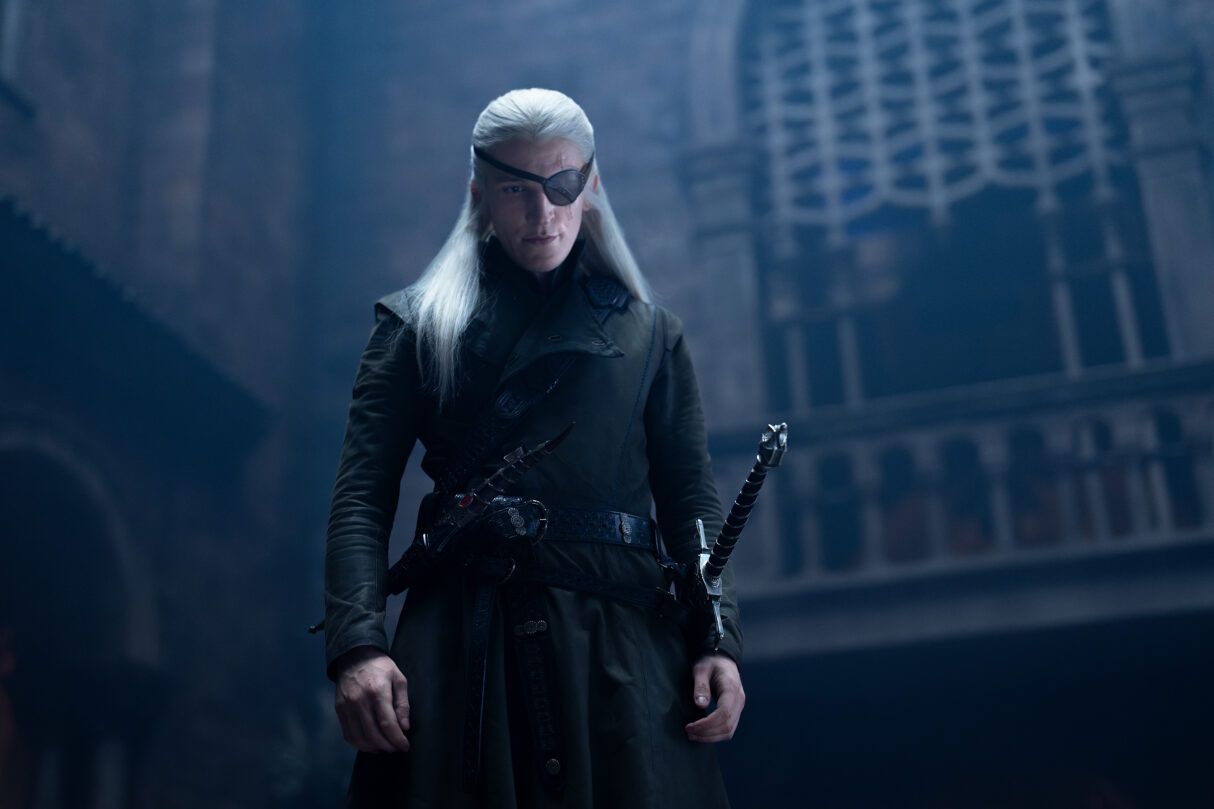
When the conversation started, we were in a massive city square. According to Bocquet, building such a magnificent square from scratch was both incredibly costly and a task that would occupy almost the entirety of the studio. Therefore, the crew followed a clever method; they only built specific parts of the square, while the rest was completed with visual effects. However, it didn’t end there.
To maintain believability as the camera approached, many areas created digitally were actually built for subsequent shoots! In short, you suddenly found yourself walking between hundred-year-old stone buildings and narrow streets. During the tour, where taking photographs was forbidden, my hand constantly went to my phone. I would have loved to share the things I saw, but I didn’t have permission to do so.
Journalists coming from all over the world were at least as surprised as I was. In fact, when we learned that even the maintenance of the approximately 150-year-old olive trees planted in the square was undertaken by the production crew, we looked at each other in amazement. At that moment, it felt less like a set and more like walking inside a living city.
The tense, intrigue-laden atmosphere in King’s Landing and the palace scenes was not created by coincidence either. Bocquet explained that in the design, they drew inspiration particularly from English court life during the reign of Henry VIII, the paranoia of the era, and the political climate where everyone watched one another.
Moving away from classic medieval English architecture, which is predominantly wood-based, they had established a unique structural language inspired by European castles, blending medieval and Renaissance influences. The aim was to create a world so believable that the audience would say “this could truly exist.” Walking through those massive corridors and climbing the monumental stairs, I truly felt like an inhabitant of the palace.
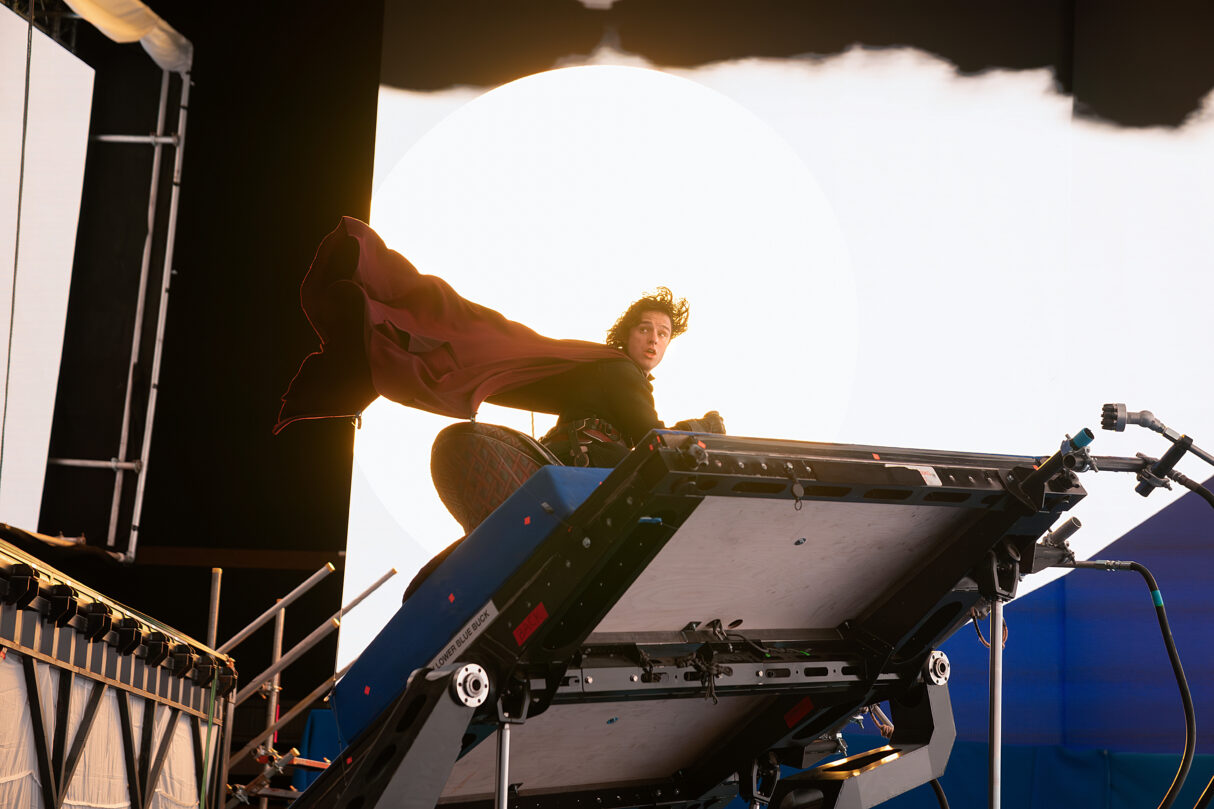
One of the most entertaining stories shared during the set tour was about director Miguel Sapochnik. In order to see the entirety of the massive sets at the same time and make plans, the director got onto a mechanical scissor lift used on set that moves up and down, and had himself raised up alone.
Putting on his headphones and completely severing his connection with the noise of the set, he observed below. Standing alone on this platform suspended in the air, turning left and right, making fervent movements with his hands and arms as he imagined the scenes, the angles, or where the dragons would fly from, looked funny from below, yet this situation was etched into the set’s memory as a characteristic moment of “creative madness.”
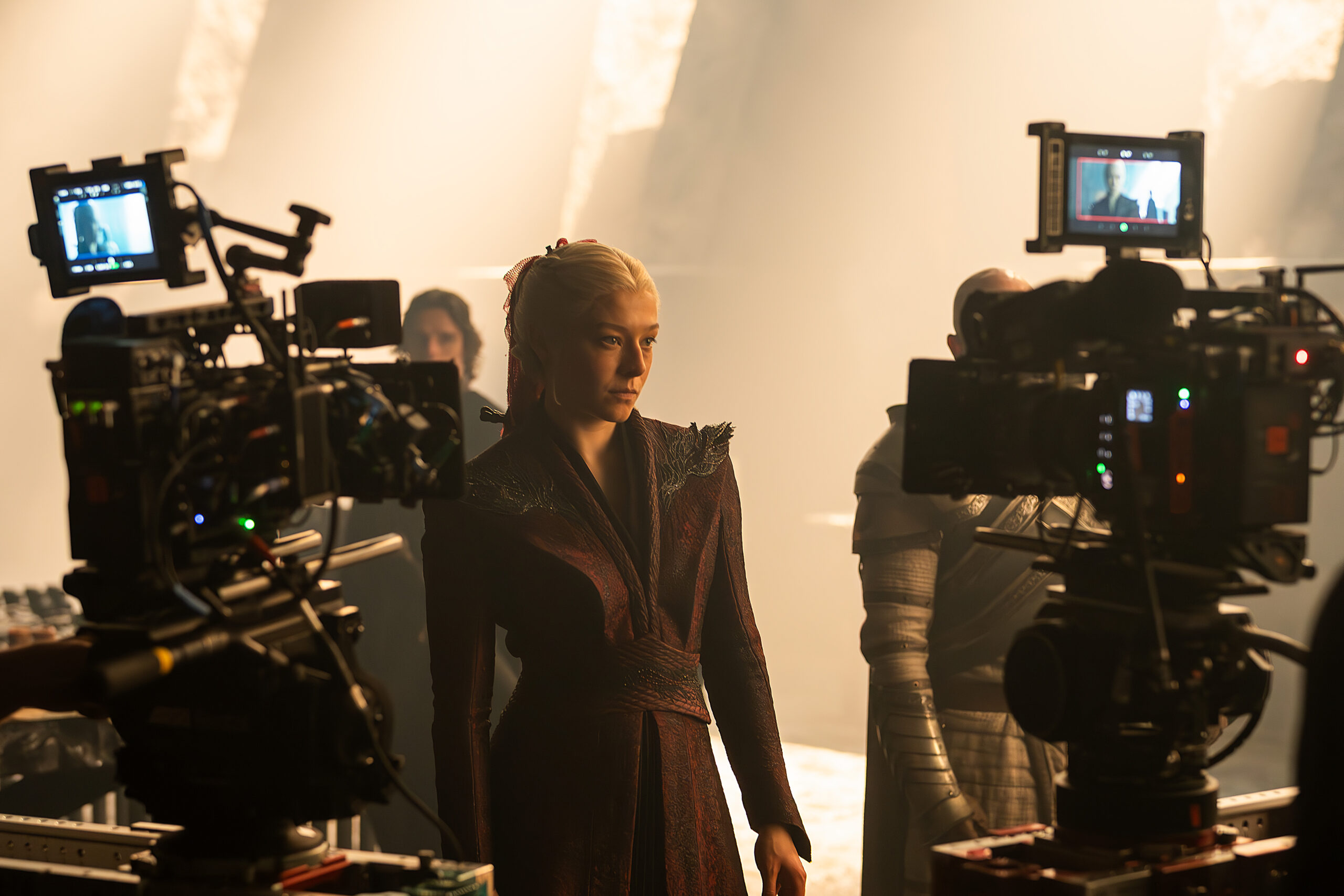
Our tour was not limited to this. While moving to another area to watch the big naval battle sequence in the first episode of the new season, a familiar street caught my attention the moment I turned my head to the left. Although it was my first time coming to Watford, it felt as though I had seen this view before. Then the penny dropped: we were on the grounds of Warner Bros. Studios, and the place I saw in the distance was none other than Privet Drive from the Harry Potter films. At that moment, the line between reality and fiction began to blur completely.
Taking a typical English snack in my hand, I entered the tent where the battle scene would be shown. On the screens set up for journalists, we could see both the filming area and the scenes planned to be shot in a draft format. Not long after, actor Abubakar Salim arrived. For someone who was about to participate in the filming of one of the largest battle sequences in television history, he was surprisingly calm. We asked him how he prepared for such a massive scene.
“I think the best part,” he began, “is that the stunt team, the director, and the whole crew prepare you up to the best point you can reach. There is a controlled chaos out there.”
He was smiling as he explained how much he enjoyed working with the stunt team. “Everything looks very brutal on screen, but during filming, when your sword accidentally touches someone, a few ‘Sorry!’s definitely slide in. Actually, the point isn’t about playing the hero, it’s about being part of a big team that trusts one another.”
While preparing for his role, he had learned many details about seafaring; he received training on many subjects from directional terms like starboard and port to sailors’ knots, speed calculations to seafaring jargon. “Learning all of this was really cool,” he said.
So, what kind of Alyn will we watch in the new season? “I think people change after such big events. Alyn will change too. This season we will see a much more human side of him. Alongside his soldier identity, that young, fragile side still living inside him will become more visible.”
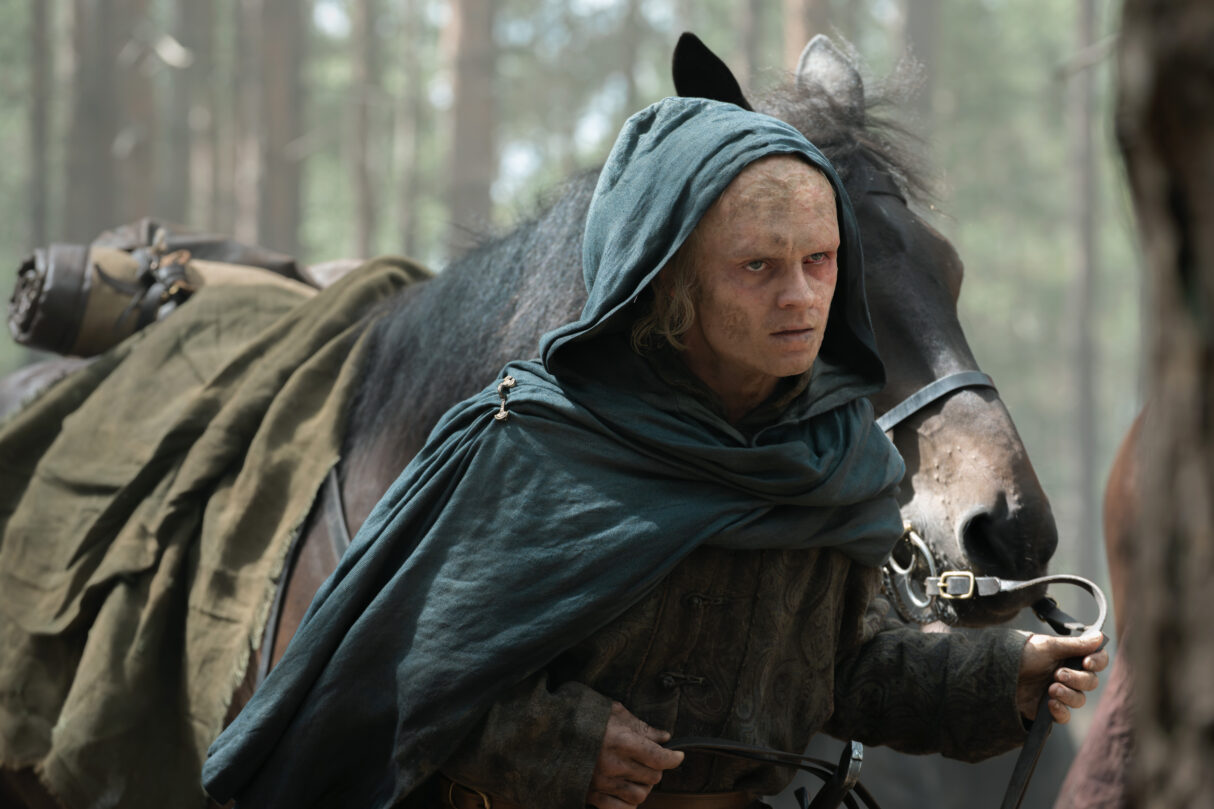
In fact, a part of that childlike excitement existed in Salim himself. “If someone had told me when I was a kid that one day I would earn money by killing pirates, I would probably have burst out laughing,” he said.
Listening to him, I realized that the filming gave the feel of a massive playground rather than a giant television production. He was of the same opinion: “On these kinds of sets, you realize how much fun you can have. When the environment is safe and enjoyable, Steve, Abigail, and everyone else share the same energy. I guess that’s why such a grand visual feast comes out. After all, what we do is a game. We are all playing pirates and believe me, it is truly a lot of fun.”
FROM TITANIC TO WESTEROS: BEHIND THE SCENES OF HOUSE OF THE DRAGON‘S GIANT NAVAL BATTLE WITH MALCOLM SMITH
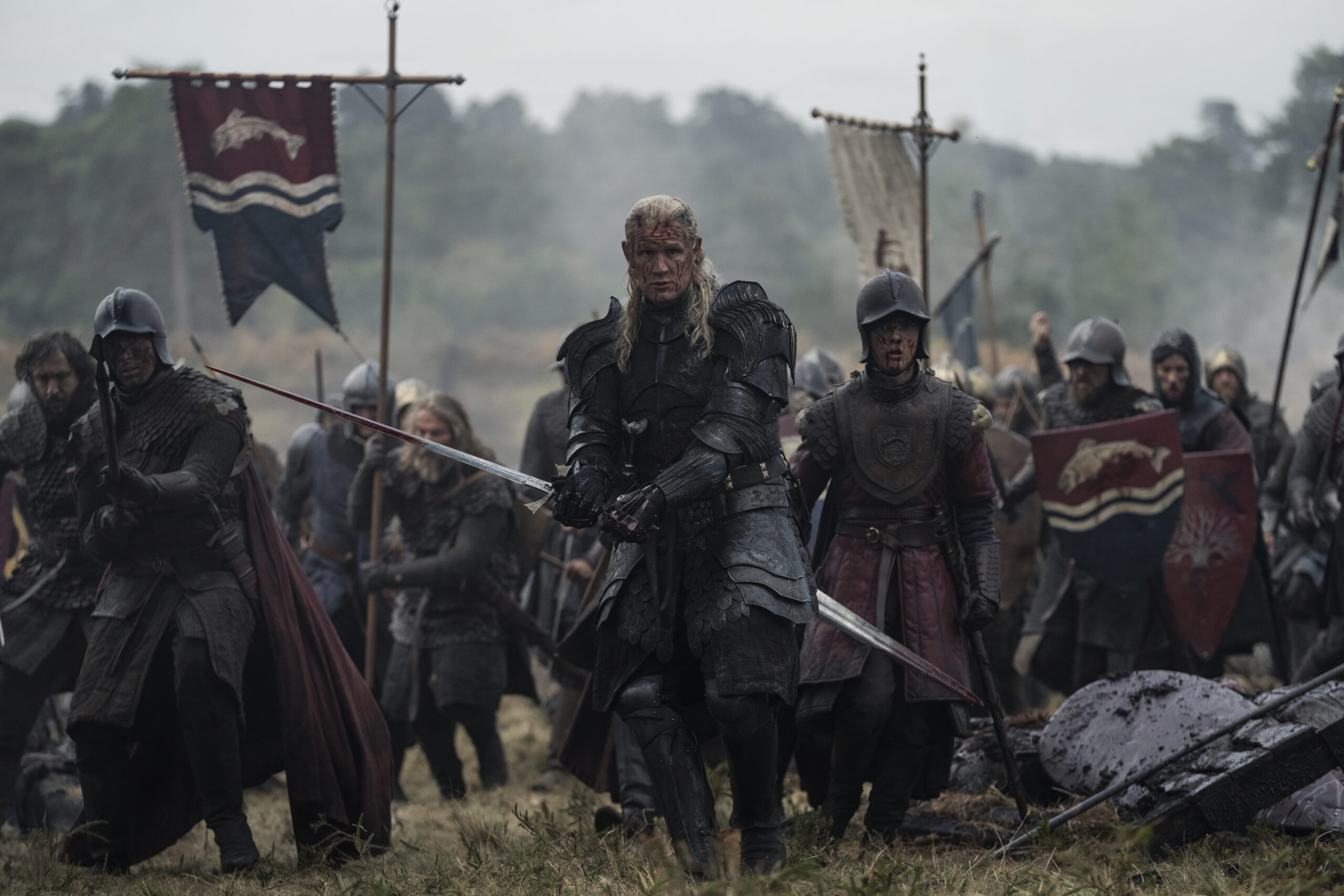
Producer Malcolm Smith, who has worked on unforgettable productions like Titanic, Braveheart, and Saving Private Ryan, and is now one of the key figures of the House of the Dragon crew, explained how the giant naval battle in the new season was brought to life. Real ships, giant water tanks, mechanical systems, and the goal of using as little CGI as possible… The emerging picture resembled a giant engineering project built for television.
In groups of four, we were taken to the area containing the giant tank where the Battle of the Gullet was filmed. At first glance, it was difficult for a human to perceive the scale. Filming was continuing inside the tank, which was large enough to fit two large gulets at the same time. Giant mechanical cannons hidden under the water rose and fell rapidly at certain intervals, creating artificial waves and rocking the ships as if they were in a real storm.
This complex mechanism was designed by John Richardson, one of the legendary names of the special effects world. Richardson, who worked as a Special Effects Supervisor on countless cult productions such as Aliens, the Harry Potter series, and James Bond films, made his experience felt here too. The five parallel moving platforms (gimbals) weighing approximately 18 tons, which the set crew affectionately referred to among themselves as “our children,” were engineering marvels specially developed to rock the ships in the naval battle scenes.
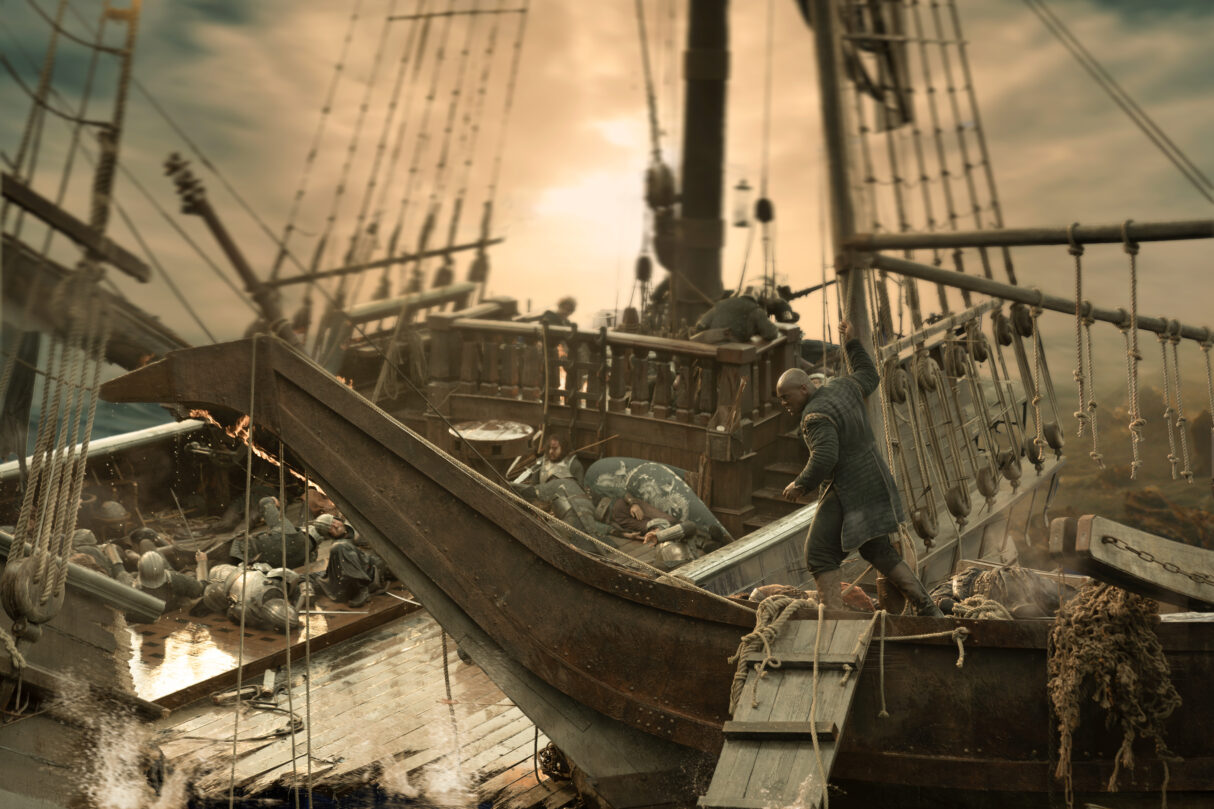
Westeros warriors were truly standing in front of me. The meters-high blue screen panels surrounding the ships hid the unfinished part of the world before my eyes. After a while, when we returned to the tent and watched the previews on the monitors, our astonishment increased even more as we saw how these gaps were filled with computer effects.
Listening to the technical details from Malcolm Smith was a completely different experience. While we were all under the influence of the footage we had just watched, our first question was inevitably how they prepared for this giant battle scene. Smith’s answer came without hesitation: “In a sense, I had a cheating advantage. Because I worked on Titanic.”
He then continued his words: “I learned a lot from James Cameron and our crew there. I had personally supervised the installation of the giant water tank used in Titanic and the construction of the ship. I gained serious experience regarding the sinking of ships and scenes involving water. Therefore, preparing for this project was easier for me.”
Preparations had begun months in advance. First, draft drawings were made, and then the dry and wet tanks we saw on set were built. Moreover, these were not general-purpose pools; they were custom structures designed entirely for this sequence, keeping in mind the camera angles and movements the director would need. Smith did not neglect to make a joke: “If they had asked me to prepare a ballet performance, we would be in big trouble.”
According to Smith, action scenes of this scale were not a element of pure showmanship on their own. The main goal was to grow the character-driven story and make the plot more impactful. “If you are telling a big story, you need a big canvas,” he said. He believed that the sequences where Daemon Targaryen led his armies, the naval battles, and the moments where the Velaryon fleet came face-to-face supported the characters’ journeys and gave a grand scale to the story.”
Of course, the conversation eventually turned to the topic everyone was most curious about: Dragons. Would we see new dragons or different abilities in the new season? Smith smiled and gave a brief but noteworthy answer: “The only thing I can tell you is… Yes, there are new dragons. But that’s all the information you can get.”
Following the laughter in the room, we asked whether the unforgettable battle scenes of Game of Thrones created any pressure on them. This time he answered at greater length: “Of course we feel that legacy. After all, it was the pioneer of everything. But I come from a cinema background; I worked on battle movies like Braveheart and Saving Private Ryan. We carry those experiences here. In such projects, the primary goal is always to go above what was done before. Whether you succeed or fail, that is your professional goal.”
The most striking point was that they preferred to work with real people as much as possible in battle scenes: “We all know dragons are digital; that’s inevitable. But we use more real actors and stunt performers in battlefields instead of computer-generated crowds. We believe we can capture the scale and the feeling this way. We are aware of unforgettable episodes like ‘Battle of the Bastards,’ but they were filmed over a decade ago now. Our job is to constantly improve.”
STEVE TOUSSAINT: “WE LIVED IN THE WATER FOR 27 DAYS, BUT IT WAS WORTH IT”
The new season opens with the Battle of the Gullet, which is shown as one of the largest naval battles in television history. One of the central names in this massive episode is Lord Corlys Velaryon, the legendary sailor of Westeros. When we came together on set with Steve Toussaint, who gives life to the character, we were impressed not only by the grandeur of the battle but also by the preparation process that made it possible.
According to the actor, the first two seasons were actually designed to prepare for this moment. “In the first season we got to know the characters, and in the second season everyone did their best to prevent the war. But now all paths have been tried and war has become inevitable,” he began his words.
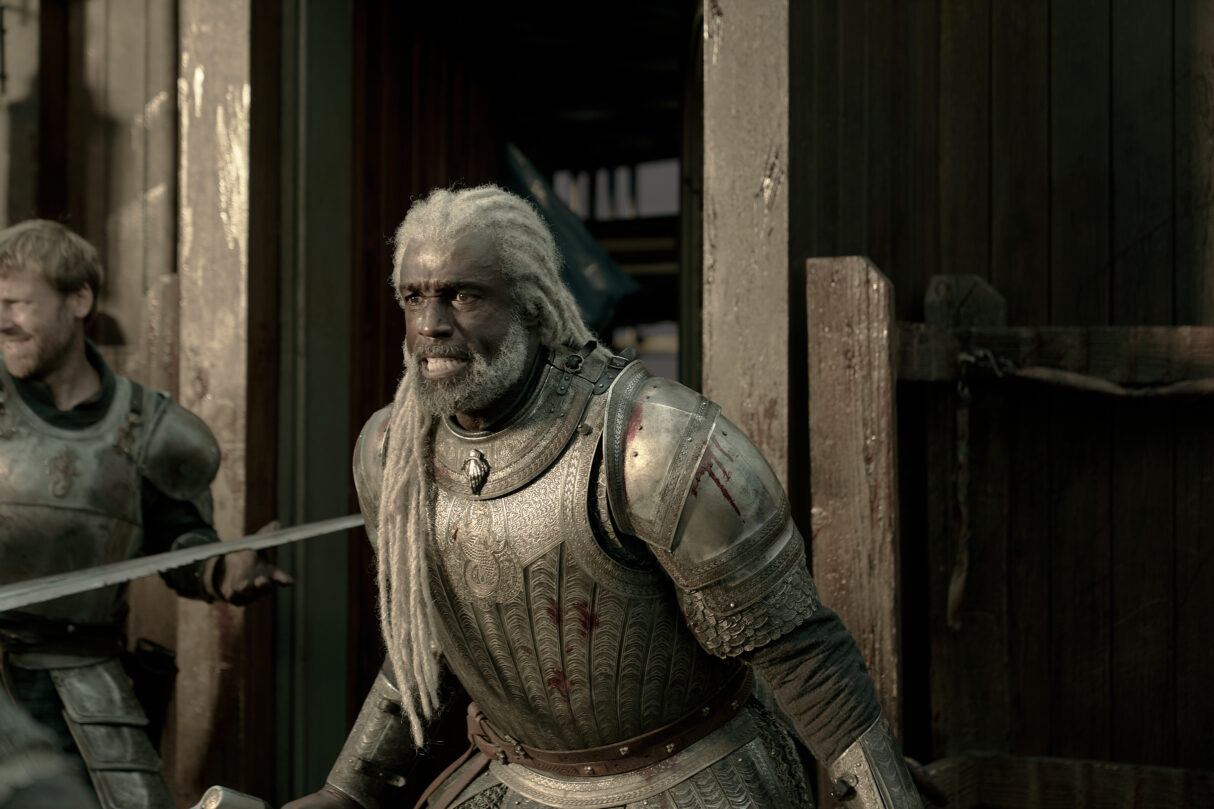
As someone visiting the set, our first surprise was the scale of the decorations. Well, had the actors experienced the same feeling when they saw it for the first time? Toussaint explained with a smile: “We were told we would shoot a big naval battle, but when you get into it, you understand how exhausting it is. You rehearse for months with stunt crews and effects specialists. At first, you only have a T-shirt on and everything looks easy. Then the costume comes, the armor comes, other equipment is added on top. Suddenly the weight you have to carry multiplies, and even the simplest movement starts to make you sweat.”
Before filming, intensive work was done on fight choreographies and physical training, as well as script readings. “I think we all came together in mid-March 2025. For a few weeks, we were just talking about the scenes, discussing how we would play, and learning the choreography. The good thing about this show is that it really allows time for preparation.”
Horse riding training had also been an important part of this process. Moreover, Toussaint did not hesitate to make a small confession during the interview: “I fell off the horse today,” he said, laughing.
Apart from the physical difficulties of the battle scenes, the emotional weight of the series also left a major impact on the actors. When asked how he prepared for intense scenes, he said he didn’t have a single method: “This depends entirely on the scene and the person you are playing with. Sometimes staying quiet feels good, sometimes listening to music. In the second season, there was a scene where I was alone after Rhaenys’s death. That day, I listened to particularly sad songs to capture the emotion.”
At the end of the conversation, the topic came to Corlys’s greatest loss, the death of Rhaenys. When we asked what kept his character on his feet in the new season, he gave the following answer, being careful not to give hints: “Corlys is currently largely trying to fulfill the things his wife wanted him to do. Rhaenys was always the person who showed him the right path. Even though he has lost her, he still hears her voice in his mind.”
After listening to Steve Toussaint, I understood that the greatest battles of House of the Dragon are not fought only with swords or dragons; some are experienced inside the characters. For Corlys Velaryon, that battle lay in remaining faithful to her advice even after losing Rhaenys.
ANDRIJ PAREKH AND RYAN CONDAL: “THE HERO OF THIS BATTLE IS NOT THE DRAGONS, BUT THE CHARACTERS”
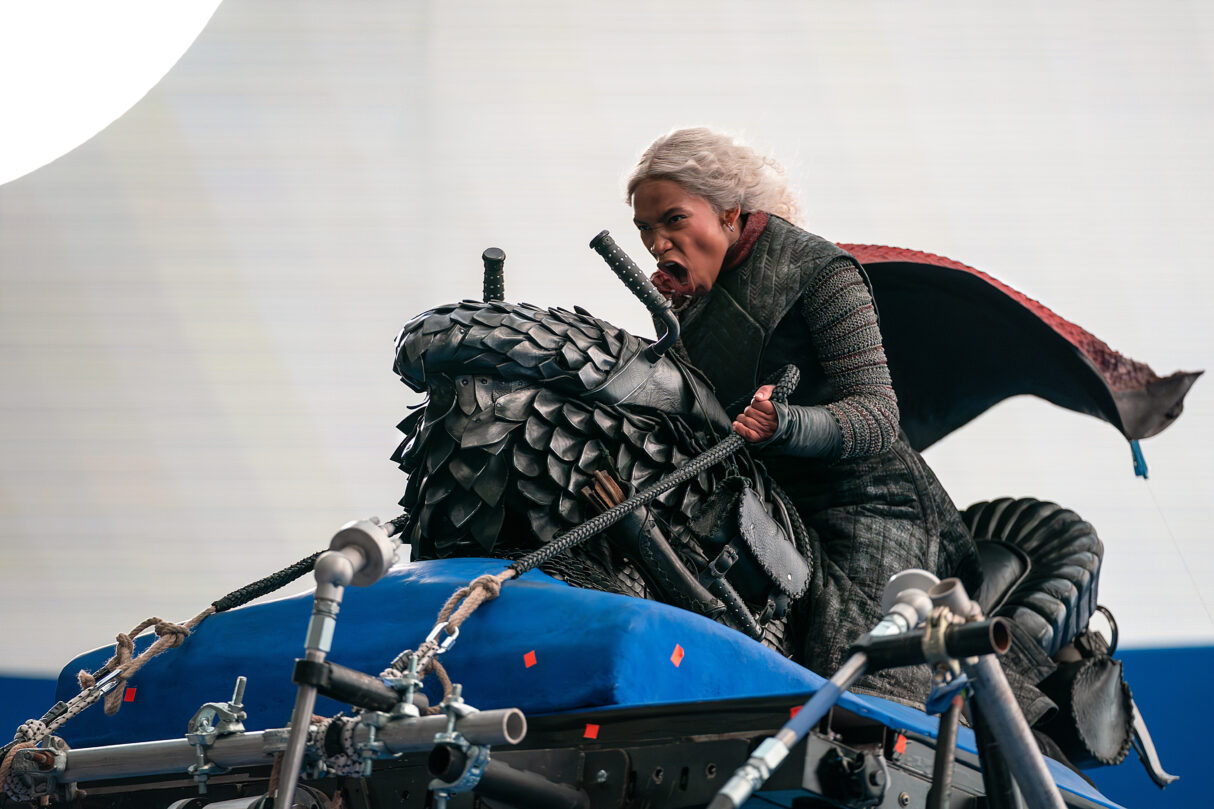
We came together with two important names of the show’s creative team, director Andrij Parekh and showrunner Ryan Condal. According to what the duo told, a special production manual of exactly 172 pages was prepared for the Battle of the Gullet, which will last approximately 20 minutes on screen, and the entire crew worked through this “living guide.”
When it came to the inevitable war in Westeros, their common opinion was clear: In this story, the main conflict was experienced not between swords and dragons, but in the inner worlds of people. Therefore, the biggest challenge was to ensure that the audience did not lose their connection with the characters, even inside action sequences worth millions of dollars.
As the conversation began, we had a question in our minds about the essence of the series: Everyone in the universe sees that disaster is approaching, even many characters know that war will bring victory to no one; despite this, why could no one step on the brakes?
Ryan Condal answered this question first: “You are right for some characters. For example, I think names like Viserys or Otto Hightower really did not want war. One of Viserys’s greatest achievements, even if he laid the foundations for future problems perhaps without realizing it, was preserving the long period of peace.”
But immediately after, he reminded of the balance: “On the other side, there are characters like Aegon, Aemond, Criston Cole, and Daemon who do not hesitate to enter war. So, there are people ready to draw their swords as much as those who want peace on both sides.”
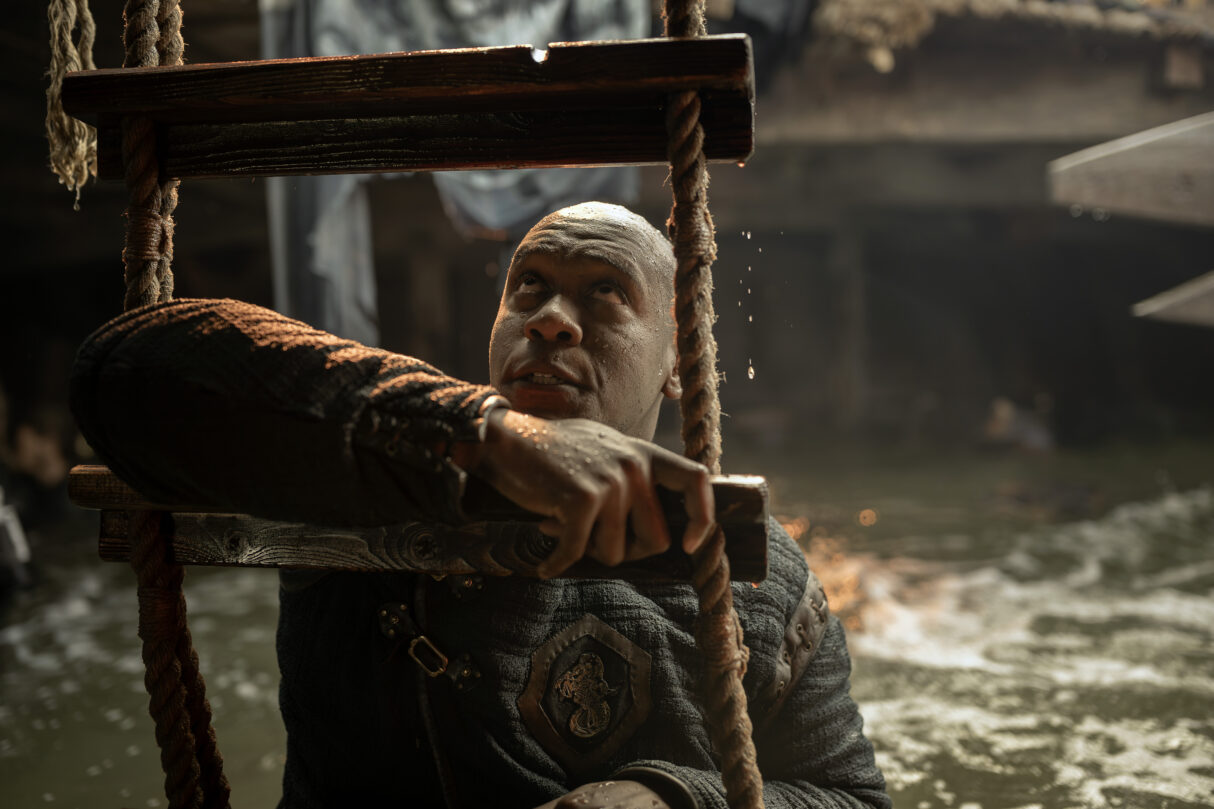
Condal thinks that the series actually holds a mirror to today as well, and gave the tournament scene at the opening of the first season as an example; reminding of the moment when Rhaenys and Corlys said that the younger generation grew up without seeing a real war: “They saw war only as a game, a show. I think the re-emergence of intergenerational conflicts that we thought were resolved in the past is a very familiar situation today as well.”
Director Andrij Parekh, on the other hand, brought the word to scene management. For him, the issue was not the size of the war, but what the people inside it felt. “The thing Ryan emphasized the most this season was to tell all this big action through the eyes of the characters,” he said. For example, while describing the struggle of Jace, Baela, and Rhaena in the sky with their dragons, he made the analogy: “It’s like being in the cockpit of a Top Gun pilot.” But he also added that a completely different battle was being experienced below, on Corlys Velaryon’s ship: “What mattered to us was not the explosions, but the effect those explosions created on the characters.”
Stating that the preparation process is critical when directing such a large battle sequence, Parekh said humorously about the 172-page working file, “We had our own Wikipedia.” The entire crew obtained the information they needed from this giant guide, from shooting plans to camera angles.
One of the questions I was most curious about was the character Ryan Condal enjoyed writing the most. “Aegon,” he said without hesitation, surprising me. Because according to him, Aegon was not just an arrogant or cruel person: “People frequently compare him with Joffrey, but I think they are very different. Joffrey was a complete psychopath. Aegon, on the other hand, is someone with deep wounds, hurt, and carrying a need to be loved.”
When asked about the inspirations for the series, Condal reminded that George R.R. Martin already established the story inspired by the Anarchy Period in English history, but added: “Any period where a civilization begins to tear itself apart can be a source of inspiration for us.”
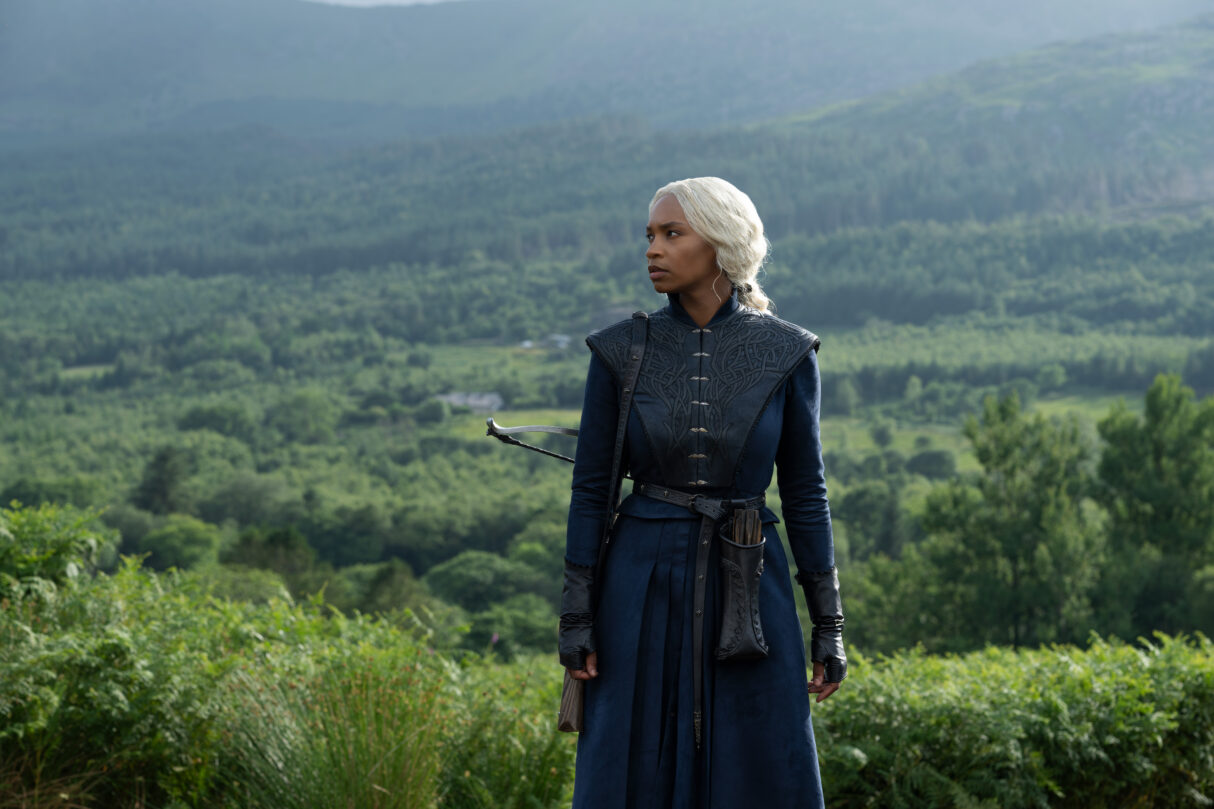
The actors of this season are also another kind of special. Parekh said that working with solid actors is one of the biggest advantages in such a large production. “Emma D’Arcy, Matt Smith, Olivia Cooke, Steve Toussaint… The moment the camera starts recording, all the technical mess of the set remains in the background and their performance takes over everything.”
When we touched upon the story of Jace, one of the heaviest emotional breaking points of the season, the expression on Parekh’s face deepened: “We cried when we first read the script. We cried again while preparing the storyboards. The same thing happened while watching the pre-visualization animations. Even HBO executives could not hold back their tears while watching those rough digital drafts.”
According to the director, Jace’s tragedy was that he believed he was invincible as long as he was on dragonback. “He wants to prove himself and the power he possesses makes him think he is untouchable. Until the last moment, he believes someone will come and save him.” After a short pause, he added: “Filming Vermax’s scenes hurt all of us too.”
As the director left our side, what remained in my mind was why House of the Dragon is actually so impressive. Yes, there are dragons involved. There are also giant battles, explosions, hundreds of ships, and millions of dollars worth of effects. But what Ryan Condal and Andrij Parekh told shows that there is still a very human story beneath all those magnificent images. Maybe this is exactly what makes the show so gripping.
ABIGAIL THORN: “SHARAKO LOHAR LIKES TO KILL, BUT HER MAIN WEAPON IS HER RAGE”
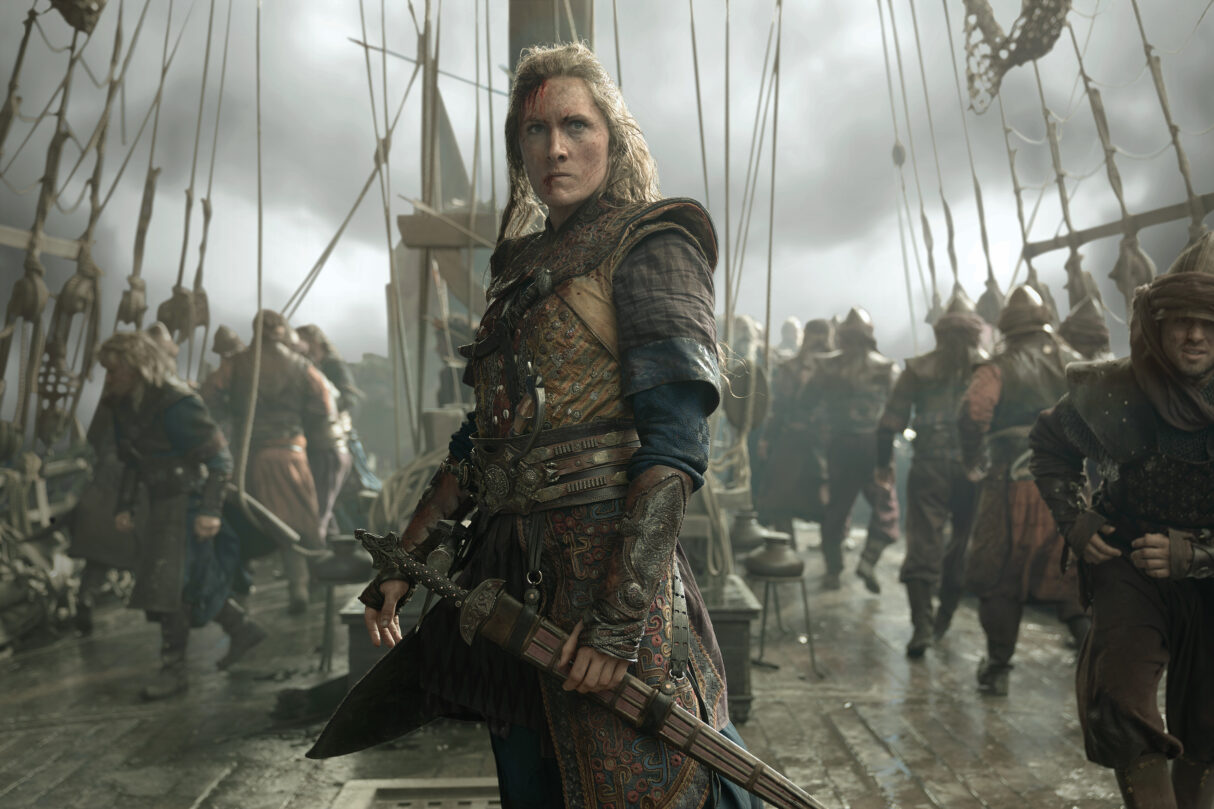
At the end of the day we watched the filming of the Battle of the Gullet, we met with Abigail Thorn. There was no trace of Triarchy Admiral Sharako Lohar, who was swinging a sword and defying dragons on the deck of the flagship just a few minutes ago; her heavy battle makeup was wiped off, and there was a warm smile on her face.
Thorn was one of the names who not only played but also built her character, who will leave a major mark despite appearing in only two episodes. She had worked for months for the role and gained more than 10 kilograms of muscle mass. In fact, she was frequently reminded on set of Sigourney Weaver in the movie Aliens and the strong female heroes of action cinema. She approached this with a laugh: “While everyone is trying to lose weight, I was using creatine and building muscle.”
The analogy she used while explaining her character’s psychology was quite striking. She compared Sharako’s entry into this war to Captain Ahab’s obsession with Moby Dick. According to her, this was not just a naval battle, but a settlement of accounts from the past and a journey of no return.
The thing she enjoyed the most had been the fight scenes. “Fight choreography does not consist only of aesthetic movements,” she said. “You can tell a lot about a character through how they fight.”
She gave the best example of this by comparing Corlys Velaryon with her own character: While Corlys used long-handled weapons that kept his opponent at a distance, Sharako preferred the exact opposite. “She holds her knives reversed because she wants to look into her enemy’s eyes. She likes to get as close as possible to the moment of death.” She said that even the sharp protrusions located on her ship were a conscious choice: “I wanted to create a character that says ‘Do not come near me’ with everything she has.”
Stating that she also enjoyed working with Steve Toussaint very much, Thorn described him as “an actor who teaches with his actions.” She shared that her opinions were truly valued on set, and the idea of her costume being full of weapons everywhere and giving that “don’t touch me” feeling was her own suggestion.
After talking to Abigail Thorn, I started to look at Sharako Lohar with a different eye. She is not just a pirate leader swinging a sword; she is a character who explains her rage with her body language, her choice of weapon, and even her posture. Maybe that’s why she manages to become one of Westeros’s most unforgettable warriors despite appearing in only two episodes. Because some characters do not stay on screen for a long time; the moment they arrive, they take over the entire scene. Sharako Lohar is precisely one of them.