





As the traditional distribution model faces mounting pressure, the question is no longer simply how many titles a company can sell, but how much value it can unlock from each one. From YouTube’s growing role as a monetisation platform to AI-driven workflows and the rise of microdrama, the industry is rethinking how content is distributed, managed and monetised. In this interview, Milena Đuričić, Co-Founder & COO of Videomite, discusses the shifting economics of content distribution, the company’s technology-driven strategy and the opportunities she sees in the MENA market, from Turkish horror and feature films to digital-first formats.
Buyers are taking fewer titles and expecting each one to work harder. Does that make the traditional distributor with a huge catalogue less valuable?
Not if the distributor actually understands how to maximise the life of the content.
A large catalogue on its own is not a strategy. And one of the biggest problems in the market is that distribution is still too fragmented. You often have one company focused on television, another on digital, another on theatrical. Each distributor naturally optimises for its own window and its own revenue.
The problem is that content does not live in separate boxes.
If the same film is sitting with several distributors who are all pulling in different directions, the title is often not monetised to its full potential. One party may want to protect a television window, another may push digital immediately, another may focus only on theatrical. Everyone is looking at their own piece of the economics.
What we believe is more valuable is a single strategy across the full life cycle of the IP.
That means deciding when and where a title should move through theatrical, television, SVOD, AVOD, YouTube, FAST and other windows, and doing that differently by territory, language and audience.
The goal is not to maximise one window. The goal is to maximise the total value of the content across all windows, over time. And that is where a distributor becomes more than a sales intermediary. It becomes the architect of the commercial life of the IP. If every distributor optimises only for its own window, nobody is optimising for the content.
Has YouTube quietly become a broadcaster while much of the television industry was still treating it as a promotional platform?
In many ways, yes. Five years ago, a lot of traditional media companies still thought of YouTube as somewhere you uploaded trailers, clips or old content after the “real” distribution had happened. That is not how we see it.
For the right rights owner, YouTube can be a serious monetisation window, a discovery engine and an audience-development platform. It can also tell you where demand exists before a traditional sales process does. But uploading a video is the easy part.
The difficult part is knowing what to publish, how to package it, in which language, in which territory, on which channel and how to optimise and monetise it over time.
YouTube has been extremely important to Videomite because it forced us to become faster, more granular and more data-driven. YouTube is no longer what happens after television. It can be part of the core distribution strategy.
You will not be physically at DICM this year. So how are you approaching the MENA market, and what do you actually want buyers in the region to discover from Videomite?
We will not be physically present at DICM this year, but buyers can explore a selection of our catalogue on videomite.com and download the materials currently available there. Our catalogue is much broader than what can realistically be presented online, so if a buyer is looking for a specific genre, territory, language, window or type of rights, they can send an inquiry directly through the website and our sales team can propose the most relevant titles.
MENA is particularly interesting for us because Turkish talent already has an extraordinary relationship with audiences across the region.
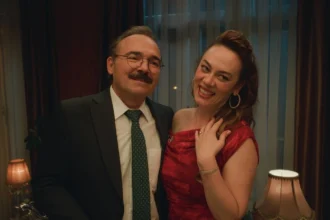
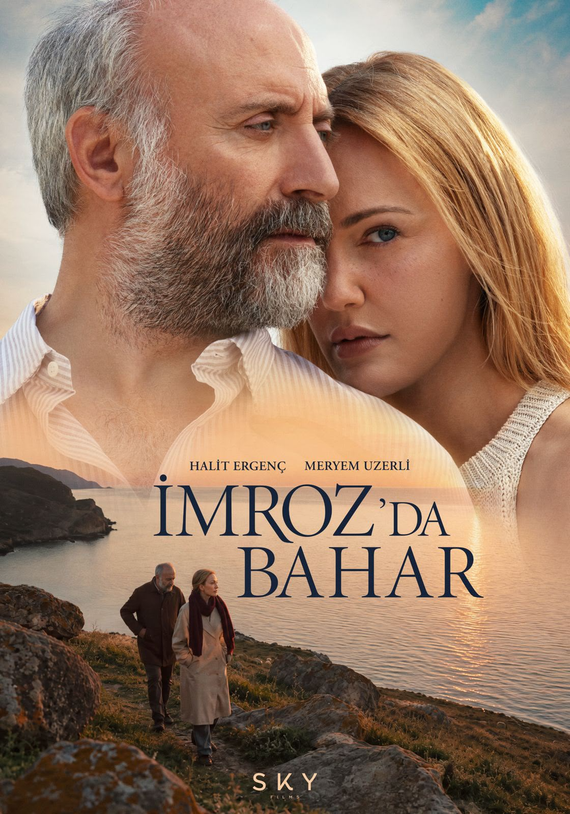
One title we are highlighting is Spring in Imroz, produced by Sky Films, directed by Özcan Alper and bringing Meryem Uzerli and Halit Ergenç together on screen again after 15 years.
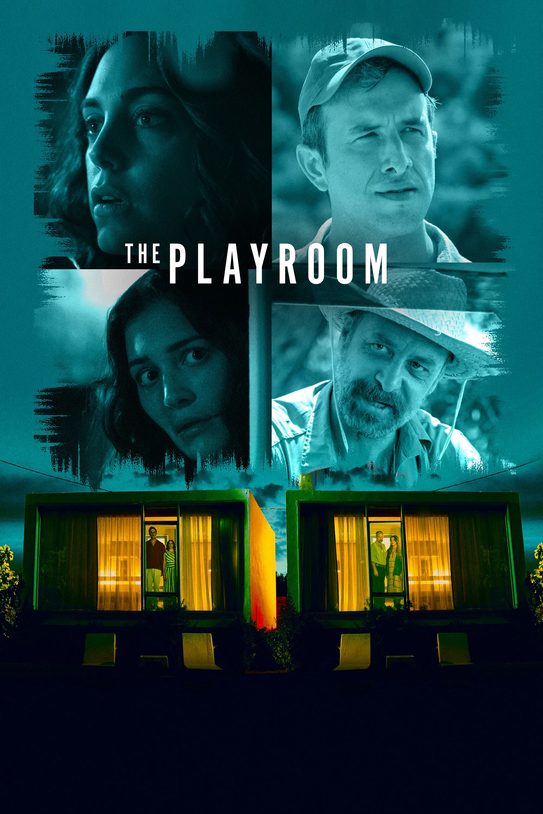
We are also putting a strong focus on Turkish horror. We have real depth, recurring franchises and a distinctive mythology built around djinn, rituals, curses and local folklore.
The idea is not to make buyers search through hundreds of titles. Tell us what audience, territory or genre you are looking for, and we can curate the right package.
Is the entertainment industry talking too much about AI making content and not enough about AI making money?
I think so. The problem with saying “AI” is that it has become an umbrella term for completely different things.
One side is generative AI. That is about using AI creatively to generate images, clips, scenes and eventually more complex audiovisual content. That is fascinating, but it also raises major questions around creativity, rights, ownership and production.
The other side is much less glamorous, but commercially much more immediate. The industry already owns millions of hours of content that cost billions to produce. AI can help localise it, dub it, subtitle it, create new versions, repurpose long-form content, improve metadata, analyse performance and distribute assets faster. That is where AI can affect revenue now.
So I think we need to separate the creative AI conversation from the business-process AI conversation. The question is not only, “What can AI create?” It is also, “What can AI make more valuable?”
Every company now says it uses AI. What is actually proprietary about Videomite Studio?
Videomite Studio is not just an AI wrapper and it is not just a set of agents performing repetitive tasks. The core is our proprietary algorithms and proprietary intelligence layer.
We have taken years of Videomite know-how about how content behaves across platforms, markets, languages and content types, and embedded that knowledge into the system. AI agents can move assets, prepare versions, repurpose long-form content into platform-ready clips, check metadata, upload across YouTube and other AVOD platforms, monitor performance and handle routine optimisation. But automation alone is not the interesting part. Our proprietary layer helps determine how those tasks should be performed.
A generic AI model does not automatically understand how content should be packaged differently for a specific territory, language or YouTube environment. We are not just automating workflows. We are turning Videomite’s know-how into proprietary technology.
Did microdrama only become a “real” business once mainstream streamers started writing cheques?
I would say we are entering a very different second wave. The first wave of microdrama was built largely around specialised apps, fast and inexpensive production, aggressive user acquisition and micro-payments. It was almost its own ecosystem, separate from traditional television and streaming.
Now we are seeing mainstream media companies and streamers begin to commission, acquire and license microdrama titles.
That changes the economics significantly.
For producers, there is suddenly another route to monetisation beyond owning an app or relying purely on micro-payments.
And I think it will also push the format toward better production values, stronger ideas and more competition for quality.
The first wave proved there was an audience. The second wave is about whether microdrama becomes a real licensable content category inside the wider entertainment business.
At Videomite, we are experimenting as well. The Next Door!, or Konu Komşu, produced by İki Dakika Creative House, will launch on YouTube alongside other platforms.
We are interested in what happens when microdrama moves beyond the closed-app economy and becomes part of a broader multi-platform distribution strategy.
The traditional MCN model was built on armies of people cutting, uploading and optimising video. If software can now do much of that, what exactly is left of the MCN?
That is the uncomfortable question, and I think it is a fair one. Videomite benefited from the MCN and outsourcing model. The model solved digital complexity largely with people. You needed large teams cutting videos, packaging content, uploading, optimising, managing channels and monitoring performance. But I do not think the future is simply adding more people to perform more repetitive tasks.
Large rights owners increasingly want more control in-house, but they do not necessarily want to recreate those huge operational teams internally. Videomite Studio creates a third option. The media company keeps the people who understand the content, brand, audience and commercial strategy. Technology, AI agents and proprietary algorithms handle much of the heavy operational layer.
Does that potentially cannibalise part of the model that helped build Videomite? Yes. I am comfortable with that. I would rather disrupt our own business model than wait for somebody else to do it.
MENA already loves Turkish drama. Is the next opportunity simply selling more of the same, or is the region ready for a broader Turkish content proposition?
I think the opportunity is much broader than selling more long-running drama. The region already has familiarity with Turkish talent and storytelling, which gives us a strong starting point.
But we see potential in feature films, distinctive genre content such as horror, and new digital-first formats as well. At the same time, broadcasters and media groups in MENA are thinking more seriously about YouTube, AVOD, localisation and direct control of digital monetisation.
That is where Videomite becomes particularly relevant, because our content and technology businesses meet in exactly that space. So for us, MENA is not only a market where we want to sell more titles. It is a market where we see an opportunity to build longer-term relationships around both rights and infrastructure.