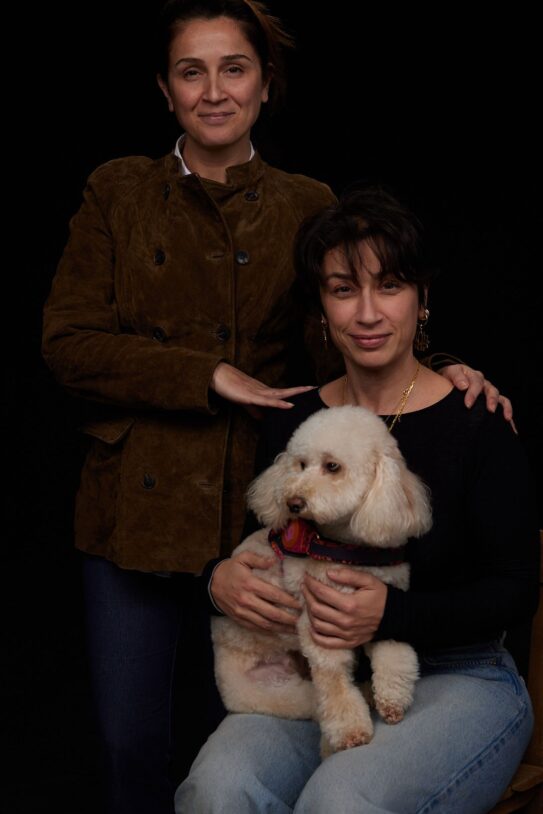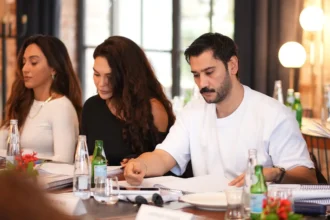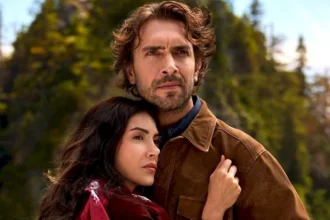




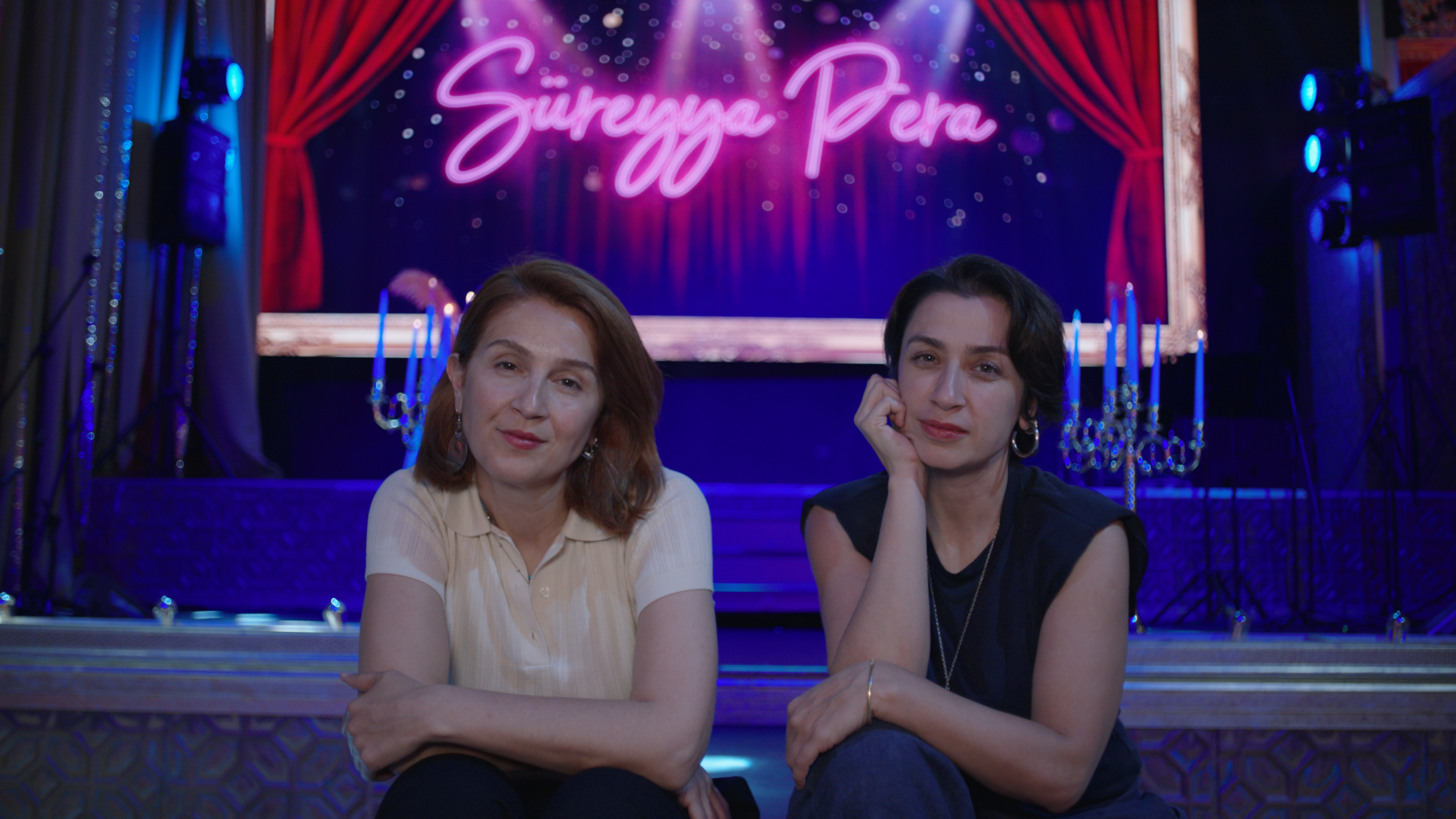
For our NEM Dubrovnik 2026 issue, we spoke with Burcu Alptekin and Merve Çolak, directors of the new Turkish drama Ugly.
How did the journey of Ugly begin for you? What did you think when you first read the project?
BURCU ALPTEKİN: Actually, it caught my attention not when I read the project, but when I heard it from Fırat Parlak. It was a period after the season when I was very tired and didn’t want to work at all. My house was going through a renovation, I was mentally and physically exhausted, and I was dreaming of a vacation to Sri Lanka.
My manager, Rezzan Çankır, called and said, “Burcu, there’s a story you’re going to love.” So, in the midst of all that chaos, I met with Fırat Parlak and listened to this very familiar yet deeply affecting story. The fact that this story had been waiting for the right time and the right team for years also particularly moved me.
MERVE ÇOLAK: My journey began when Burcu called me and told me about the project. Working together was something we both wanted to experience. We talked about the story and the characters on the phone for about an hour. I was very excited. After reading the script and thinking about it, I felt that I truly connected with the story.
It’s a series that has also won praise for its cast. We would love to hear about your casting process.
BURCU: This process was a bit long. Since we were going to air mid-season and needed to be fast, we wanted to work with both actors we knew and trusted, as well as new faces. The audition process was quite long and challenging because we watched very talented people, and it took time to make a decision. Derya and Çağlar were already set before we arrived. What was left for us was to have deep conversations about the characters and infuse them with our own perspective.
From the very first moment, the name we had in mind for the character of Cennet was Nur Sürer. We felt she would suit the soul of this world the most. That’s why we tried to convince her throughout the process. In the end, we are very happy to have had the chance to work together.
We have a history with Çetin Tekindor from Golden Boy. I think we understand each other well. We also had a promise to each other to work together once more. For the character of Ökkeş, we naturally called Çetin Tekindor, and he didn’t turn us down.
Gözde and Baran are actors I’ve worked with before and feel very comfortable with on set. Their acting ranges are expanding day by day. They found their roles without hesitation.
MERVE: We had two characters that would remind us that this business is a story emerging from the very heart of Adana: Ferhat and Hediye. I can say we never thought of entrusting these two characters to anyone else. And we had no difficulty at all choosing them.
We held a lot of interviews for Lale, but the moment we stepped into the meeting with Başak, she impressed us greatly, and we realized we had found our Lale. I had worked with Baran and Cahit before; I was sure they would be very good. For the remaining roles, we wanted to include new faces and young talents. We really shot and watched a huge number of auditions.
A narrative with two directors is like seeing a single story through two different eyes… How did you turn those two perspectives into a shared language?
BURCU: Since we have a friendship spanning many years, we know each other’s rhythm and approach to the story very well. Most importantly, we look at the emotion of the story from the same place. Therefore, our different perspectives formed a structure that nourished each other rather than clashed, resulting in a shared narrative language.
In our deep conversations about Ugly, we have the chance to see each other’s pluses and minuses and complement one another. Merve and I have been friends for 20 years. Once you capture that emotional resonance for the story, even if there is a difference in flow, staging, or directorial language, the emotion remains the same. Thus, the story we want to tell translates to the screen as a single narrative.
MERVE: Before we went on set, we talked and discussed the story, characters, music, colors, locations, and costumes extensively. Consequently, when we went on set, we knew the world we were going to build very well. But even more important than that was the fact that we deeply respect each other’s space.
I think trying to complement each other rather than trying to be identical helped us immensely in establishing a shared language. Being able to accept our non-identical sides and move forward, and being able to listen to each other without being blindly stuck in our own ideas, was very precious.
Setting out with the title Ugly constantly confronts the viewer with a matter of “gaze.” The camera is also a part of this gaze. As directors, how did you establish this gaze?
BURCU: Who is the real ugly person, and where are they right now? We moved forward by asking this question, from the details we used to the songs we chose. The answer was always in Ugly. Once you find the owner of that emotion, our question is answered. The camera, as well as the cuts in editing, continue as a part of this search.
MERVE: “Ugly” is actually a very harsh and accusatory title, or let me say, nickname. Here, by placing a very beautiful young woman as the bearer of this nickname, we are trying to convey that this is not an aesthetic or physical condition. There is a perspective regarding Meryem here. I view this title as a reflection of the inner worlds, past experiences, and overprotectiveness of the people around Meryem through her. That’s why what I tried to capture with the camera was mostly emotions and feelings. I prefer to do this sometimes by tightening the frame, sometimes by positioning the camera behind a glass pane, and sometimes by triggering that emotion with music.
In the series, “ugliness” actually stands out as a state of exclusion and being unseen. When establishing this emotion, where did you start as directors?
BURCU: Actually, rather than exclusion, it’s a state of being trapped. A state of captivity, of not belonging… This might be why it gives a sense of invisibility. But at its core, there is the feeling of not belonging. This applies to almost all of our characters.
When we examine why all characters, starting with Ugly, meaning Meryem, are at this point today, the place we arrive at is always the same: the lack of a sense of belonging. The unlived potential stories of our characters truly break my heart. It is a very deep sorrow for a person to be unable to realize their own potential and to remain trapped in a life they do not want. How will Ugly, meaning Meryem, break this? How will she do what Cennet couldn’t do? How will she discover her own potential? In fact, everything started with these questions.
MERVE: I never approached the idea of “ugliness” from a physical standpoint. Instead, I focused on people’s perspectives and the effect that this nickname, which they gave to Meryem out of their own internal emotions, created on her over time. This turns into a state of being unseen after a while.
One of the things that saddens a person most deeply can be being unseen. After a while, a person even begins to doubt their own existence. Getting used to this, accepting this state, means giving importance to everyone else but yourself and putting yourself at the very end.
Therefore, as directors, we chased that feeling of being unseen. We established Meryem as someone living in today’s world but belonging to the past. We always leaned toward these choices in locations, costumes, and music. By intertwining the past and the present, we deliberately disrupted the perception of time in certain places.
When describing the character of Meryem, what kind of visual language did you build to take her out of being an object that is “watched” and turn her into a subject?
BURCU: For many years, we have seen female characters represented on screen as more flawless, more controlled, and often slightly detached from real life. The world of male characters, on the other hand, can be comfortably flawed, messy, and “real.” When telling Meryem’s story, we wanted to step outside of this accustomed perspective.
Rather than creating a flawless image, we focused on the character’s emotion at that moment. Every detail, from the costumes used to the lack of makeup, was established from a more natural place for this reason. When you look at the story from the inner world of the female character, the charac- ter automatically transforms into a “subject” anyway. Thus, the audience starts to feel along with Meryem instead of just watching her from the outside.
MERVE: As Meryem begins to become a subject in her own story, turning into a character who changes the course of events and experiences breaking points, we also make changes in her costumes, hair, and the locations she is in. But I think the most important thing is that we try to move the audience to a place where they don’t just watch her, but see through her eyes. We try to make the audience experience her feelings. I think we support this the most with music.
In the series, there are two distinct worlds: one is the town where everything begins, and the other is Istanbul. We see a structure where the town represents the past and belonging, while Istanbul represents transformation. How did you reflect the contrast between these two locations into the emotional and dramatic structure of the story?
BURCU: The original story took place in Adana. We had to set it in Istanbul, but my mind is still in Adana… I wanted the town to be a timeless place with a bit of an Adana breeze, belonging to another world. I wanted to evoke that naive feeling of old-time movies. Because the characters of Cennet and Meryem lived on such extremes that they could almost be unreal in today’s world. Of course, there might be people living like this today as well, but I wanted there to be a sense of a period piece.
The moment we set foot in Istanbul, I wanted us to get a slap from the real world, just like our characters. Therefore, with Istanbul, we teleport into reality. The town represents our pure, clean, and good side, while Istanbul represents the contaminated, corrupt side. Yet, a person actually becomes whatever they choose. Whatever is inside us; whether it is good or bad, beautiful or ugly…
MERVE: Hisarlı and Istanbul are not actually two different locations, but two separate states of mind. Hisarlı is an organic and very real place representing Adana, where everyone knows each other and feels they have a say over one another. On the other hand, it represents the past.
Here, friendship and belonging are very strong, but it is hard to breathe. Because everyone knows and comments on each other’s story. That’s why it’s not easy to be reborn, to spread your wings and fly here. Hisarlı has a very nostalgic, warm, but slightly tired atmosphere.
Istanbul is exactly the opposite; crowded, constantly moving, glittering, where anything can happen at any moment, a state of mind promising freedom and chaos. The dramatic structure thrives on this contrast.
Süreyya Pera is not just a location in the series; it is almost like a character in its own right. Was there a particular “soul” or aesthetic understanding you specifically wanted to preserve when filming this location?
BURCU: For us, Süreyya Pera is like a town inside Istanbul. The place where dreams come true. Therefore, with the colors and songs we used there, there was always a sense of longing for the past, a feeling of gratitude to the past for me.
MERVE: It absolutely could not lose its grandeur, brilliance, and colors. The atmosphere there always needs to be glamorous because Süreyya Pera is the place where dreams come true.
Ugly became one of the successful works of this season. Which emotion do you think resonated most with the audience?
BURCU: I think what resonated with the audience was timelessness. We built a bridge between the past and the present. When I read the story, I caught a scent belonging to the past, and I held onto the emotion brought by that scent. I suppose an emotion in the viewers’ memory was unlocked. In the collective memory, we have Meryem, Cennet, Kadir; our mothers and fathers.
MERVE: I think the nostalgic air in the series evoked a different feeling in everyone. I cannot know what those feelings are, but I believe the audience holds onto their own beautiful memories through us.
What are your expectations and predictions regarding Ugly’s global journey?
BURCU: I believe that stories which appear very local actually touch the most universal emotions. I believe that Ugly carries emotions anyone can connect with, such as belonging, the desire to be seen, class, love, and transformation. Therefore, I would love for it to resonate across different geographies as well. I think the emotion of the story has a side that can transcend language.
MERVE: I don’t have a clear prediction regarding this matter, but of course, I would love for this beautiful work, which we made with love and put effort into, to find the value and reception it deserves everywhere.