


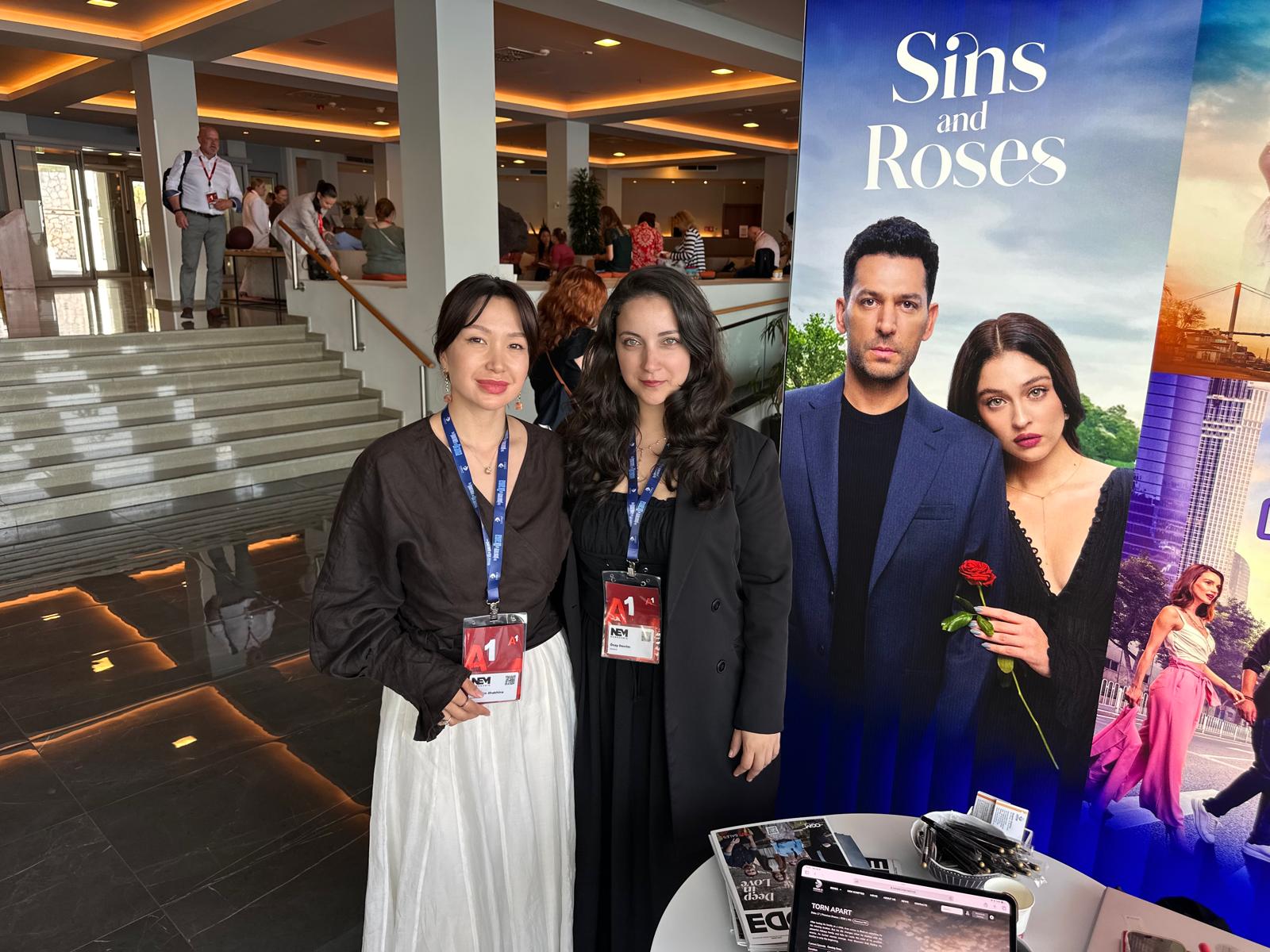
At NEM Dubrovnik 2026, we spoke with Sangerim Zhakhina, Sales Manager for CIS, CEE & Baltics at Kanal D International, and Önay Devrim, Sales Executive for CEE & Baltics, about the market’s growth, changing content trends, and the evolving needs of international buyers.
How do you evaluate NEM Dubrovnik?
Önay Devrim: First of all, the location itself makes NEM a very relaxed and enjoyable market. Buyers tend to feel more comfortable here. Being by the sea creates a different atmosphere compared to larger and more hectic international markets, allowing meetings to become more productive.
Many people compare NEM to other major industry events, but it has developed its own identity. It has become an increasingly important gathering point for the CEE region. We expected growth this year, and that expectation was clearly reflected in the number of participants. The venue expanded, attendance increased, and professionals from new regions began joining the market.
As Kanal D International, we are even seeing visitors from territories such as the Caribbean, which demonstrates the event’s growing international reach and visibility.
What content trends are you seeing in the market this year as Kanal D International?
Sangerim Zhakhina: Demand for premium content remains very strong. At the same time, library content continues to perform well. One of the fastest-growing areas is mini series. VOD platforms are increasingly looking for shorter, bingeable titles that fit the viewing habits established by global streaming services.
As a result, we are adapting our catalogue to meet those expectations. As Kanal D International, we have created mini series and alternative versions of some of our bestselling library titles and are using markets such as NEM to test audience and buyer reactions.
Another major area of growth is formats. Format sales and adaptations are performing very well. Buyers see them as a lower-risk investment and as a source of long-term value beyond the original production. Producers, broadcasters and distributors can continue working together to expand a property’s international reach.
A good example is Broken Promise, the Portuguese adaptation of Ruthless City, produced by SIC in Portugal. The adaptation was later sold to Hungary, where it achieved significant success. Cases like this demonstrate the growing potential of adaptations across international markets.
At the same time, the region remains quite traditional in its content preferences. Family dramas and stories built around family values continue to attract strong demand. In that respect, Turkish content remains an excellent fit for the market.
Networking also remains one of NEM’s strongest assets. Despite packed schedules, the market offers valuable opportunities to discover trends, evaluate new content and build relationships across the industry.