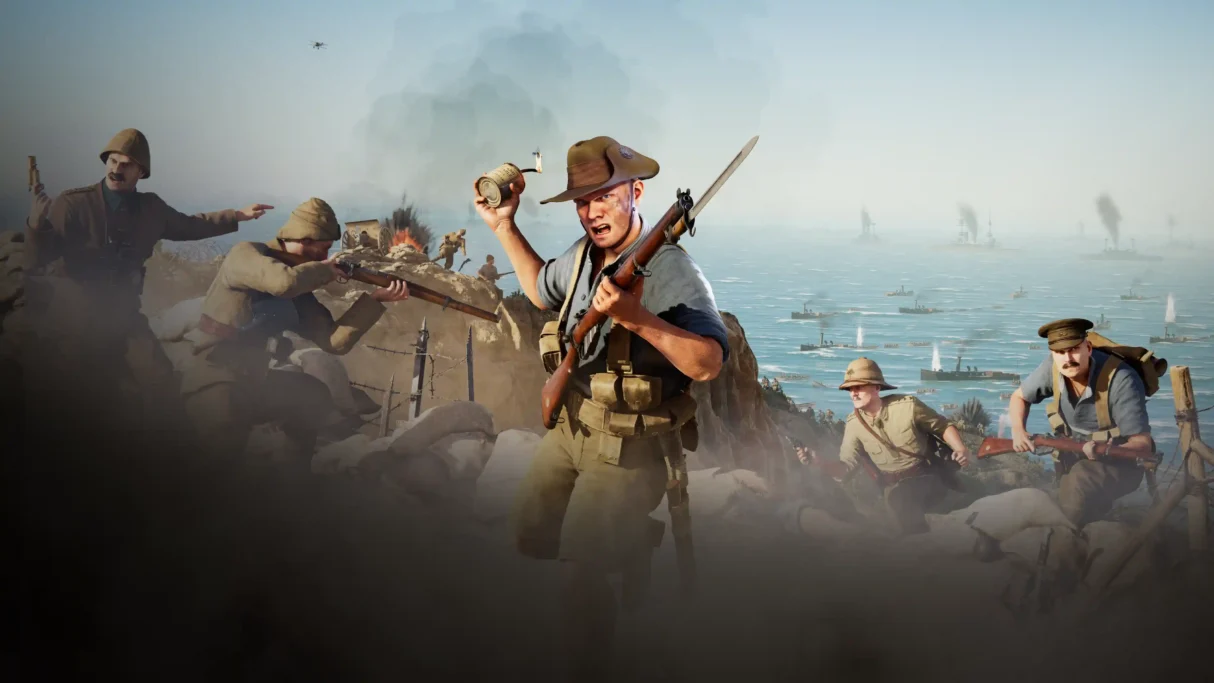




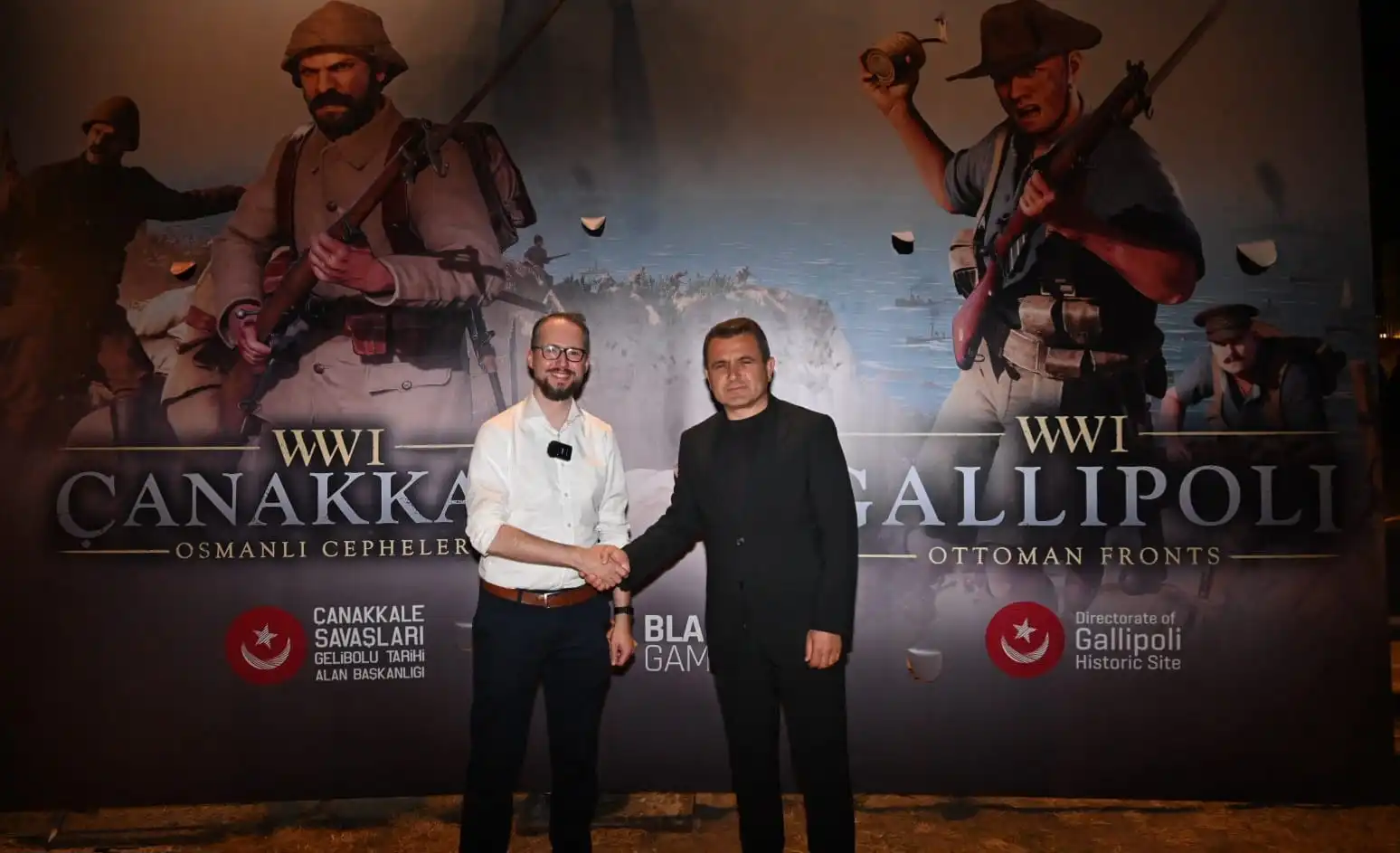
BlackMill Games has partnered with the Directorate of Gallipoli Historical Site to bring the history and geography of the Gallipoli Campaign to a global gaming audience through its upcoming title, Gallipoli.
The collaboration was officially launched on August 10 at Seddülbahir Fortress, one of the key locations of the historic campaign. As part of the event, visitors were able to explore a digitally recreated version of the battlefield within the actual Seddülbahir Fortress, bringing together the physical site and its representation in the game.
Developed by BlackMill Games, known for its World War I-themed titles, Gallipoli is scheduled for worldwide release on August 20. Rather than focusing solely on combat, the game aims to recreate the historical setting of the campaign, allowing players to explore its geography, battlefields, trenches, uniforms and period weaponry through a digitally reconstructed environment.
Key locations featured in the game include Seddülbahir Fortress, Kumkale, Ariburnu and Anzac Cove. Historical structures, natural landscapes and military equipment have been recreated with an emphasis on reflecting the conditions of the period.
The Directorate of Gallipoli Historical Site is supporting the development process by providing BlackMill Games with archival materials, historical records and technical data. The resources include LiDAR scans, 3D spatial data, maps and other documentation used to recreate the campaign’s landscapes and structures.
The Directorate has also facilitated field research, giving the development team access to the historic battlefields for on-site examinations. The collaboration is intended to strengthen the connection between the game’s digital environments and the physical geography and heritage of the Gallipoli Historical Site.
Speaking at the launch event, İsmail Kaşdemir, President of the Directorate of Gallipoli Historical Site, stated, “As the Çanakkale Wars Gallipoli Historical Site Presidency, we are deeply pleased to see one of our long-standing aspirations become a reality. We are particularly delighted to finally establish a presence in the digital sphere, an area in which we have previously been lacking, in our efforts to make Çanakkale more widely known and recognized. We are working with a company that has extensive expertise in its field. From the very first time we made contact, we were incredibly excited about this collaboration, and we knew that, by the end of the process, it would result in something truly remarkable.”
Kaşdemir noted that games are one of the most effective ways to reach children and young people, and continued: “I hope that, once this game is released and people begin playing it, Çanakkale will become a place of even greater interest both in Türkiye and around the world, inspiring more people to visit. In this way, Çanakkale can become a meeting point for people from Türkiye and across the globe. Turkish children will now have the opportunity to choose Turkish heroes as they play, while players around the world will have the chance to learn more about Çanakkale and gain a deeper understanding of this historic land.
I would like to extend my sincere thanks to BlackMill for all the effort and dedication they have put into this game. I would also like to propose that we continue our collaboration through even more significant projects in the future. Keep your eyes and ears on these lands. Congratulations, and may this project bring great success and benefit to all.”
Jos Hoebe, CEO of BlackMill Games, remarked, “We are proud and delighted to be partnering up with the Directorate of Gallipoli Historical Site on this project. This partnership demonstrates the value of bringing together the expertise of historical institutions and the creative capabilities of the games industry. By working together, we can help bring the history of the Gallipoli Front to a much wider audience and encourage a deeper understanding of the battles and the people who shaped this important chapter of history. For us, it is meaningful recognition of how games can serve as a powerful medium for engaging new audiences with historical heritage.”
Following the speeches, Kaşdemir and Hoebe formally signed the collaboration protocol.