




Audience retention is emerging as a more important factor than total viewing time when streaming platforms decide which series to renew, according to new research from Luminate.
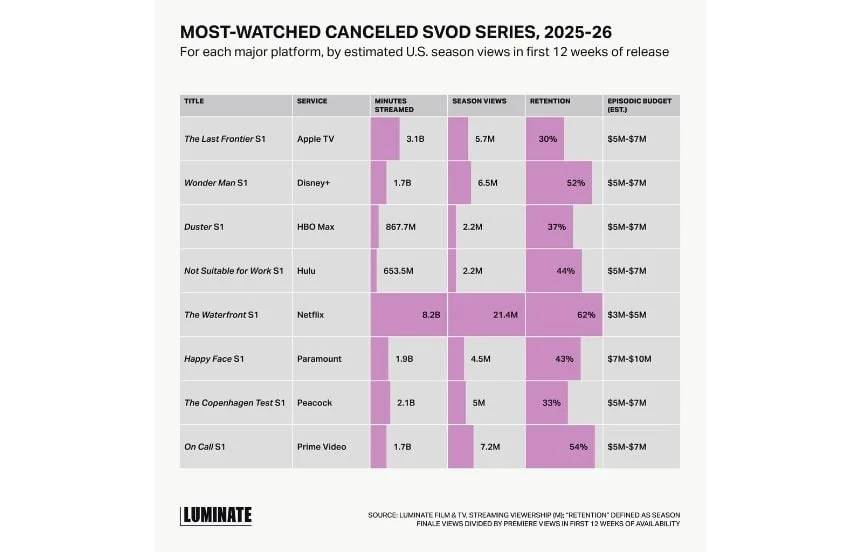
The TV Renewals & Cancellations report examined first seasons released between 2024 and the first half of 2026, finding a clear difference in completion rates between renewed and canceled shows. Series that returned for another season recorded an average retention rate of 51%, compared with 44% for canceled titles.
Streaming platforms weigh engagement against cost
Luminate found that shows with more than half of their viewers completing a season were considerably more likely to receive renewals. The data suggests that simply attracting a large audience may not be enough, as platforms increasingly look at whether viewers remain engaged through the full season.
There are notable exceptions. Disney’s Wonder Man, Prime Video’s On Call and Netflix’s The Waterfront all passed the 50% completion threshold but were still canceled. Luminate notes that individual business considerations can influence these decisions, including reported licensing-fee negotiations surrounding On Call. The Waterfront also spent three consecutive weeks at the top of Netflix’s global viewing rankings.
Production cost is another part of the equation, but Luminate found that budget size alone was not a strong predictor of cancellation. Instead, the report points to cost efficiency, measuring how much viewing a series generates relative to its production investment.
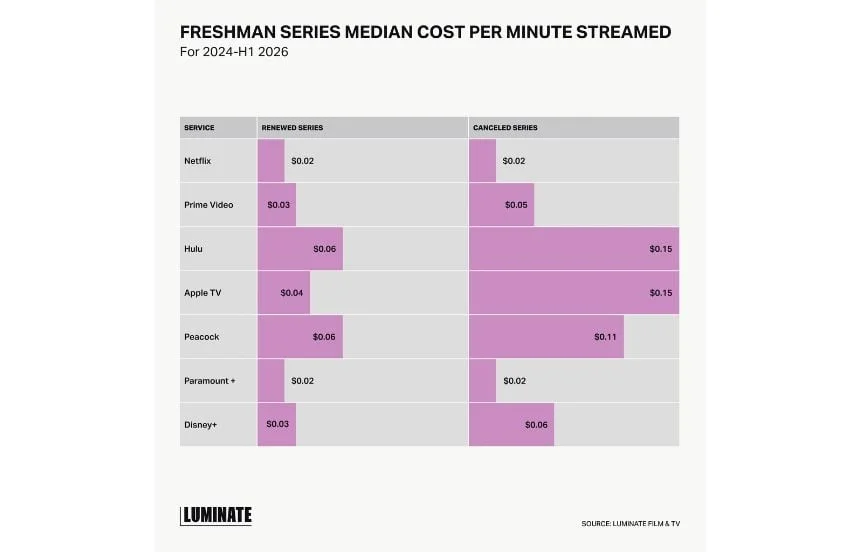
Using its “cost per minute streamed” metric, Luminate found that renewed shows generally generated more viewing value for their production costs than canceled series across major SVOD services.
The findings point to a streaming renewal model increasingly centered on two factors: how effectively a series keeps its audience watching and whether that engagement delivers sufficient value for its cost.
TV Shows Cancelled or Ending in 2026: The Series Saying Goodbye This Year