



Have we ever stopped to think about what lies behind the colourful worlds our children encounter when we turn on the television or open a digital platform? Children’s, youth and family programming is often regarded merely as a form of “entertainment” or as a digital babysitter that parents turn to when they need a moment to breathe.
- MIPJUNIOR 2026
- Disney and Building Lasting Fandom
- A Princess Who Breaks the Rules: Migali
- Reimagining Legacy IPs in the Digital Age
- The Evolution of Viewing Habits and Industry Trends
- From Eastern Mythology to Universal Stories: Murphy’s Manor
- Solidarity Among Public Broadcasters and the Choices That Will Shape the Future
Yet stories are among the most powerful tools for shaping the reality, dreams and social perceptions of children who are only beginning to make sense of the world. Every character we watch and connect with on screen during childhood offers clues about the adults we will become in the future. Producing content for children, therefore, goes far beyond pursuing commercial success; it is a responsibility that directly involves shaping the society of tomorrow.
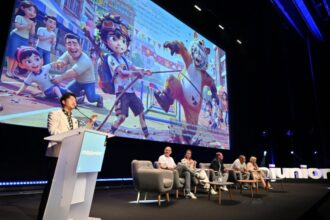
It was precisely this enormous responsibility, together with rapidly changing digital habits, that came under discussion at MIPJUNIOR 2026, held in Cannes this year. Bringing together global industry giants, producers and broadcasters, the event explored the challenges of transitioning from traditional media to digital-first brands and the emergence of new business models, while also seeking ways to connect meaningfully with children’s hearts and minds.
MIPJUNIOR 2026
Disney and Building Lasting Fandom
For the first time in its history, Disney Kids & Family, one of the industry’s most established storytellers, took the stage as MIPJUNIOR’s official “Presenting Partner.” The company shared insights into how it is transforming storytelling across a broad spectrum, from preschool audiences to young adults.
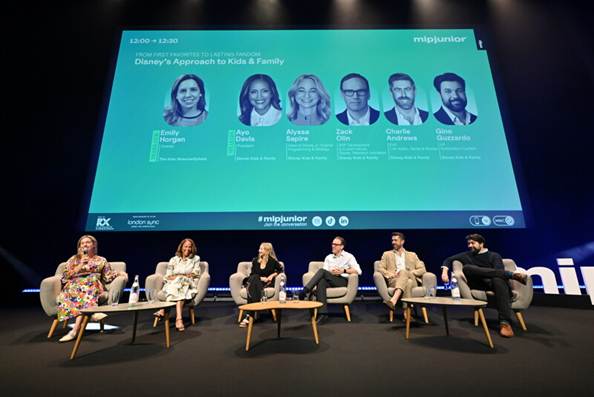
Change Is Our New Normal: A striking reality was acknowledged during the “From First Favorites to Lasting Fandom” panel, featuring leaders including Ayo Davis, Alyssa Sapire, Charlie Andrews, Zack Olin and Gino Guzzardo. Davis pointed out that today’s children may be watching Bluey at home and then encounter adult content such as Squid Game on the next screen, explaining that “change is the new normal.”
Simply getting children to watch a cartoon is no longer enough; the goal is to establish an organic, lasting connection between the child and the character. Disney explained how it is approaching its beloved franchises through new formats in response to this new reality and how it is radically adapting its storytelling methodologies.
A Princess Who Breaks the Rules: Migali
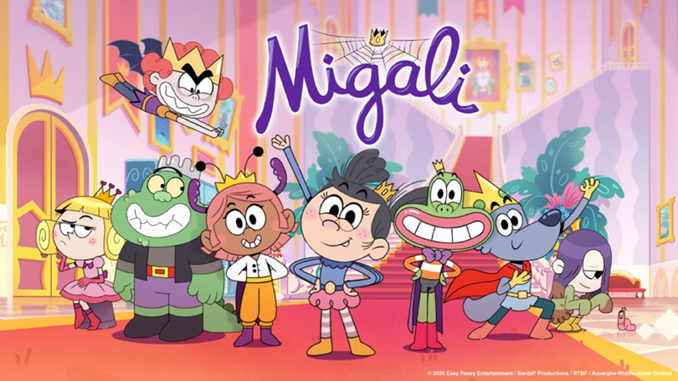
One of this year’s most notable events was the world premiere of Migali, produced by Easy Peasy Entertainment and Bardaf! Production. Adapted from the bestselling comic book published by Auzou Éditions, this 2D animation is poised to shatter the familiar clichés surrounding the “perfect princess.”
Heroes Who Aren’t Perfect: We follow a Spider Princess at the Royal Academy. However, this princess has little interest in royal protocol or looking flawless; she is too busy having fun, making mistakes and turning the school upside down as she spins her webs.
As producer Adélaïde Terme also noted, Migali is a “genuine, generous and imperfect” female character. The growing presence of such characters on screen is a significant sociological achievement, showing children that they do not always have to be perfect and that they can become leaders despite their mistakes.
Reimagining Legacy IPs in the Digital Age
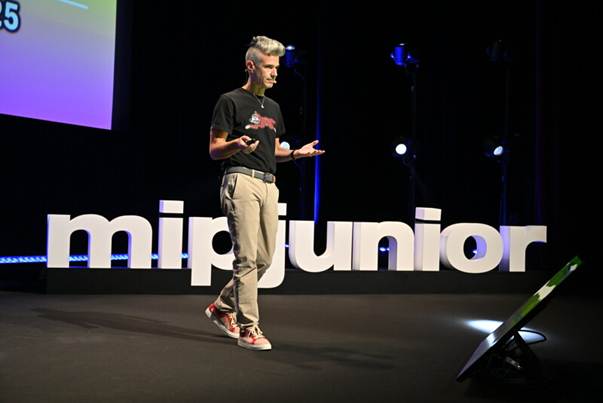
Gregory Dray (Animaj Co-Founder & LUMEE Chairman), who took the MIP Headliner stage, offered a clear summary of how the established stories we all know and love—legacy IPs—should be passed on to a new digital generation.
The Affinity Economy: The data presented by renowned media strategist Evan Shapiro during the session “The Kids Content Business in the Affinity Economy” also supported this argument. Children are no longer passive viewers; they seek content they can connect with and use to build their own communities.
If we cannot translate culturally significant stories of the past into a language that resonates with today’s children, we will be unable to establish cultural connections for the future. The industry urgently needs to understand not only its commercial models but also this profound transformation in audience behaviour.
The Evolution of Parents and Guardians: The global data shared by Evan Shapiro during his session offered some eye-opening insights into the demographic profiles of parents and guardians, who are the primary decision-makers when it comes to children’s content.
According to the figures presented, Millennials head 72% of households with underage children today. When Millennials and Generation Z are considered together, that figure reaches 80%.
In other words, the people filtering children’s programmes today belong to generations that grew up at the very heart of the digital world. It is now inevitable that content creators must consider not only children themselves but also the high digital expectations and social sensitivities of this new generation of parents and guardians.
The Evolution of Viewing Habits and Industry Trends
Sessions in Cannes presented striking market analyses of where and how children consume content.
In her “Kids Content Trends Watch” presentation, Cyrine Amor used figures to illustrate global trends in children’s content production, broadcaster strategies and the overwhelming influence of YouTube and social media channels on children.
In her presentation titled “Next-Gen Viewing: Trends Shaping Children’s Content,” Romy Nicolas demonstrated how viewing habits shift dramatically towards multiple platforms, starting in the preschool years and continuing through children, tweens and teens.
These findings tell us one thing: producing content solely for television is no longer viable. Stories must be able to thrive within a multilayered ecosystem that extends from Roblox to YouTube and from the screen into the physical world.
From Eastern Mythology to Universal Stories: Murphy’s Manor
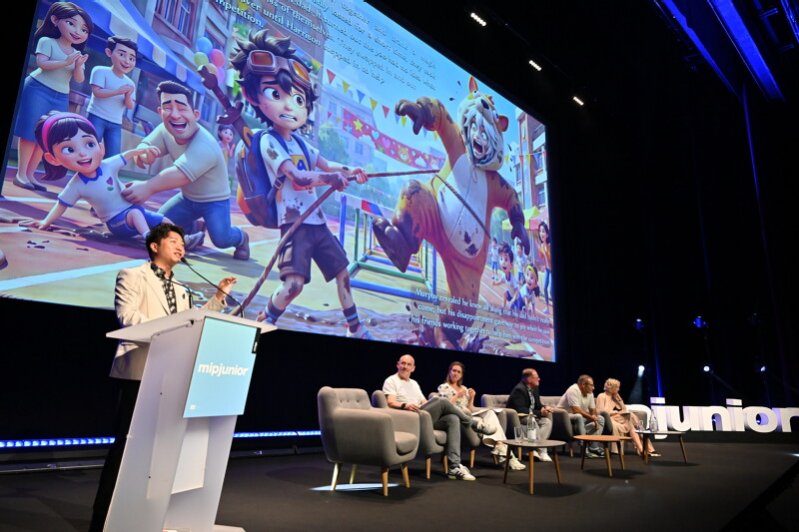
Representing the event’s forward-looking dimension, the MIPJUNIOR Pitch Tweens & Teens platform showcased bold, original projects aimed at audiences aged 9–17. The project that emerged victorious from a strong field of five finalists this year was Murphy’s Manor, developed through a collaboration between Chinese animation giant Fantawild Animation Inc. and Josh Selig (China Bridge Content).
Building Bridges Between Cultures: This 3DCG fantasy comedy integrates legendary spirits from Eastern mythology, known as Yao, into the modern world and tells the story of a young boy who inherits a magical mansion.
Viewed through a sociological lens, the project’s success is no coincidence. The industry is increasingly tiring of narratives centred exclusively on the West; productions that blend local legends with universal themes of friendship, belonging and the challenges of growing up are finding an audience on a global scale.
While Murphy’s Manor uses humour to teach children how to connect with those who are different from themselves, it also reflects the global market’s search for new cultural perspectives.
Solidarity Among Public Broadcasters and the Choices That Will Shape the Future
Meanwhile, in an environment where commercial concerns and algorithmic pressures are pushing the industry towards uniformity, one of the most political and encouraging developments across the sessions was the decision by more than 20 public broadcasters to join forces to support the future of children’s animation.
By developing joint funds and strategies to protect high-quality, educational content that promotes universal values, public broadcasters are creating a vital shield to safeguard the spirit of childhood against commercial pressures.
Because we know that the child sitting in front of a screen is not simply passing the time; they are building the world of tomorrow with the values they absorb today. If we want a future in which violence, uniformity and sheer consumerism are not normalised culturally, we must first clean up the screens our children watch and strengthen the stories presented to them.
When we turn on the television or open a digital platform tomorrow, I hope to see worlds that do more than encourage consumption—worlds that are thoughtfully created, contribute to social development and teach children empathy.
This is about far more than commercial success for all of us.
It is a choice we make for our children.